

Industry
Vacuum pumps for research, laboratory and analytics
Analytical instruments, laboratories and research facilities need vacuum from rough to ultra-high vacuum: mass spectrometers and electron microscopes can only measure without interfering residual gas, glove boxes and freeze dryers need clean, stable vacuum, and accelerators or space simulation chambers need a pumping system of backing pump and high vacuum pump. Below you can see which series the manufacturers themselves name for these tasks – 495 models from 5 manufacturers.
Compare 495 modelsSee the applications
- 495Models
- 43Series
- 5Manufacturers
- 8Applications

In short
Research, laboratory and analytics: vacuum pumps – the key facts
- Pressure rangesPfeiffer Vacuum divides them as follows: rough vacuum 1013–1 hPa, medium vacuum 1–10⁻³ hPa, high vacuum 10⁻³–10⁻⁸ hPa, ultra-high vacuum 10⁻⁸–10⁻¹² hPa. Rough and medium vacuum are sufficient for glove boxes, Schlenk techniques and drying; surface, plasma and cryogenic research need high and ultra-high vacuum.
- Backing pumpThe turbo pump sits inside the analytical instrument, the backing pump stands outside (Pfeiffer Vacuum). Edwards names RV, E2M, nXRi and nXLi for this, Pfeiffer Vacuum HiScroll, SmartVane and DuoVane, Busch COBRA and R5. Turbo pumps and ion getter pumps are not part of our range.
- Quiet in the laboratoryPfeiffer Vacuum states about 45 dB for HiScroll, and below 47 dB for mass spectrometry; for electron microscopes, Edwards and Pfeiffer Vacuum name low-vibration backing pumps.
- Without oilFor laboratory freeze drying, Pfeiffer Vacuum names a stable pressure without traces of oil (scroll, diaphragm, ACP); for research and development Edwards names dry and oil-sealed backing pumps, and Busch names COBRA, R5, PANDA and PUMA for analytics and laboratory.
Applications
Research, laboratory and analytics: what vacuum pumps are used for
For each application: what the vacuum does and which series the manufacturers name for it. The information comes from the manufacturers’ own pages.
Mass spectrometry and chromatography
Mass spectrometers work under vacuum, often with several chambers in different pressure ranges (Leybold): a few tens of mbar at the inlet, 10⁻⁸ to below 10⁻¹⁰ mbar in TOF and Orbitrap instruments. Edwards names ionisation at 1–5 mbar and RV, E2M, nXRi and nXLi for GC, LC, ICP and MALDI MS; Pfeiffer Vacuum names HiScroll (below 47 dB), SmartVane and DuoVane as external backing pumps, Busch names COBRA and R5. For gas and liquid chromatography Leybold lists SOGEVAC BI/DI.
Laboratory vacuum and glove box
Pfeiffer Vacuum names quiet, clean vacuum for mass spectrometers, freeze drying, glove boxes and filtration – individually or centrally – with HiScroll (about 45 dB), ACP, DuoVane and SmartVane, and HiScroll for glove boxes and air-sensitive work. For glove boxes, Edwards names rotary vane and scroll pumps that remove the residual air before nitrogen or argon is filled in, and RV and E2M for laboratories and universities in chemistry, biology, physics and geology. Busch names COBRA for glove boxes and isolators.
Backing pump for high vacuum and accelerators
Ultra-high vacuum prevents surface contamination and reduces disturbances in accelerators (Leybold: below 10⁻⁹ mbar, storage rings ≤10⁻¹¹ mbar). Pfeiffer Vacuum describes the pump chain for below 10⁻⁷ hPa with a backing pump down to about 10⁻³ hPa and names HiScroll, ACP and DuoVane; as backing pumps for turbo and high vacuum systems, Edwards names XDS, RV, E2M, nXRi (below 0.03 mbar), GV and E2S, Leybold names SCROLLVAC plus, ECODRY plus, SOGEVAC BI/DI, NEO D and TRIVAC B. Busch names COBRA for beamlines, particle accelerators, plasma and photonics research.
Electron microscopy
The electron beam must not be scattered, and the pump must not disturb the image: Edwards names low-vibration rotary vane, scroll and nXRi pumps, and about 10 mbar for ESEM. For low-vibration wafer metrology (CD-SEM) Pfeiffer Vacuum names 10⁻⁵–10⁻⁷ hPa with ACP and HiScroll, and HiScroll for electron microscopes; Busch names COBRA and R5.
- EdwardsnXRi also names rotary vane and scroll pumps without a series
- Pfeiffer VacuumHiScroll, ACP
- BuschCOBRA Industry, R5
Freeze drying
Frozen water sublimes under vacuum (Busch) – this protects heat-sensitive products, at below 1 hPa. For coffee, fruit and vaccines Pfeiffer Vacuum names 0.5–10⁻² hPa, and for laboratory freeze drying a stable pressure without traces of oil with scroll, diaphragm and ACP pumps; in its product finder Pfeiffer Vacuum lists ACP, DuoVane, HiLobe and HiScroll. Busch names COBRA, DOLPHIN, MINK, PANDA, PUMA and R5.
- Pfeiffer VacuumACP, DuoVane, HiLobe, HiScroll
- BuschCOBRA Industry, DOLPHIN, MINK, PANDA/PUMA, R5
Space and altitude simulation
Vacuum chambers simulate space conditions for tests before launch (Leybold): thermal vacuum testing at extreme temperatures (Edwards: −80 to +180 °C, below 10⁻¹⁰ mbar), propulsion tests, bake-out and mass loss measurement. Leybold names backing pumps down to 1×10⁻² mbar (DRYVAC, RUVAC, TRIVAC B, SCREWLINE SP, ECODRY plus, LEYVAC), Pfeiffer Vacuum names 10⁻⁷ to a few 10⁻⁵ hPa for ion thrusters, with ACP, HiLobe and HiScroll. For TVAC tests Edwards names mXDS, nXDS, XDS, EDS, GXS and nXRi, and Busch names COBRA for space research.
- LeyboldTRIVAC, ECODRY, DRYVAC, RUVAC WA/WAU, RUVAC WS/WSU, RUVAC WH/WHU, SCREWLINE
- EdwardsnXRi also names mXDS, nXDS, XDS, EDS, GXS, EH, GMB and EXS
- Pfeiffer VacuumACP, HiLobe, HiScroll
- BuschCOBRA Industry
Insulation vacuum and cryogenics
Vacuum insulates cryostats and low-temperature experiments (Pfeiffer Vacuum) and forms the insulating vacuum of superconducting magnets (Leybold). Busch names COBRA, MINK, PANDA, PUMA and R5 for insulation vacuum and COBRA for cryogenics; Pfeiffer Vacuum names ACP, DuoVane, HiLobe and HiScroll. Edwards lists nXRi for the regeneration of cryopumps and E2S for vacuum insulation.
- BuschCOBRA Industry, MINK, PANDA/PUMA, R5
- Pfeiffer VacuumACP, DuoVane, HiLobe, HiScroll
- EdwardsnXRi E2S only listed – not a series on this page
Leak detection and leak testing
Busch names COBRA, R5 and PANDA for leak detectors and end-of-line leak testing, for example of batteries, tanks and HVAC units. Pfeiffer Vacuum describes helium leak detection by spraying, with leak rates of about 10⁻⁷ to 10⁻⁹ mbar·l/s – as leak location, not leak rate measurement – with its ASM 340, 310, 390 and 392 leak detectors; as pumps for leak detection, Pfeiffer Vacuum lists ACP, DuoVane, HiScroll and HiLobe.
- BuschCOBRA Industry, R5, PANDA/PUMA, MINK
- Pfeiffer VacuumACP, DuoVane, HiScroll, HiLobe ASM leak detectors named only as measuring instruments
Manufacturers and series
Research, laboratory and analytics: 5 manufacturers, 43 series
Listed are the series the manufacturer itself names for this industry. “Show only …” sets the filter of the product overview.
Atlas Copco
17 models · 0.75–351 m³/h
Busch
248 models · 3–16,160 m³/h
Edwards
73 models · 0.75–44,300 m³/h
Leybold
99 models · 2.7–4,700 m³/h
- TRIVAC20
- SCROLLVAC5
- SOGEVAC23
- NEO D5
- ECODRY5
- NOVADRY4
- DURADRY3
- DRYVAC9
- RUVAC WA/WAU8
- RUVAC WS/WSU8
- RUVAC WH/WHU7
- SCREWLINE2
Pfeiffer Vacuum
58 models · 1.25–13,540 m³/h
Becker names the industry without naming a series for it.
Product overview
Research, laboratory and analytics: all 495 models compared
Use the filters on the left to narrow the selection – by manufacturer, technology and the models’ key figures, for 50 or 60 Hz.
Atlas Copco GVD series 13 models
Atlas Copco GVS VSD+ series 4 models
 GVS 80 VSD+Pumping speed 78 m³/h 50 Hz78 m³/h 60 HzUltimate pressure 0.5 mbarRated motor power 2.2 kW 50 Hz2.2 kW 60 HzVariants 1
 GVS 120 VSD+Pumping speed 117 m³/h 50 Hz117 m³/h 60 HzUltimate pressure 0.5 mbarRated motor power 3.7 kW 50 Hz3.7 kW 60 HzVariants 1
Busch COBRA Industry series 36 models
 COBRA NS 0070 CPumping speed 70 m³/h 50 Hz85 m³/h 60 HzUltimate pressure 0.03 mbarRated motor power 4 kW 50 Hz4.4 kW 60 HzVariants
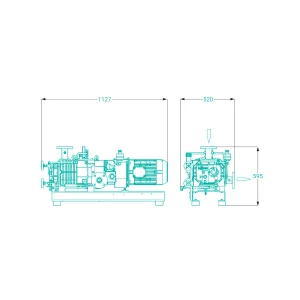 COBRA NC 0100 BPumping speed 110 m³/h 50 Hz130 m³/h 60 HzUltimate pressure 0.05 mbarRated motor power 3.5 kW 50 Hz4.8 kW 60 HzVariants 4
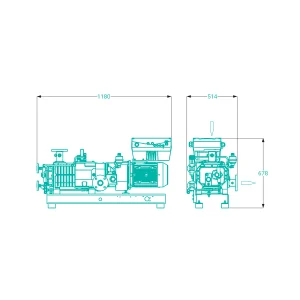 COBRA NC 0100 B ECOTORQUEPumping speed 130 m³/h 50 Hz130 m³/h 60 HzUltimate pressure 0.05 mbarRated motor power 4.8 kW 50 Hz4.8 kW 60 HzVariants
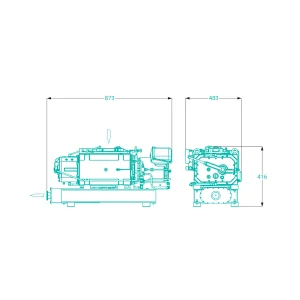 COBRA NS 0160 CPumping speed 135 m³/h 50 Hz170 m³/h 60 HzUltimate pressure 0.03 mbarRated motor power 5.5 kW 50 Hz6.6 kW 60 HzVariants
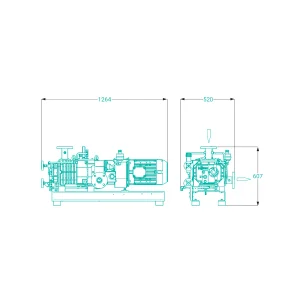 COBRA NC 0200 BPumping speed 220 m³/h 50 Hz265 m³/h 60 HzUltimate pressure 0.05 mbarRated motor power 6 kW 50 Hz7.6 kW 60 HzVariants 4
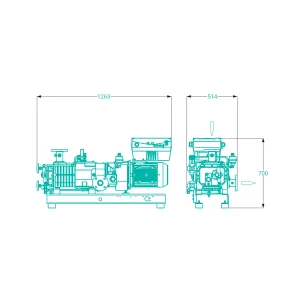 COBRA NC 0200 B ECOTORQUEPumping speed 265 m³/h 50 Hz265 m³/h 60 HzUltimate pressure 0.05 mbarRated motor power 7.6 kW 50 Hz7.6 kW 60 HzVariants
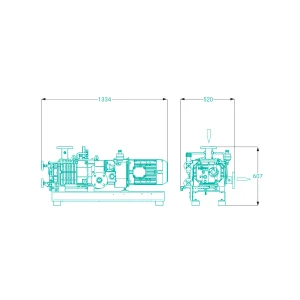 COBRA NC 0300 BPumping speed 320 m³/h 50 Hz385 m³/h 60 HzUltimate pressure 0.05 mbarRated motor power 7.5 kW 50 Hz9.5 kW 60 HzVariants 4
Busch COBRA Semicon series 22 models
Busch DOLPHIN series 70 models
Busch HUCKEPACK series 4 models
Busch MINK series 32 models
Busch PANDA/PUMA series 26 models
Busch R5 series 58 models
Edwards E2M series 9 models
Edwards E2S series 3 models
Edwards EDS series 3 models
Edwards EH series 5 models
Edwards EXS series 11 models
Edwards GMB series 2 models
Edwards GV series 2 models
Edwards GXS series 10 models
Edwards mXDS series 2 models
Edwards nXDS series 4 models
Edwards nXLi series 7 models
Edwards nXRi series 5 models
Edwards RV series 8 models
Edwards XDS series 2 models
Leybold DRYVAC series 9 models
Leybold DURADRY series 3 models
Leybold ECODRY series 5 models
Leybold NEO D series 5 models
Leybold NOVADRY series 4 models
Leybold RUVAC WA/WAU series 8 models
Leybold RUVAC WH/WHU series 7 models
Leybold RUVAC WS/WSU series 8 models
Leybold SCREWLINE series 2 models
Leybold SCROLLVAC series 5 models
Leybold SOGEVAC series 23 models
Leybold TRIVAC series 20 models
Pfeiffer Vacuum A4 series 12 models
Pfeiffer Vacuum A 100/200 L series 3 models
Pfeiffer Vacuum ACP series 4 models
Pfeiffer Vacuum DuoVane series 12 models
Pfeiffer Vacuum HiLobe series 17 models
Pfeiffer Vacuum HiScroll series 4 models
Pfeiffer Vacuum SmartVane series 2 models
Pfeiffer Vacuum TORRI series 4 models
No model matches these filters.
Atlas Copco GVD series 13 models
Atlas Copco GVS VSD+ series 4 models
Busch COBRA Industry series 36 models
Busch COBRA Semicon series 22 models
Busch DOLPHIN series 70 models
Busch HUCKEPACK series 4 models
Busch MINK series 32 models
Busch PANDA/PUMA series 26 models
Busch R5 series 58 models
Edwards E2M series 9 models
Edwards E2S series 3 models
Edwards EDS series 3 models
Edwards EH series 5 models
Edwards EXS series 11 models
Edwards GMB series 2 models
Edwards GV series 2 models
Edwards GXS series 10 models
Edwards mXDS series 2 models
Edwards nXDS series 4 models
Edwards nXLi series 7 models
Edwards nXRi series 5 models
Edwards RV series 8 models
Edwards XDS series 2 models
Leybold DRYVAC series 9 models
Leybold DURADRY series 3 models
Leybold ECODRY series 5 models
Leybold NEO D series 5 models
Leybold NOVADRY series 4 models
Leybold RUVAC WA/WAU series 8 models
Leybold RUVAC WH/WHU series 7 models
Leybold RUVAC WS/WSU series 8 models
Leybold SCREWLINE series 2 models
Leybold SCROLLVAC series 5 models
Leybold SOGEVAC series 23 models
Leybold TRIVAC series 20 models
Pfeiffer Vacuum A4 series 12 models
Pfeiffer Vacuum A 100/200 L series 3 models
Pfeiffer Vacuum ACP series 4 models
Pfeiffer Vacuum DuoVane series 12 models
Pfeiffer Vacuum HiLobe series 17 models
Pfeiffer Vacuum HiScroll series 4 models
Pfeiffer Vacuum SmartVane series 2 models
Pfeiffer Vacuum TORRI series 4 models
Models a manufacturer no longer carries in its current range are listed in its “Outdated models” section.
Selection
Research, laboratory and analytics: choosing a vacuum pump
What the manufacturers highlight for use in this industry.
Oil-free or oil-lubricated?
For freeze drying and glove boxes, Pfeiffer Vacuum names clean vacuum without traces of oil (scroll, diaphragm, ACP). For research and development Edwards names dry and oil-sealed backing pumps side by side, and Leybold names small dry pumps or oil-sealed pumps for mass spectrometers. Whether oil interferes with the process decides the type of pump.
Noise and vibration
In the laboratory, the pump stands next to the instrument: Pfeiffer Vacuum states about 45 dB for HiScroll. For electron microscopes, Edwards and Pfeiffer Vacuum name low-vibration backing pumps, and for CD-SEM Pfeiffer Vacuum names low-vibration metrology at 10⁻⁵–10⁻⁷ hPa.
Ultimate pressure of the backing pump
The backing pump must reach the backing pressure that the high vacuum pump requires: for UHV chains Pfeiffer Vacuum names a backing pump down to about 10⁻³ hPa, Edwards names below 0.03 mbar for nXRi, and Leybold names backing pumps down to 1×10⁻² mbar for space simulation chambers. According to Edwards, less vacuum is sufficient for ionisation in the mass spectrometer (1–5 mbar) and for ESEM (about 10 mbar).
Radiation, magnetic field, gases
For accelerators, Pfeiffer Vacuum names radiation-resistant pumps; for proton therapy, Leybold names vacuum despite the magnetic field and radiation, with SCROLLVAC plus. For ion sources with aggressive gases, Pfeiffer Vacuum names A4 and ACP at 10⁻⁶–10⁻⁹ hPa.
Frequently asked questions
Research, laboratory and analytics: frequently asked questions about vacuum pumps
Which backing pump is suitable for a mass spectrometer?
The turbo pump sits inside the instrument, the backing pump stands outside (Pfeiffer Vacuum). Edwards names RV, E2M, nXRi and nXLi and ionisation at 1–5 mbar; Pfeiffer Vacuum names HiScroll at below 47 dB, SmartVane and DuoVane; Busch names COBRA and R5. Leybold describes instruments with several chambers – a few tens of mbar at the inlet, 10⁻⁸ to below 10⁻¹⁰ mbar in TOF and Orbitrap instruments – and lists SOGEVAC BI/DI for GC and LC.
Which vacuum pump is quiet enough for the laboratory?
Pfeiffer Vacuum states about 45 dB for HiScroll and names the series for mass spectrometers, freeze drying, glove boxes and filtration. For electron microscopes, Edwards and Pfeiffer Vacuum name low-vibration backing pumps.
Oil-free or oil-lubricated in the laboratory?
For laboratory freeze drying, Pfeiffer Vacuum names a stable pressure without traces of oil with scroll, diaphragm and ACP pumps, and clean vacuum with HiScroll for glove boxes. For research and development Edwards names dry and oil-sealed backing pumps, and for glove boxes rotary vane and scroll pumps. Busch names COBRA, R5, PANDA and PUMA for analytics and laboratory.
Which vacuum pump for a glove box?
Pfeiffer Vacuum names HiScroll for clean vacuum in air-sensitive work. Edwards describes the procedure: the pump removes the residual air, then nitrogen or argon is filled in – with rotary vane or scroll pumps. Busch names COBRA for glove boxes and isolators.
Which vacuum pump for laboratory freeze drying?
For lyophilisation Busch names pressures below 1 hPa and the COBRA, DOLPHIN, MINK, PANDA, PUMA and R5 series. Pfeiffer Vacuum names 0.5–10⁻² hPa, a stable pressure without traces of oil, and ACP, DuoVane, HiLobe and HiScroll.
Which backing pump for an electron microscope?
Edwards names low-vibration rotary vane, scroll and nXRi pumps, and about 10 mbar for ESEM. Pfeiffer Vacuum names HiScroll for electron microscopes, and ACP and HiScroll at 10⁻⁵–10⁻⁷ hPa for CD-SEM; Busch names COBRA and R5.
Which backing pump for high vacuum, UHV and accelerators?
Pfeiffer Vacuum describes the pump chain for below 10⁻⁷ hPa with a backing pump down to about 10⁻³ hPa and names HiScroll, ACP and DuoVane, and radiation-resistant pumps for accelerators. Edwards names XDS, RV, E2M, nXRi (below 0.03 mbar), GV and E2S; Leybold names SCROLLVAC plus, ECODRY plus, SOGEVAC BI/DI, NEO D and TRIVAC B; Busch names COBRA for beamlines and particle accelerators.
Which vacuum pump for space simulation and TVAC tests?
For thermal vacuum testing at −80 to +180 °C and below 10⁻¹⁰ mbar, Edwards names mXDS, nXDS, XDS, EDS, GXS and nXRi. Leybold names backing pumps down to 1×10⁻² mbar: DRYVAC, RUVAC, TRIVAC B, SCREWLINE SP, ECODRY plus and LEYVAC. For ion thrusters Pfeiffer Vacuum names 10⁻⁷ to a few 10⁻⁵ hPa with ACP, HiLobe and HiScroll, and Busch names COBRA.
Which vacuum pump for insulation vacuum and cryostats?
Busch names COBRA, MINK, PANDA, PUMA and R5 for insulation vacuum and COBRA for cryogenics. Pfeiffer Vacuum names ACP, DuoVane, HiLobe and HiScroll for vacuum insulation in low-temperature experiments; Edwards lists nXRi for the regeneration of cryopumps and E2S for vacuum insulation.
Which vacuum pump for leak detection?
Busch names COBRA, R5 and PANDA for leak detectors and end-of-line leak testing. For helium leak detection, Pfeiffer Vacuum names leak rates of about 10⁻⁷ to 10⁻⁹ mbar·l/s with its ASM series leak detectors, and ACP, DuoVane, HiScroll and HiLobe as pumps for leak detection.
A pump at each machine or a central vacuum system?
A central system in a room of its own keeps noise and heat away from production and matches its output to the demand. Central vacuum systems are planned and built by Eugen Theis Vakuum, a company of the Ehrler & Beck group – more under Central Vacuum.
Does Ehrler & Beck also supply spare parts and service?
Yes. Ehrler & Beck offers original spare parts and accessories as well as maintenance and repair.
Which pump suits your process?
Tell us the application, the medium and the number of machines – we advise you on selection, spare parts and service.
