

Technology
Claw vacuum pumps
Two claw-shaped rotors compress dry and without contact – with no oil or other operating liquids in the compression chamber. 78 current models from 6 manufacturers – comparable by pumping speed, ultimate pressure and rated motor power.
Compare 78 modelsHow the technology works
- 78models
- 13series
- 6manufacturers
- 6 × 10⁻³ mbarlowest ultimate pressure
Touch the points: the parts explain themselves.
Manufacturers and series
6 manufacturers, 13 series
Each series leads to its page with all models. “Show only …” sets the filter of the product overview.
Atlas Copco
13 models · 65–1,560 m³/h
Becker
10 models · 100–500 m³/h
Busch
32 models · 18–1,150 m³/h
Edwards
7 models · 65–950 m³/h
Elmo Rietschle
11 models · 100–950 m³/h
Leybold
5 models · 65–950 m³/h
Product overview
Compare all 78 models
The filters on the left narrow down the selection by the key figures of the models – for 50 or 60 Hz.
Atlas Copco DZM VSD+ series 2 models
Atlas Copco DZQ series 1 model
Atlas Copco DZS series 5 models
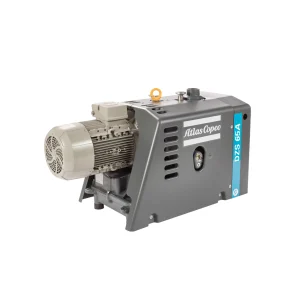 DZS 065APumping speed 65 m³/h 50 Hz78 m³/h 60 HzUltimate pressure 50 mbarRated motor power 1.8 kW 50 Hz2.2 kW 60 HzVariants 12
Atlas Copco DZS VSD+ series 5 models
 DZS 100 VSD+Pumping speed 105 m³/h 50 Hz105 m³/h 60 HzUltimate pressure 50 mbarRated motor power 3 kW 50 Hz3 kW 60 HzVariants 3
Becker BCV series 7 models
Becker VARIAIR BCV series 3 models
Busch MINK series 32 models
 MINK MB 0018 APumping speed 18 m³/h 50 Hz18 m³/h 60 HzUltimate pressure 600 mbarRated motor power 0.5 kW 50 Hz0.5 kW 60 HzVariants 2
Edwards EDC series 2 models
Edwards GV series 2 models
Edwards nEDC series 3 models
Elmo Rietschle C-VLR series 7 models
Elmo Rietschle C-VLU series 4 models
Leybold CLAWVAC series 5 models
No model matches these filters.
Atlas Copco DZM VSD+ series 2 models
Atlas Copco DZQ series 1 model
Atlas Copco DZS series 5 models
Atlas Copco DZS VSD+ series 5 models
Becker BCV series 7 models
Becker VARIAIR BCV series 3 models
Busch MINK series 32 models
Edwards EDC series 2 models
Edwards GV series 2 models
Edwards nEDC series 3 models
Elmo Rietschle C-VLR series 7 models
Elmo Rietschle C-VLU series 4 models
Leybold CLAWVAC series 5 models
Models that a manufacturer no longer carries in its current range are not part of this overview; they are listed in the manufacturer’s “Outdated models” section.
Operating principle
How a claw vacuum pump works
In the housing, two claw-shaped rotors turn in opposite directions – without contact and with very narrow gaps; a gearbox synchronises them. The shape of the claws ensures that the gas is drawn in, compressed between the rotors and then expelled. The pump therefore already compresses internally.
The drawing shows the basic principle in simplified form. In many designs the ports are at the side and are uncovered by the rotors; the designs of the manufacturers differ in detail.
- SuctionWhen the claw moves past the inlet connection (A), the gas is drawn into the suction chamber (D).
- CompressionThe rotors (C) carry the gas to the discharge side; there the volume between them decreases (E).
- DischargeAs soon as the rotor uncovers the discharge channel, the pre-compressed gas is expelled through the outlet connection (F).
Key figures
The technology in figures
The ranges result from the current models in our range.
Pumping speed (50 Hz)
18 to 1,560 m³/hin our range
Ultimate pressure
6 × 10⁻³ to 600 mbarin our range
Rated motor power (50 Hz)
0.5 to 44 kWin our range
Ultimate pressure compared (mbar, logarithmic)
For comparison: the oil-lubricated rotary vane vacuum pumps in our range reach 1 × 10⁻³ to 20 mbar.
What characterises the technology
Internal compression
The gas is pre-compressed inside the pump before it is expelled. Compared with designs without internal compression, this saves energy.
Dry compression chamber
The narrow gaps between rotors and housing provide the seal. Lubricants or operating liquids are not required in the compression chamber.
Timing gear
A gearbox ensures that the two rotors run in exact relation to each other without touching.
Versions
Depending on the series, there are corrosion-resistant versions with stainless steel claws and explosion-proof models.
Advantages
What speaks for this technology
- Oil-free compression
- Rotors run without contact
- Internal compression saves energy
- No oil to change in the compression chamber
- Robust for continuous operation
- Air-cooled designs
- Explosion-proof versions, depending on the series
Applications
Where they work
- Woodworkingholding, vacuum pressing
- Printingholding, lifting, moving
- Plasticspneumatic conveying, holding, pick and place
- Pharmaceuticals and packagingpick and place, blister packaging, production of aluminium cans
- Food and beveragespneumatic conveying, central vacuum supply
- Medicine and flat glasscentral vacuum supply; holding, lifting, moving
Frequently asked questions
Questions about claw vacuum pumps
How does a claw vacuum pump work?
Two claw-shaped rotors turn in opposite directions and without contact in the housing. Their shape ensures that the gas is drawn in, compressed between the rotors and expelled. The drawing in the section Operating principle shows every step.
Are claw vacuum pumps oil-free?
In the compression chamber, yes: the narrow gaps between the rotors and the housing provide the seal, and lubricants or operating liquids are not needed there. There is oil only in the timing gear.
What ultimate pressure do claw vacuum pumps reach?
The models in our range state ultimate pressures from 6 × 10⁻³ to 600 mbar – depending on the series and design. In the product overview, the “Ultimate pressure” filter narrows down the selection.
From which manufacturers does Ehrler & Beck carry this technology?
Currently from Atlas Copco, Becker, Busch, Edwards, Elmo Rietschle and Leybold. The series are listed in the section Manufacturers and series.
How do I find the right model?
In the product overview, the filters narrow down the selection by the key figures of the models. For sizing, it is best to tell us the gas to be conveyed, the working pressure and the flow rate you need – we will be glad to advise you.
What do the figures for 50 Hz and 60 Hz mean?
Flow rate and rated motor power depend on the mains frequency. The overview therefore shows both values wherever the manufacturer states them, and the size filters can be switched between 50 Hz and 60 Hz.
Does Ehrler & Beck also supply spare parts and service?
Yes. Ehrler & Beck offers original spare parts and accessories as well as maintenance and repair.
Which model fits your process?
Tell us the gas to be conveyed, the working pressure and the flow rate you need – we will advise you on selection, spare parts and service.
