

Technology
Dry-running rotary vane vacuum pumps
Oil-free in the pump chamber, simple in design and low-maintenance – the technology for rough vacuum. 69 current models from 4 manufacturers – comparable by pumping speed, ultimate pressure and rated motor power.
Compare 69 modelsHow the technology works
- 69models
- 15series
- 4manufacturers
- 100 mbarlowest ultimate pressure
Touch the points: the parts explain themselves.
Manufacturers and series
4 manufacturers, 15 series
Each series leads to its page with all models. “Show only …” sets the filter of the product overview.
Atlas Copco
10 models · 5–130 m³/h
Becker
40 models · 1.9–560 m³/h
Busch
10 models · 3–83 m³/h
Elmo Rietschle
9 models · 3.5–130 m³/h
Product overview
Compare all 69 models
The filters on the left narrow down the selection by the key figures of the models – for 50 or 60 Hz.
Atlas Copco DVS series 10 models
 DVS 5Pumping speed 5 m³/h 50 Hz6 m³/h 60 HzUltimate pressure 120 mbarRated motor power 0.12 kW 50 Hz0.15 kW 60 HzVariants 3
Becker KVT series 4 models
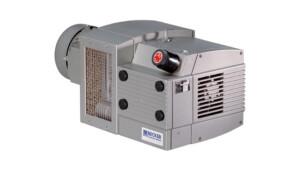 KVT 3.60Pumping speed 55 m³/h 50 Hz66 m³/h 60 HzUltimate pressure 100 mbarRated motor power 2.2 kW 50 Hz2.6 kW 60 HzVariants 6
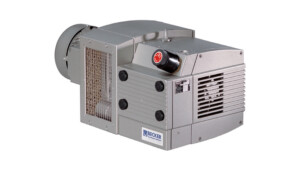 KVT 3.80Pumping speed 67 m³/h 50 Hz78.5 m³/h 60 HzUltimate pressure 100 mbarRated motor power 2.2 kW 50 Hz2.6 kW 60 HzVariants 6
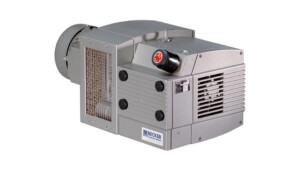 KVT 3.100Pumping speed 98 m³/h 50 Hz112 m³/h 60 HzUltimate pressure 100 mbarRated motor power 3 kW 50 Hz3.6 kW 60 HzVariants 8
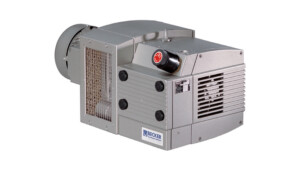 KVT 3.140Pumping speed 129 m³/h 50 Hz154 m³/h 60 HzUltimate pressure 100 mbarRated motor power 4 kW 50 Hz4.5 – 4.8 kW 60 HzVariants 7
Becker KVX series 4 models
KVX 3.60Pumping speed 55 m³/h 50 Hz66 m³/h 60 HzUltimate pressure 100 mbarRated motor power 2.2 kW 50 Hz2.6 kW 60 HzVariants 6KVX 3.80Pumping speed 67 m³/h 50 Hz78.5 m³/h 60 HzUltimate pressure 100 mbarRated motor power 2.2 kW 50 Hz2.6 kW 60 HzVariants 6KVX 3.100Pumping speed 98 m³/h 50 Hz112 m³/h 60 HzUltimate pressure 100 mbarRated motor power 3 kW 50 Hz3.6 kW 60 HzVariants 8KVX 3.140Pumping speed 129 m³/h 50 Hz154 m³/h 60 HzUltimate pressure 100 mbarRated motor power 4 kW 50 Hz4.5 – 4.8 kW 60 HzVariants 7Becker VARIAIR KVT series 3 models
Becker VARIAIR KVX series 3 models
Becker VARIAIR VTLF series 2 models
Becker VARIAIR VXLF series 2 models
Becker VTLF series 6 models
Becker VT series 7 models
Becker VXLF series 5 models
Becker VX series 4 models
Busch SECO series 10 models
Elmo Rietschle V-VTE series 4 models
Elmo Rietschle V-VTN series 3 models
Elmo Rietschle V-VTR series 2 models
No model matches these filters.
Atlas Copco DVS series 10 models
Becker KVT series 4 models
Becker KVX series 4 models
Becker VARIAIR KVT series 3 models
Becker VARIAIR KVX series 3 models
Becker VARIAIR VTLF series 2 models
Becker VARIAIR VXLF series 2 models
Becker VTLF series 6 models
Becker VT series 7 models
Becker VXLF series 5 models
Becker VX series 4 models
Busch SECO series 10 models
Elmo Rietschle V-VTE series 4 models
Elmo Rietschle V-VTN series 3 models
Elmo Rietschle V-VTR series 2 models
Models that a manufacturer no longer carries in its current range are not part of this overview; they are listed in the manufacturer’s “Outdated models” section.
Operating principle
How a dry-running rotary vane vacuum pump works
A rotor turns eccentrically in the bore of the housing. Vanes slide in its slots and are pressed against the wall by centrifugal force. This creates closed cells: as the rotor turns, they first grow and draw in air, then shrink and compress it. There is no oil in the pump chamber.
The drawing shows the basic principle. The designs of the individual manufacturers differ in detail.
- SuctionThe air flows through the inlet port (A) and the inlet channel (B) into a cell (H) that grows as the rotor turns.
- CompressionAs soon as the cell is cut off from the inlet, it shrinks. The air is compressed in the compression chamber (I).
- DischargeThe compressed air leaves the pump through the discharge channel (J).
Key figures
The technology in figures
The ranges result from the current models in our range.
Pumping speed (50 Hz)
1.9 to 560 m³/hin our range
Ultimate pressure
100 to 400 mbarin our range
Rated motor power (50 Hz)
0.09 to 11 kWin our range
Ultimate pressure compared (mbar, logarithmic)
For comparison: the oil-lubricated rotary vane vacuum pumps in our range reach 1 × 10⁻³ to 20 mbar.
What characterises the technology
Oil-free
The pumps work without oil in the pump chamber; the chambers are separated from one another by long-lasting vanes.
Simple design
One shaft and a direct drive – this results in robust pumps with low maintenance and operating costs.
Built-in accessories
Most models have built-in intake filters and control valves; further accessories can be fitted.
Humid air
With optional corrosion protection, the pumps are also suitable for extracting humid air.
Advantages
What speaks for this technology
- Oil-free in the pump chamber
- Low noise level
- Robust and economical
- Long service life
- Low maintenance
- Easy to operate
- Reliable and heavy-duty
- Comprehensive range of accessories
Applications
Where they work
- General industrypick and place, handling technology
- Printing industryprinting presses, print finishing machines
- Packagingpackaging machines
- Woodworking industry
- Environmental technology
Frequently asked questions
Questions about dry-running rotary vane vacuum pumps
How does a dry-running rotary vane vacuum pump work?
An eccentrically mounted rotor with movable vanes divides the pump chamber into cells that draw in, compress and expel the air – without oil in the pump chamber. The drawing in the section Operating principle shows every step.
What ultimate pressure do dry-running rotary vane vacuum pumps reach?
The models in our range state ultimate pressures from 100 to 400 mbar. In the product overview, the “Ultimate pressure” filter narrows down the selection.
What is the difference between dry-running and oil-lubricated rotary vane pumps?
Dry-running rotary vane vacuum pumps work without oil in the pump chamber. Oil-lubricated rotary vane vacuum pumps reach much lower ultimate pressures: in our range they lie between 1 × 10⁻³ and 20 mbar, for the dry-running pumps between 100 and 400 mbar.
From which manufacturers does Ehrler & Beck carry this technology?
Currently from Atlas Copco, Becker, Busch and Elmo Rietschle. The series are listed in the section Manufacturers and series.
How do I find the right model?
In the product overview, the filters narrow down the selection by the key figures of the models. For sizing, it is best to tell us the gas to be conveyed, the working pressure and the flow rate you need – we will be glad to advise you.
What do the figures for 50 Hz and 60 Hz mean?
Flow rate and rated motor power depend on the mains frequency. The overview therefore shows both values wherever the manufacturer states them, and the size filters can be switched between 50 Hz and 60 Hz.
Does Ehrler & Beck also supply spare parts and service?
Yes. Ehrler & Beck offers original spare parts and accessories as well as maintenance and repair.
Which model fits your process?
Tell us the gas to be conveyed, the working pressure and the flow rate you need – we will advise you on selection, spare parts and service.
