

Application
Vacuum pumps for degassing
In degassing, a liquid or paste stands in a vessel and the pressure above it is lowered: dissolved and trapped gases escape. Busch describes it as releasing the gas by lowering the pressure, Becker as removing gas inclusions from pastes and liquids under vacuum. Below you can see how the application works, what vacuum the manufacturers name and which of their series are intended for it – 385 models from 6 manufacturers.
Compare 385 modelsHow it works
- 385Models
- 32Series
- 6Manufacturers
- 13Industries
Touch the points: each part of the system explains itself.
In short
Degassing: the key facts
- PrincipleBusch describes degassing as releasing dissolved gas from a liquid or paste by lowering the pressure; Becker names the removal of gas inclusions from pastes and liquids under vacuum.
- Beverages and waterBusch and Leybold name the degassing of mineral water and beverages: dissolved oxygen and dissolved CO2 are removed from the water. Leybold provides CLAWVAC, NOVADRY and DRYVAC for this, Busch DOLPHIN and MINK.
- Battery cellsFor removing air bubbles from the electrolyte, Busch names R5 RA and COBRA NC/NX. Leybold describes degassing after formation with DRYVAC: the cell is pierced in the vacuum chamber and the gas is pumped out.
- High gas loadFor liquids such as sauces, juices and oils, Becker names the VADS series and, at a high gas load, U5/U4 together with RBP; for degassing, Atlas Copco lists the ZRS Roots pumps and the AWC liquid ring vacuum pumps.
Operating principle
How it works: Degassing
The drawing shows the basic principle in section. The systems and pumps of the individual manufacturers differ in detail.
- FillingThe liquid or paste goes into the vessel; the valve to the pump is still closed. For battery cells, Atlas Copco describes filling with electrolyte and removing trapped gases as one work step in cell production.
- EvacuatingThe vacuum pump lowers the pressure above the process material. Dissolved gas escapes (Busch), gas inclusions leave pastes and liquids (Becker); the separator catches foam and droplets.
- VentingOnce the gas has escaped, the vessel is vented and emptied. Becker names less foam and oxidation as the result, Leybold fewer bubbles with resins.
Vacuum and sizing
Degassing: how much vacuum is needed
What the manufacturers say about pressure, pumping speed and sizing.
Which vacuum
The principle: as the pressure falls, dissolved gas escapes from the liquid (Busch), gas inclusions leave pastes and liquids (Becker). We determine the required pressure with you on the basis of the process material.
Gas load and pumping station
For sauces, juices and oils, Becker names the VADS series and, at a high gas load, U5/U4 together with the RBP Roots pump. Atlas Copco lists the ZRS Roots pumps, Pfeiffer Vacuum lists HiLobe models in its product data for degassing.
Dry or oil-lubricated
For beverages, Leybold names dry pumps: CLAWVAC, NOVADRY and DRYVAC. Busch names both: R5 and HUCKEPACK oil-lubricated, MINK and COBRA dry, plus DOLPHIN as a liquid ring vacuum pump. Becker names dry-running and oil-lubricated rotary vane, screw, claw and Roots booster pumps from VT to RBP; Edwards lists EDS, LR, E2S, nES Ex and IDX.
Vapours and moisture
Atlas Copco describes removing gases and moisture in the extruder to prevent pores and bubbles; Leybold describes bubbles and volatile substances in resins and, in hydrogen plants, residual gases and moisture from pipes, valves and pressure vessels. Edwards lists the XDS for degassing and curing oil and epoxy.
Technology
Degassing: the vacuum pumps the manufacturers name
Listed are the series the manufacturer itself names for this application. “Show only …” sets the filter of the product overview.
Liquid ring vacuum pumps
112 models · 20–16,160 m³/h
Oil-lubricated rotary vane vacuum pumps
90 models · 3–1,800 m³/h
Screw vacuum pumps
55 models · 63–4,652 m³/h
Roots vacuum pumps
51 models · 250–13,540 m³/h
Claw vacuum pumps
44 models · 18–1,150 m³/h
Dry-running rotary vane vacuum pumps
30 models · 1.9–495 m³/h
Scroll vacuum pumps
2 models · 35–40 m³/h
Screw compressors
1 model · 1,230 m³/h
Elmo Rietschle names the application without naming a series for it.
Product overview
Degassing: all 385 models compared
Use the filters on the left to narrow the selection – by manufacturer, technology and the models’ key figures, for 50 or 60 Hz.
Atlas Copco AWC series 9 models
Atlas Copco ZRS series 5 models
Becker BCV series 7 models
Becker KVT series 4 models
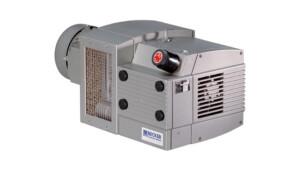 KVT 3.60Pumping speed 55 m³/h 50 Hz66 m³/h 60 HzUltimate pressure 100 mbarRated motor power 2.2 kW 50 Hz2.6 kW 60 HzVariants 6
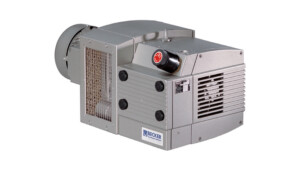 KVT 3.80Pumping speed 67 m³/h 50 Hz78.5 m³/h 60 HzUltimate pressure 100 mbarRated motor power 2.2 kW 50 Hz2.6 kW 60 HzVariants 6
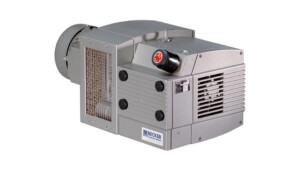 KVT 3.100Pumping speed 98 m³/h 50 Hz112 m³/h 60 HzUltimate pressure 100 mbarRated motor power 3 kW 50 Hz3.6 kW 60 HzVariants 8
Becker KVX series 4 models
Becker O series 6 models
Becker RBP series 3 models
Becker U4 series 6 models
Becker U series 8 models
Becker VADS series 3 models
Becker VTLF series 6 models
Becker VT series 7 models
Becker VXLF series 5 models
Becker VX series 4 models
Busch COBRA Industry series 36 models
Busch DOLPHIN series 70 models
Busch HUCKEPACK series 4 models
Busch MINK series 32 models
Busch PANDA/PUMA series 26 models
Busch R5 series 58 models
Edwards E2S series 3 models
Edwards EDS series 3 models
Edwards IDX series 1 model
Edwards LR1A series 12 models
Edwards LR1C series 9 models
Edwards LR1D series 12 models
Edwards nES Ex series 5 models
Edwards XDS series 2 models
Leybold CLAWVAC series 5 models
Leybold DRYVAC series 9 models
Leybold NOVADRY series 4 models
Pfeiffer Vacuum HiLobe series 17 models
No model matches these filters.
Atlas Copco AWC series 9 models
Atlas Copco ZRS series 5 models
Becker BCV series 7 models
Becker KVT series 4 models
Becker KVX series 4 models
Becker O series 6 models
Becker RBP series 3 models
Becker U4 series 6 models
Becker U series 8 models
Becker VADS series 3 models
Becker VTLF series 6 models
Becker VT series 7 models
Becker VXLF series 5 models
Becker VX series 4 models
Busch COBRA Industry series 36 models
Busch DOLPHIN series 70 models
Busch HUCKEPACK series 4 models
Busch MINK series 32 models
Busch PANDA/PUMA series 26 models
Busch R5 series 58 models
Edwards E2S series 3 models
Edwards EDS series 3 models
Edwards IDX series 1 model
Edwards LR1A series 12 models
Edwards LR1C series 9 models
Edwards LR1D series 12 models
Edwards nES Ex series 5 models
Edwards XDS series 2 models
Leybold CLAWVAC series 5 models
Leybold DRYVAC series 9 models
Leybold NOVADRY series 4 models
Pfeiffer Vacuum HiLobe series 17 models
Models a manufacturer no longer carries in its current range are listed in its “Outdated models” section.
Industries
Degassing: where the manufacturers name it
The manufacturers list these uses on their own pages.
Chemicals
In the chemical industry, Atlas Copco describes releasing gases from liquids, for example with polymers and in synthesis; Edwards lists EDS, LR, E2S, nES Ex and IDX for this, Busch its series from R5 to DOLPHIN, and Elmo Rietschle names degassing without a description.
Battery manufacturing
Atlas Copco names filling the cells with electrolyte and removing trapped gases, Busch removing air bubbles from the electrolyte with R5 RA and COBRA NC/NX, Leybold degassing after formation with DRYVAC; Pfeiffer Vacuum lists degassing in its product finder.
Beverages and bottling
For the beverage industry, Elmo Rietschle describes removing unwanted gases from liquids and names the degassing of mineral water; Leybold and Busch name the same task – removing dissolved oxygen and CO2 from water and beverages.
Food and beverage
For the food industry, Busch names the degassing of mineral water with DOLPHIN and MINK: oxygen and CO2 are removed from the water.
Plastics and recycling
Atlas Copco describes degassing in the extruder, in which gases and moisture are removed to prevent pores and bubbles, Leybold resin degassing for composites; Busch (with PLASTEX) and Pfeiffer Vacuum also name degassing for plastics processing.
Pharmaceuticals and biotechnology
Busch also names degassing for the pharmaceutical industry; the principle is the same – dissolved gas is released from liquid or paste by lowering the pressure.
Energy
For the energy market, Becker lists electrolyte degassing for lithium-ion cells without describing it in more detail.
Hydrogen and fuel cells
For the hydrogen industry, Leybold describes the pre-evacuation and degassing of pipelines and components: residual gases and moisture are removed from pipes, valves and pressure vessels.
Environmental and wastewater
Leybold lists wastewater degassing for the CLAWVAC series without describing it.
Packaging
In primary packaging and food processing, Becker names the degassing of sauces, juices and oils to prevent foam and oxidation; Leybold names beverage degassing with CLAWVAC, NOVADRY and DRYVAC.
Metallurgy and heat treatment
Leybold lists vacuum induction degassing for the DIFFVAC OB oil diffusion pump, which is not part of our range; among the degassed materials, Busch also names melt and steel.
Mechanical engineering and manufacturing
For general mechanical engineering, Becker lists the degassing of ceramic compounds without describing it in more detail.
Medical and healthcare
For medical technology, Becker lists the degassing of raw compounds for prostheses without describing it in more detail.
Frequently asked questions
Degassing: frequently asked questions
How does degassing under vacuum work?
The liquid or paste stands in a closed vessel, and the vacuum pump lowers the pressure above it. Under vacuum, gases are released from liquids: Busch describes it as releasing the dissolved gas by lowering the pressure, Becker as removing gas inclusions from pastes and liquids. The extracted gas leaves the pump through the exhaust, and the vessel is then vented.
Which vacuum pump is suitable for degassing liquids?
The manufacturers name all designs. Busch names R5, MINK, DOLPHIN, COBRA and HUCKEPACK, Becker rotary vane, screw, claw and Roots booster pumps from VT to RBP, Leybold CLAWVAC, NOVADRY and DRYVAC, Edwards EDS, LR, E2S, nES Ex and IDX, Atlas Copco ZRS and AWC, Pfeiffer Vacuum HiLobe. Which one fits depends on the process material, on the gas load and on whether vapours or moisture occur.
How much vacuum is needed for degassing?
The further the pressure falls, the more dissolved gas escapes. The pressure required depends on the process material.
Oil-free or oil-lubricated for degassing?
Both are named. For beverage degassing, Leybold provides dry pumps: CLAWVAC, NOVADRY and DRYVAC. Alongside the oil-lubricated R5 and HUCKEPACK, Busch names the dry MINK and COBRA and the liquid ring vacuum pump DOLPHIN; Becker names dry-running (VT, VX, KVT, KVX, VTLF, VXLF) and oil-lubricated rotary vane vacuum pumps (O, U, U4).
How is mineral water degassed?
Busch describes the degassing of mineral water as follows: oxygen and CO2 are removed from the water under vacuum; DOLPHIN and MINK are named. Leybold names CLAWVAC, NOVADRY and DRYVAC for beverage degassing, and Elmo Rietschle lists the degassing of mineral water for the beverage industry.
Why is the electrolyte in battery cells degassed?
Atlas Copco describes filling the cells with electrolyte and removing trapped gases. Busch names the removal of air bubbles from the electrolyte and provides R5 RA and COBRA NC/NX for this. Becker also lists electrolyte degassing for lithium-ion cells.
What is degassing after formation?
Leybold describes it for the production of lithium-ion cells: after formation, the cell is pierced in a vacuum chamber and the gas produced during formation is pumped out. Leybold names the DRYVAC series for this.
How do you degas resin and epoxy resin under vacuum?
Leybold describes resin degassing for composites: bubbles and volatile substances are removed from the resin under vacuum. Edwards lists the XDS scroll vacuum pump for degassing and curing oil and epoxy, without describing the process.
What to do when a lot of gas is released during degassing?
For liquids such as sauces, juices and oils, Becker names the VADS series and, at a high gas load, the combination of U5/U4 and the RBP Roots pump. Atlas Copco lists the ZRS Roots pumps for degassing, Pfeiffer Vacuum lists HiLobe models in its product data – Roots pumps increase the pumping speed of the pumping station.
How are pastes and ceramic compounds degassed?
Becker describes removing gas inclusions from pastes under vacuum and lists the degassing of ceramic compounds and of raw compounds for prostheses, without describing these cases in more detail. Busch names lowering the pressure for liquids and pastes alike.
A single pump or a central vacuum system?
A central system in a room of its own keeps noise and heat away from production and matches its output to the demand. Central vacuum systems are planned and built by Eugen Theis Vakuum, a company of the Ehrler & Beck group – more under Central Vacuum.
Does Ehrler & Beck also supply spare parts and service?
Yes. Ehrler & Beck offers original spare parts and accessories as well as maintenance and repair.
Which pump suits your process?
Tell us the application, the medium and the volume – we advise you on selection, spare parts and service.
