

Vacuum pumps
Vacuum pumps by technology
1,121 vacuum pumps and blowers from 7 manufacturers in eleven technologies – from the oil-lubricated rotary vane pump for medium vacuum to the radial blower for large volume flows. Each technology with operating principle, key figures and all models.
View the technologiesFilter all products
- 1,121models
- 11technologies
- 7manufacturers
- 1 × 10⁻³mbar lowest ultimate pressure
Technologies
Eleven technologies at a glance
Each card leads to the technology's page with an interactive drawing, key figures and all models.
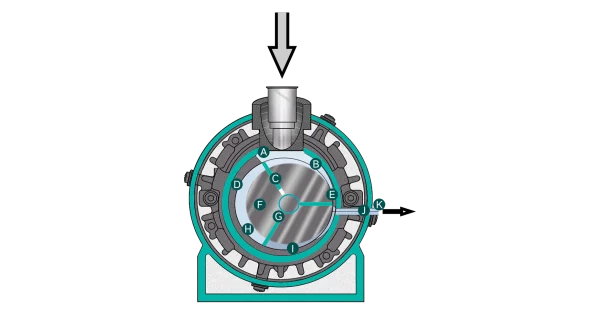
Oil-lubricated rotary vane vacuum pumps
Vanes slide in an eccentric rotor; oil lubricates, seals and cools. Single- and two-stage, for rough and medium vacuum.
- 256 models
- 7 manufacturers
- 0.75–1,800 m³/h at 50 Hz

Dry-running rotary vane vacuum pumps
The rotary vane principle without oil in the pumping chamber: the vanes run dry. For oil-free rough vacuum.
- 65 models
- 4 manufacturers
- 1.9–560 m³/h at 50 Hz
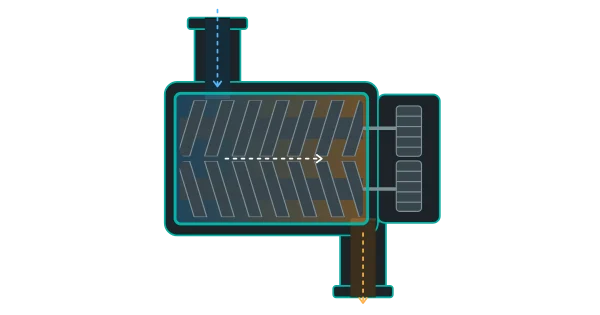
Screw vacuum pumps
Two counter-rotating screw rotors convey and compress the gas – dry-running or oil-injected.
- 163 models
- 6 manufacturers
- 63–7,385 m³/h at 50 Hz
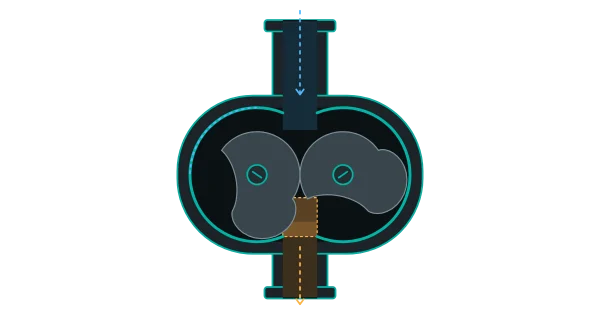
Claw vacuum pumps
Two claw rotors turn against each other without contact and compress the gas without oil in the pumping chamber.
- 77 models
- 6 manufacturers
- 18–1,560 m³/h at 50 Hz

Scroll vacuum pumps
An orbiting spiral circles inside a fixed one and compresses the gas towards the centre – dry and oil-free.
- 19 models
- 3 manufacturers
- 3–100 m³/h at 50 Hz
Roots vacuum pumps
Two Roots lobes move large gas volumes without contact; together with a backing pump for lower pressures.
- 134 models
- 6 manufacturers
- 14–44,300 m³/h at 50 Hz
Liquid ring vacuum pumps
An eccentric impeller forms a ring with the operating liquid that compresses the gas – for humid gases and gases containing vapour.
- 207 models
- 4 manufacturers
- 20–36,600 m³/h at 50 Hz
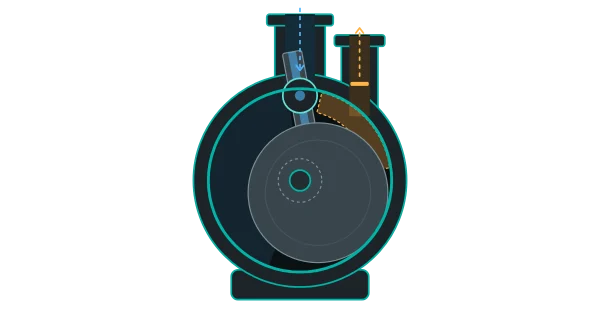
Rotary piston vacuum pumps
A piston runs on an eccentric in the cylinder and compresses the gas; oil-sealed, for rough and medium vacuum.
- 4 models
- 2 manufacturers
- 234–442 m³/h at 50 Hz
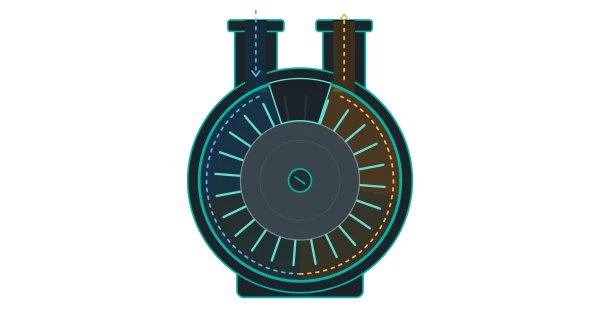
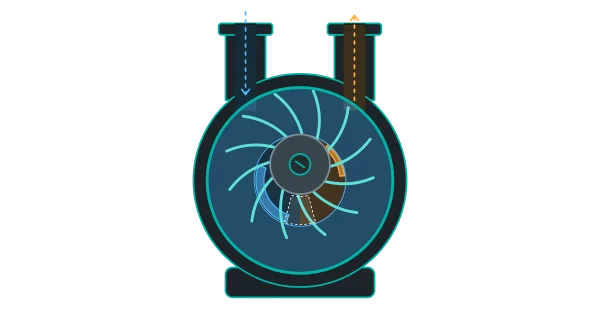
Side channel blowers
An impeller accelerates the gas in the side channel – for large volume flows at low pressure differences, for vacuum or pressure.
- 177 models
- 4 manufacturers
- 24–2,200 m³/h at 50 Hz
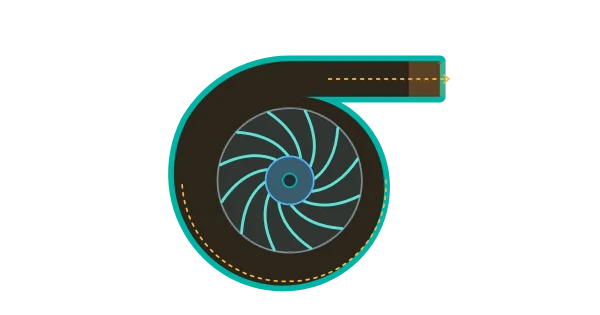
Radial blowers
A fast-turning impeller throws the gas outwards into the volute – for very large volume flows at small pressure differences.
- 3 models
- 2 manufacturers
- 1,570–2,500 m³/h at 50 Hz
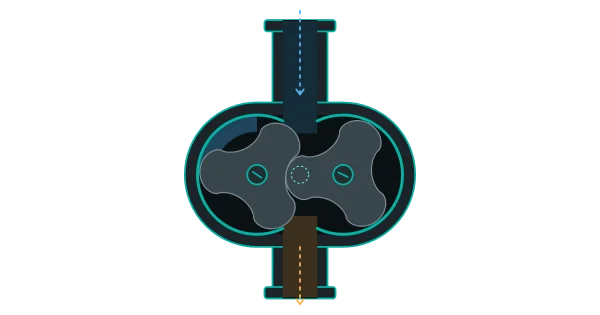
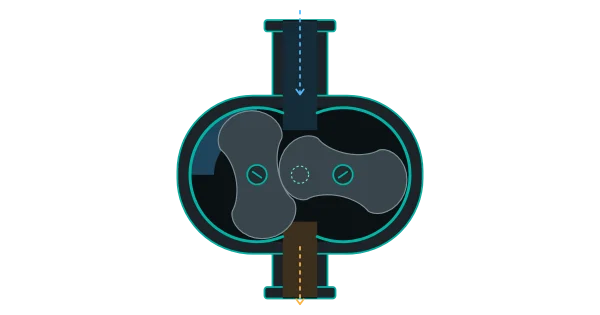
Rotary lobe blowers
Two rotary lobes convey the gas without internal compression – for vacuum or overpressure at large volume flows.
- 16 models
- 1 manufacturer
- 535–4,000 m³/h at 50 Hz
Pressure/vacuum pumps
Vacuum and overpressure
Pumps that produce both are in the section pressure/vacuum pumps:
Comparison
The technologies compared
Pumping speed and ultimate pressure from the data of all models of the technology; figures at 50 Hz.
| Technology | Models | Pumping speed | Ultimate pressure from | Pumping chamber |
|---|---|---|---|---|
| Oil-lubricated rotary vane vacuum pumps | 256 | 0.75–1,800 m³/h | 1 × 10⁻³ mbar | oil-lubricated |
| Dry-running rotary vane vacuum pumps | 65 | 1.9–560 m³/h | 100 mbar | dry |
| Screw vacuum pumps | 163 | 63–7,385 m³/h | 1 × 10⁻³ mbar | dry or oil-injected |
| Claw vacuum pumps | 77 | 18–1,560 m³/h | 6 × 10⁻³ mbar | dry |
| Scroll vacuum pumps | 19 | 3–100 m³/h | 6 × 10⁻³ mbar | dry |
| Roots vacuum pumps | 134 | 14–44,300 m³/h | with backing pump | dry |
| Liquid ring vacuum pumps | 207 | 20–36,600 m³/h | 25 mbar | with operating liquid |
| Rotary piston vacuum pumps | 4 | 234–442 m³/h | 0.033 mbar | oil-sealed |
| Side channel blowers | 177 | 24–2,200 m³/h | pressure difference | dry |
| Radial blowers | 3 | 1,570–2,500 m³/h | pressure difference | dry |
| Rotary lobe blowers | 16 | 535–4,000 m³/h | pressure difference | dry |
Selection
Which technology fits?
Which pressure?
Almost every technology covers rough vacuum. Medium vacuum is reached by oil-lubricated rotary vane, rotary piston, screw and scroll vacuum pumps and by some claw vacuum pumps; a Roots pump in front of the backing pump goes lower still.
Which gas?
If no oil may get into the gas or the exhaust, dry-running technologies are the choice. Liquid ring vacuum pumps suit humid gases and gases containing vapour.
How much volume?
Side channel, radial and rotary lobe blowers are built for large volume flows at low pressure differences. The comparison above shows the pumping speed of each technology.
Sizing depends on the process, the gas, the working pressure and the volume flow. We help with the selection: send an enquiry.
Frequently asked questions
Questions about vacuum pumps
Which vacuum pump technologies does Ehrler & Beck offer?
Eleven: oil-lubricated rotary vane vacuum pumps, dry-running rotary vane vacuum pumps, screw vacuum pumps, claw vacuum pumps, scroll vacuum pumps, Roots vacuum pumps, liquid ring vacuum pumps, rotary piston vacuum pumps, side channel blowers, radial blowers and rotary lobe blowers. In addition there are dry-running rotary vane and claw pumps for pressure and vacuum in the section pressure/vacuum pumps.
What is the difference between oil-lubricated and dry-running vacuum pumps?
In an oil-lubricated pump, oil lubricates, seals and cools the pumping chamber; this allows lower ultimate pressures but requires oil changes and, depending on the application, an exhaust filter. Dry-running pumps work without oil in the pumping chamber, so neither the gas nor the exhaust comes into contact with oil.
Which vacuum pump reaches the lowest ultimate pressure?
In our catalogue, oil-lubricated rotary vane vacuum pumps reach ultimate pressures from 1 × 10⁻³ mbar, screw vacuum pumps from 1 × 10⁻³ mbar and scroll vacuum pumps from 6 × 10⁻³ mbar. Roots vacuum pumps reach lower pressures still together with a suitable backing pump.
How do I find the right pump?
On the products page all models are in one list with filters for manufacturer, technology, ultimate pressure, pumping speed and rated motor power. For sizing, tell us the gas, the working pressure and the volume flow – we will be glad to advise you.
Does Ehrler & Beck also supply spare parts and service?
Yes. Ehrler & Beck supplies original spare parts and accessories and takes care of maintenance and repair.
Which model fits your process?
Tell us the gas to be conveyed, the working pressure and the volume flow you need – we will advise you on selection, spare parts and service.
