

Technology
Dry-running rotary vane pressure/vacuum pumps
Suction air and blast air from one machine – oil-free, with only one shaft and direct drive. 14 current models from Becker and Elmo Rietschle – comparable by flow rate and rated motor power.
Compare 14 modelsHow the technology works
- 14models
- 3series
- 2manufacturers
- 137 m³/hhighest pumping speed (50 Hz)
Touch the points: the parts explain themselves.
Manufacturers and series
Manufacturers and series
Each series leads to its page with all models. “Show only …” sets the filter of the product overview.
Becker
10 models · 10–137 m³/h
Elmo Rietschle
4 models · 58–135 m³/h
Product overview
Compare all 14 models
The filters on the left narrow down the selection by the key figures of the models – for 50 or 60 Hz.
Becker DVT series 4 models
 DVT 3.60Pumping speed 58 m³/h 50 Hz69 m³/h 60 HzRated motor power 2.2 – 3 kW 50 Hz2.6 – 3.6 kW 60 HzVariants 6DVT 3.80Pumping speed 70 m³/h 50 Hz82 m³/h 60 HzRated motor power Variants DVT 3.100Pumping speed 103 m³/h 50 Hz120 m³/h 60 HzRated motor power Variants
 DVT 3.140Pumping speed 137 m³/h 50 Hz160 m³/h 60 HzRated motor power Variants
Becker T series 6 models
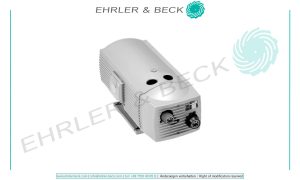 T 4.10 DVPumping speed 10 m³/h 50 Hz12 m³/h 60 HzRated motor power 0.37 kW 50 Hz0.44 – 0.45 kW 60 HzVariants 3T 4.16 DVPumping speed 16 m³/h 50 Hz20 m³/h 60 HzRated motor power 0.55 kW 50 Hz0.66 – 0.7 kW 60 HzVariants 4
 T 4.25 DSKPumping speed 25 m³/h 50 Hz30 m³/h 60 HzRated motor power 1.1 kW 50 Hz1.3 kW 60 HzVariants 4
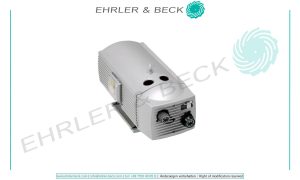 T 4.25 DVPumping speed 25 m³/h 50 Hz30 m³/h 60 HzRated motor power 0.75 – 0.8 kW 50 Hz0.9 – 1 kW 60 HzVariants 3T 4.40 DSKPumping speed 35 m³/h 50 Hz43 m³/h 60 HzRated motor power 1.7 – 1.85 kW 50 Hz1.95 – 2.2 kW 60 HzVariants 4T 4.40 DVPumping speed 35 m³/h 50 Hz43 m³/h 60 HzRated motor power 1.1 – 1.25 kW 50 Hz1.1 – 1.5 kW 60 HzVariants 2
Elmo Rietschle V-KTR series 4 models
V-KTR 61Pumping speed 58 m³/h 50 Hz69 m³/h 60 HzRated motor power 3 kW 50 Hz3.6 kW 60 HzVariants V-KTR 81Pumping speed 66 m³/h 50 Hz82 m³/h 60 HzRated motor power 4 kW 50 Hz4.8 kW 60 HzVariants V-KTR 101Pumping speed 98 m³/h 50 Hz118 m³/h 60 HzRated motor power 5.5 kW 50 Hz6.6 kW 60 HzVariants V-KTR 141Pumping speed 135 m³/h 50 Hz159 m³/h 60 HzRated motor power 7.5 kW 50 Hz9 kW 60 HzVariants No model matches these filters.
Becker DVT series 4 models
Becker T series 6 models
Elmo Rietschle V-KTR series 4 models
Models that a manufacturer no longer carries in its current range are not part of this overview; they are listed in the manufacturer’s “Outdated models” section.
Operating principle
How a rotary vane pressure/vacuum pump works
A rotor turns eccentrically in the bore of the housing. Vanes slide in its slots and are pressed against the wall by centrifugal force; between them, cells form that first grow and then shrink. In pressure/vacuum pumps the cell, which is only partly filled because of the vacuum, is topped up with air through a second inlet. In this way the same machine delivers vacuum on one side and blast air on the other.
The drawing shows the basic principle of the rotary vane pump; the second inlet of the pressure/vacuum pumps is not shown. The designs of the individual manufacturers differ in detail.
- SuctionThe air flows through the inlet port (A) and the inlet channel (B) into a cell (H) – this is the side on which the vacuum is created.
- Topping up and compressionThrough a second inlet the cell, which is only partly filled, is topped up with air; it then shrinks and compresses the air.
- Blowing outThe compressed air leaves the pump through the discharge channel (J) as blast air.
Key figures
The technology in figures
The ranges result from the current models in our range.
Pumping speed (50 Hz)
10 to 137 m³/hin our range
Rated motor power (50 Hz)
0.37 to 7.5 kWin our range
Vacuum and overpressure instead of ultimate pressure
Pressure/vacuum pumps suck and blow at the same time. The manufacturers therefore state the vacuum and the overpressure that are reached in combined operation. Both values are given in the technical data of the models.
What characterises the technology
Two inlets
The ratio between the vacuum volume flow and the pressure volume flow can be determined by the position of the two inlet channels.
Oil-free
The pumps work completely oil-free; the working chambers are separated by vanes with a long service life.
Regulating valves
A vacuum regulating valve and a pressure regulating valve set the operating points on both sides; the intake filter is built in.
Simple design
One shaft and a direct drive – this results in robust, durable pumps with low maintenance and operating costs.
Advantages
What speaks for this technology
- Suction air and blast air from one machine
- Oil-free
- Robust and durable
- Low maintenance and operating costs
- Intake filter and regulating valves built in
- Accessories easy to fit
Applications
Where they work
- Suction air and blast air at oncefor machines and systems that need vacuum and blast air at the same time
- One machine instead of twoin place of a separate vacuum pump and a separate compressor
- Humid airwith optional corrosion protection, also for extracting humid air
Frequently asked questions
Questions about rotary vane pressure/vacuum pumps
How does a rotary vane pressure/vacuum pump work?
It works like a dry-running rotary vane pump: an eccentrically mounted rotor with vanes forms cells that draw in and compress air. Through a second inlet the cell is additionally topped up with air – so the machine delivers vacuum and blast air at the same time. The drawing in the section Operating principle shows the basic principle.
How does it differ from a rotary vane vacuum pump?
A dry-running rotary vane vacuum pump delivers vacuum only. The pressure/vacuum pump additionally provides blast air; each side has its own regulating valve.
Why is no ultimate pressure given here?
Because the pumps suck and blow at the same time: the manufacturers state the vacuum and the overpressure in combined operation. Both values are given in the technical data of each model.
From which manufacturers does Ehrler & Beck carry this technology?
Currently from Becker and Elmo Rietschle. The series are listed in the section Manufacturers and series.
How do I find the right model?
In the product overview, the filters narrow down the selection by the key figures of the models. For sizing, it is best to tell us the gas to be conveyed, the working pressure and the flow rate you need – we will be glad to advise you.
What do the figures for 50 Hz and 60 Hz mean?
Flow rate and rated motor power depend on the mains frequency. The overview therefore shows both values wherever the manufacturer states them, and the size filters can be switched between 50 Hz and 60 Hz.
Does Ehrler & Beck also supply spare parts and service?
Yes. Ehrler & Beck offers original spare parts and accessories as well as maintenance and repair.
Which model fits your process?
Tell us the gas to be conveyed, the working pressure and the flow rate you need – we will advise you on selection, spare parts and service.
