

Technology
Side channel blowers
Compressing without contact and practically maintenance-free – usable as a vacuum pump or as a compressor. 177 current models from 4 manufacturers – comparable by flow rate and rated motor power.
Compare 177 modelsHow the technology works
- 177models
- 13series
- 4manufacturers
- 2,200 m³/hhighest pumping speed (50 Hz)
Touch the points: the parts explain themselves.
Manufacturers and series
4 manufacturers, 13 series
Each series leads to its page with all models. “Show only …” sets the filter of the product overview.
Atlas Copco
64 models · 65–2,050 m³/h
Becker
31 models · 24–1,180 m³/h
Busch
31 models · 40–2,200 m³/h
Elmo Rietschle
51 models · 35 m³/h
Product overview
Compare all 177 models
The filters on the left narrow down the selection by the key figures of the models – for 50 or 60 Hz.
Atlas Copco DBD series 6 models
 DBD 90Pumping speed 91 m³/h 50 Hz110 m³/h 60 HzUltimate pressure 650 – 700 mbarRated motor power 1.1 – 1.5 kW 50 Hz1.3 – 1.7 kW 60 HzVariants 2
Atlas Copco DBDt series 17 models
 DBDt 140Pumping speed 139 m³/h 50 Hz168 m³/h 60 HzUltimate pressure 700 mbarRated motor power 2.2 kW 50 Hz2.6 kW 60 HzVariants 1
Atlas Copco DBS series 29 models
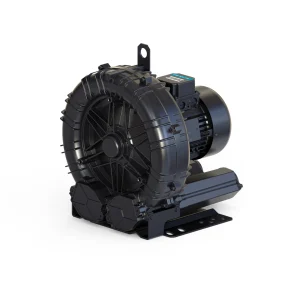 DBS 70Pumping speed 74 m³/h 50 Hz89 m³/h 60 HzUltimate pressure 850 – 900 mbarRated motor power 0.37 – 0.55 kW 50 Hz0.42 – 0.65 kW 60 HzVariants 2
Atlas Copco DBSt series 12 models
Becker SV series 16 models
Becker VARIAIR SV series 9 models
Becker VASF series 6 models
Busch SAMOS series 31 models
Elmo Rietschle G-BH1 series 25 models
Elmo Rietschle G-BH2 series 9 models
Elmo Rietschle G-BH7 series 15 models
Elmo Rietschle G-BH9 series 1 model
Elmo Rietschle G-BH100 series 1 model
No model matches these filters.
Atlas Copco DBD series 6 models
Atlas Copco DBDt series 17 models
Atlas Copco DBS series 29 models
Atlas Copco DBSt series 12 models
Becker SV series 16 models
Becker VARIAIR SV series 9 models
Becker VASF series 6 models
Busch SAMOS series 31 models
Elmo Rietschle G-BH1 series 25 models
Elmo Rietschle G-BH2 series 9 models
Elmo Rietschle G-BH7 series 15 models
Elmo Rietschle G-BH9 series 1 model
Elmo Rietschle G-BH100 series 1 model
Models that a manufacturer no longer carries in its current range are not part of this overview; they are listed in the manufacturer’s “Outdated models” section.
Operating principle
How a side channel blower works
The impeller turns in the housing without contact. Its blades accelerate the gas in the side channel in the direction of rotation and, by centrifugal force, outwards. The gas enters the impeller again and again and takes up energy each time – so the pressure rises along the channel from the inlet to the outlet.
The drawing shows the basic principle. The designs of the individual manufacturers differ in detail.
- EntryThe gas enters the side channel (B) through the intake channel (A).
- Pressure build-upThe blades of the impeller (C) accelerate the gas again and again – the pressure rises with every pass.
- ExitAt the interrupter (D) the gas is stripped off the impeller and leaves the blower through the outlet port (E).
Key figures
The technology in figures
The ranges result from the current models in our range.
Pumping speed (50 Hz)
24 to 2,200 m³/hin our range
Rated motor power (50 Hz)
0.2 to 25.3 kWin our range
Pressure difference instead of ultimate pressure
For side channel blowers the manufacturers do not state an ultimate pressure but the maximum permissible pressure difference – separately for vacuum operation and pressure operation. It is given in the technical data of the models.
What characterises the technology
Contact-free compression
The impeller does not touch the housing. In some designs it sits directly on the motor shaft.
Vacuum or pressure
The same machine works as a vacuum pump or as a compressor – depending on which side the process is connected to.
Bearings outside
The bearings lie outside the compression chamber. This benefits operational reliability and service life, even at high pressure differences.
Speed control
The speed can be controlled by an external or integrated frequency converter.
Advantages
What speaks for this technology
- Low noise
- Practically maintenance-free
- Reliable and durable
- Robust and lightweight
- Can be installed with the shaft in any position
- Versions for 50 and 60 Hz
- Speed control via frequency converter
- ATEX versions, depending on the series
Applications
Where they work
- Environmental technologyaeration of sewage treatment plants, pond aeration, soil remediation, drying of buildings
- Conveying and handlingpneumatic conveying, lifting and holding, filling of bags, bottles and silos
- Paper and printingpaper processing, sorting of letters and envelope inserting, laser printers
- Industryindustrial vacuum cleaners, plastics industry, textile industry, packaging industry
- Central vacuum systems
- Further applicationsdental suction, gas analysis, degassing of foodstuffs
Frequently asked questions
Questions about side channel blowers
How does a side channel blower work?
An impeller with many blades turns in the housing without contact. The blades accelerate the gas in the side channel again and again; the pressure rises with every pass. At the interrupter the gas is stripped off the impeller and leaves the blower. The drawing in the section Operating principle shows every step.
Vacuum pump, compressor or blower – which is correct?
All three: depending on the manufacturer, the design is called a side channel blower, a side channel compressor or a side channel vacuum pump. The machine generates negative pressure or overpressure – depending on which side the process is connected to.
Why is no ultimate pressure given for side channel blowers?
Because for this design the manufacturers state the maximum permissible pressure difference, separately for vacuum operation and pressure operation. It is given in the technical data of each model.
From which manufacturers does Ehrler & Beck carry this technology?
Currently from Atlas Copco, Becker, Busch and Elmo Rietschle. The series are listed in the section Manufacturers and series.
How do I find the right model?
In the product overview, the filters narrow down the selection by the key figures of the models. For sizing, it is best to tell us the gas to be conveyed, the working pressure and the flow rate you need – we will be glad to advise you.
What do the figures for 50 Hz and 60 Hz mean?
Flow rate and rated motor power depend on the mains frequency. The overview therefore shows both values wherever the manufacturer states them, and the size filters can be switched between 50 Hz and 60 Hz.
Does Ehrler & Beck also supply spare parts and service?
Yes. Ehrler & Beck offers original spare parts and accessories as well as maintenance and repair.
Which model fits your process?
Tell us the gas to be conveyed, the working pressure and the flow rate you need – we will advise you on selection, spare parts and service.
