

Industry
Vacuum pumps for solar and photovoltaics
From crystal growing via wafers, coating and load locks to module lamination: Atlas Copco names vacuum from wafer production to module encapsulation, Leybold in almost every production step – wafers, thin film, heterojunction. This page is part of the Energy industry. Below you can see which series the manufacturers themselves name for these tasks – 354 models from 5 manufacturers.
Compare 354 modelsSee the applications
- 354Models
- 26Series
- 5Manufacturers
- 4Applications

In short
Solar and photovoltaics: vacuum pumps – the key facts
- LaminationFor the laminator, which draws the air out of the module, Atlas Copco names approx. 200 mbar(a) and the DWS VSD+ and DZS 100–400 VSD+ A series.
- CoatingPfeiffer Vacuum names 10⁻³ to 10⁻⁶ hPa for PVD layers and 10⁻³ to 10⁻⁵ hPa for crystalline silicon – carbon-free high vacuum for PVD and PECVD.
- Pumping speedFor the solar industry, Leybold names RUVAC with 250–7,000 m³/h, plus SCREWLINE SP 630, DRYVAC, CLAWVAC, VARODRY, SOGEVAC, TRIVAC PFPE and PowerBoost.
- Dry or oil-lubricatedFor crystal growing and casting, Atlas Copco names dry, dust- and corrosion-resistant vacuum pumps; for solar cell production, Pfeiffer Vacuum names dry and oil-lubricated pumps.
Applications
Solar and photovoltaics: what vacuum pumps are used for
For each application: what the vacuum does and which series the manufacturers name for it. The information comes from the manufacturers’ own pages.
Crystal growing and ingots
When Si and SiC crystals are pulled and grown, the vacuum keeps the process chamber free of contamination (Busch) and creates a low-gas environment for pure silicon (Atlas Copco). For this, Atlas Copco names dry, dust- and corrosion-resistant pumps and DWS VSD+; Busch COBRA and PANDA; Leybold DRYVAC, PowerBoost, SCREWLINE SP, VARODRY and TRIVAC B; Pfeiffer Vacuum COBRA DS and COMBI at 10⁻³ to 10⁻⁵ hPa. Edwards names Si ingot growing with GXS, EDS and EXS.
- Atlas CopcoDWS VSD+
- BuschCOBRA Industry, PANDA/PUMA, COBRA Semicon
- EdwardsGXS, EDS, EXS names Si ingot growing in its industry statement
- LeyboldTRIVAC, DRYVAC, SCREWLINE
- Pfeiffer VacuumCOBRA Semicon also names COMBI
Coating: PVD, PECVD and thin film
Anti-reflective layers are produced by CVD/PECVD (Busch, COBRA DS); according to Leybold, TCO layers by PVD, CIGS and CdTe layers and CVD in heterojunction run in inline systems with short cycles – POWERBOOST, DRYVAC and RUVAC are named. Atlas Copco names sputtering, CVD and PVD, encapsulation against oxygen and moisture and, for thin-film and hard coating, DWS and DWS VSD+. Pfeiffer Vacuum names carbon-free high vacuum for PVD and PECVD with A4 and COBRA DS, Edwards solar cell production for c-Si, CdTe and CIGS cells.
- Atlas CopcoDWS, DWS VSD+
- BuschCOBRA Semicon, COBRA Industry, PANDA/PUMA
- EdwardsGXS, EDS, EXS names thin film (c-Si, CdTe, CIGS) in its industry statement
- LeyboldDRYVAC, RUVAC WA/WAU, RUVAC WS/WSU, RUVAC WH/WHU
- Pfeiffer VacuumA4, COBRA Semicon
Load lock chambers and locks
According to Busch, the wafers are transferred in through the load lock chamber without a pressure surge; Busch names COBRA (NX, DS, NC), PANDA WV and PUMA WY. Edwards names load locks in solar cell production with GXS, EDS and EXS. For solar cell coating, Leybold describes inline systems with short cycles.
- BuschCOBRA Industry, PANDA/PUMA, COBRA Semicon
- EdwardsGXS, EDS, EXS names load locks in its industry statement
Module lamination and encapsulation
The laminator draws the air out of the module; for this, Atlas Copco names approx. 200 mbar(a) and DWS VSD+ as well as DZS 100–400 VSD+ A. Leybold describes how the vacuum degasses the polymer when the module is bonded, so that no bubbles form, and names SCREWLINE SP 630, DRYVAC, CLAWVAC and RUVAC WSU 2001. For bonding the layers into a module, Busch names COBRA (DS, NC, NX), PANDA WV and MINK MM; Atlas Copco also names encapsulation against oxygen and moisture.
- Atlas CopcoDWS VSD+, DZS VSD+
- BuschCOBRA Industry, PANDA/PUMA, MINK
- LeyboldSCREWLINE, DRYVAC, CLAWVAC, RUVAC WS/WSU
- Pfeiffer Vacuumlists lamination only for its leak detectors
Manufacturers and series
Solar and photovoltaics: 5 manufacturers, 26 series
Listed are the series the manufacturer itself names for this industry. “Show only …” sets the filter of the product overview.
Atlas Copco
55 models · 0.75–5,136 m³/h
Busch
174 models · 3–12,000 m³/h
Edwards
24 models · 160–5,760 m³/h
Leybold
89 models · 2.7–4,700 m³/h
Pfeiffer Vacuum
12 models · 95–1,650 m³/h
Product overview
Solar and photovoltaics: all 354 models compared
Use the filters on the left to narrow the selection – by manufacturer, technology and the models’ key figures, for 50 or 60 Hz.
Atlas Copco DWS series 3 models
Atlas Copco DWS VSD+ series 6 models
Atlas Copco DZS VSD+ series 5 models
 DZS 100 VSD+Pumping speed 105 m³/h 50 Hz105 m³/h 60 HzUltimate pressure 50 mbarRated motor power 3 kW 50 Hz3 kW 60 HzVariants 3
Atlas Copco GHS VSD+ series 21 models
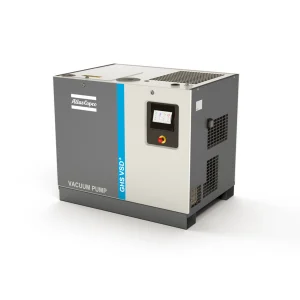 GHS 350 VSD+Pumping speed 400 m³/h 50 Hz400 m³/h 60 HzUltimate pressure 0.35 mbarRated motor power 5.5 kW 50 Hz5.5 kW 60 HzVariants 29
Atlas Copco GLS series 2 models
Atlas Copco GVD series 13 models
Atlas Copco ZRS series 5 models
Busch COBRA Industry series 36 models
Busch COBRA Semicon series 22 models
Busch MINK series 32 models
Busch PANDA/PUMA series 26 models
Busch R5 series 58 models
Edwards EDS series 3 models
Edwards EXS series 11 models
Edwards GXS series 10 models
Leybold CLAWVAC series 5 models
Leybold DRYVAC series 9 models
Leybold DURADRY series 3 models
Leybold NOVADRY series 4 models
Leybold RUVAC WA/WAU series 8 models
Leybold RUVAC WH/WHU series 7 models
Leybold RUVAC WS/WSU series 8 models
Leybold SCREWLINE series 2 models
Leybold SOGEVAC series 23 models
Leybold TRIVAC series 20 models
Pfeiffer Vacuum A4 series 12 models
No model matches these filters.
Atlas Copco DWS series 3 models
Atlas Copco DWS VSD+ series 6 models
Atlas Copco DZS VSD+ series 5 models
Atlas Copco GHS VSD+ series 21 models
Atlas Copco GLS series 2 models
Atlas Copco GVD series 13 models
Atlas Copco ZRS series 5 models
Busch COBRA Industry series 36 models
Busch COBRA Semicon series 22 models
Busch MINK series 32 models
Busch PANDA/PUMA series 26 models
Busch R5 series 58 models
Edwards EDS series 3 models
Edwards EXS series 11 models
Edwards GXS series 10 models
Leybold CLAWVAC series 5 models
Leybold DRYVAC series 9 models
Leybold DURADRY series 3 models
Leybold NOVADRY series 4 models
Leybold RUVAC WA/WAU series 8 models
Leybold RUVAC WH/WHU series 7 models
Leybold RUVAC WS/WSU series 8 models
Leybold SCREWLINE series 2 models
Leybold SOGEVAC series 23 models
Leybold TRIVAC series 20 models
Pfeiffer Vacuum A4 series 12 models
Models a manufacturer no longer carries in its current range are listed in its “Outdated models” section.
Selection
Solar and photovoltaics: choosing a vacuum pump
What the manufacturers highlight for use in this industry.
Dust and corrosion
For crystal growing and casting, Atlas Copco names dry vacuum pumps that are dust- and corrosion-resistant. Check what gets from the process into the pump before you decide on the design.
Purity of the layer
Pfeiffer Vacuum names carbon-free high vacuum for PVD and PECVD, Busch describes a process chamber free of contamination in crystal pulling, Atlas Copco a low-gas environment for pure silicon. The pump itself must not contaminate the process.
Cycle time and load locks
Busch names transfer through the lock without a pressure surge, Leybold inline systems with short cycles. For glass coating, Leybold names 2–3 cycles per minute from 1,000 to 1 mbar and operation at 10⁻² to 10⁻³ mbar – a yardstick for what a load lock pump has to achieve.
Bubble-free lamination
Leybold describes how the vacuum degasses the polymer when the module is bonded, so that no bubbles form; for the laminator, Atlas Copco names approx. 200 mbar(a). Rough vacuum is enough here, but the pump must reach it reliably and repeatably.
Frequently asked questions
Solar and photovoltaics: frequently asked questions about vacuum pumps
Which vacuum pump for laminating solar modules?
For PV lamination, Atlas Copco names DWS VSD+ and DZS 100–400 VSD+ A, Leybold SCREWLINE SP 630, DRYVAC, CLAWVAC and RUVAC WSU 2001, Busch COBRA (DS, NC, NX), PANDA WV and MINK MM. The laminator draws the air out of the module, and the vacuum degasses the polymer during bonding so that no bubbles remain.
How much vacuum does a solar laminator need?
Atlas Copco names approx. 200 mbar(a) for the laminator, which draws the air out of the module. Leybold describes the same task as degassing the polymer when the module is bonded.
Which vacuum pump for PVD and PECVD coating of solar cells?
Pfeiffer Vacuum names carbon-free high vacuum for PVD and PECVD layers with A4 and COBRA DS. For the CVD/PECVD anti-reflective layer, Busch names COBRA DS, and for PVD COBRA (NX, DS), PANDA WV and PUMA WY. For TCO by PVD, CIGS/CdTe and CVD in heterojunction, Leybold names POWERBOOST, DRYVAC and RUVAC, Atlas Copco DWS and DWS VSD+ for thin-film and hard coating.
What pressure is needed for PVD coating?
Pfeiffer Vacuum names 10⁻³ to 10⁻⁶ hPa for PVD layers. For optical coatings by PVD, Leybold names operation at 10⁻² to 10⁻³ mbar, and 10⁻² to 10⁻⁶ mbar for wear-protection and decorative coatings; Atlas Copco speaks of high vacuum for vacuum coating in general.
Which vacuum pump for pulling silicon crystals?
For crystal growing and casting, Atlas Copco names dry, dust- and corrosion-resistant vacuum pumps, and DWS VSD+ for silicon crystal pulling. For Si and SiC crystals, Busch names COBRA and PANDA, Leybold DRYVAC, PowerBoost, SCREWLINE SP, VARODRY and TRIVAC B. Pfeiffer Vacuum names COBRA DS and COMBI, and 10⁻³ to 10⁻⁵ hPa for crystalline silicon.
Dry or oil-lubricated vacuum pump in solar production?
For solar cell production, Pfeiffer Vacuum names both, dry and oil-lubricated pumps. For crystal growing, Atlas Copco explicitly names dry, dust- and corrosion-resistant pumps. For the solar industry, Leybold names SCREWLINE SP 630, DRYVAC, VARODRY, CLAWVAC, SOGEVAC and TRIVAC PFPE without distinguishing by design.
Which vacuum pump for load lock chambers?
Busch describes how the wafers are transferred in through the load lock chamber without a pressure surge, and names COBRA (NX, DS, NC), PANDA WV and PUMA WY. Edwards names the load locks in solar cell production with GXS, EDS and EXS.
Which pumps does Leybold name for the solar industry?
PowerBoost, SCREWLINE SP 630, DRYVAC, RUVAC with 250–7,000 m³/h, CLAWVAC, VARODRY, SOGEVAC, TRIVAC PFPE and PHOENIX – for wafers, thin film and heterojunction. For solar lamination, Leybold names SCREWLINE SP 630, DRYVAC, CLAWVAC and RUVAC WSU 2001, for solar cell coating POWERBOOST, DRYVAC and RUVAC.
Which vacuum pump for thin-film modules (CdTe, CIGS)?
Edwards names solar cell production for c-Si, CdTe and CIGS cells, from Si ingot growing to thin film, with GXS, EDS and EXS. Leybold names CIGS and CdTe layers in inline systems with short cycles and, for them, POWERBOOST, DRYVAC and RUVAC; Atlas Copco names DWS for thin-film coating.
Does Ehrler & Beck also supply spare parts and service?
Yes. Ehrler & Beck offers original spare parts and accessories as well as maintenance and repair.
Which pump suits your process?
Tell us the application, the medium and the number of machines – we advise you on selection, spare parts and service.
