

Application
Vacuum pumps for laminating, pressing and composites
In laminating and pressing under vacuum, the air between the membrane or film and the workpiece is extracted; the air pressure presses veneer, decorative film or the layers of a solar module on evenly, and air trapped in the adhesive or resin is removed. In composites, the same vacuum draws the resin through the fibre layers and compacts the laminate during curing. Below you can see how the application works, what vacuum the manufacturers name and which of their series are intended for it – 254 models from 4 manufacturers.
Compare 254 modelsHow it works
- 254Models
- 16Series
- 4Manufacturers
- approx. 200 mbar(a)Laminator for solar modules (Atlas Copco)
Touch the points: each part of the system explains itself.
In short
Laminating, pressing and composites: the key facts
- Contact pressureBecker and Elmo Rietschle name the even contact pressure for veneer and film as the task of the vacuum; for this, Becker names a deep, stable ultimate vacuum and the series U5, KVT and VT for furniture and door making.
- Which vacuumFor the solar module laminator, Atlas Copco names approx. 200 mbar(a); Becker gives 1 to ≤ 0.1 mbar for U5 and 100–150 mbar for KVT/VT.
- Solar modulesAccording to Leybold, the vacuum degasses the polymer when the module is bonded and prevents bubbles (SCREWLINE SP 630, DRYVAC, CLAWVAC, RUVAC WSU 2001); for bonding the layers into the module, Busch names COBRA, PANDA WV, MINK MM and R5; Atlas Copco names DWS VSD+ and DZS VSD+.
- CompositesLeybold: vacuum compacts laminates and removes trapped air – in vacuum bagging, in vacuum infusion and in resin injection (RTM). In rotor blade production, Busch describes how resin is drawn through the layers under the film (MINK, R5); Edwards names wet and dry pump carts that draw resin into the fibres.
Operating principle
How it works: Laminating, pressing and composites
The drawing shows the basic principle in section. The systems and pumps of the individual manufacturers differ in detail.
- Lay-upVeneer, film or the fibre layers are placed on the mould or plate and covered with a membrane, vacuum bag or cover film.
- EvacuationThe air under the membrane or bag is extracted; the air pressure presses evenly (Becker, Elmo Rietschle). Atlas Copco names approx. 200 mbar(a) in the laminator, Becker 100–150 mbar for KVT/VT and down to ≤ 0.1 mbar for U5.
- CuringGlue, resin or composite film cure under vacuum and heat; Leybold describes the compaction and de-aeration of the laminate during curing. The press is then vented and the part removed.
Vacuum and sizing
Laminating, pressing and composites: how much vacuum is needed
What the manufacturers say about pressure, pumping speed and sizing.
Which vacuum
For the solar module laminator, Atlas Copco names approx. 200 mbar(a). Becker names 1 to ≤ 0.1 mbar for U5 and 100–150 mbar for KVT/VT.
Which pumping speed
Becker names U5 with 40–120 m³/h and KVT/VT with 25–145 m³/h for laminating, coating and membrane pressing.
What determines the sizing
For even contact pressure, Becker names a deep, stable ultimate vacuum. According to Leybold, vacuum infusion involves evacuating, infusing resin and compacting under controlled pressure; in RTM, air and moisture are removed so that the mould is filled without bubbles.
What the manufacturers point out
For solar lamination, Leybold names SCREWLINE SP 630, DRYVAC, CLAWVAC and RUVAC WSU 2001, for composites SOGEVAC B, CLAWVAC B and VARODRY; NOVADRY and CLAWVAC are only listed for 3D laminating presses and for bonding/pressing. For the resin infusion of rotor blades, Edwards names wet and dry pump carts; Pfeiffer Vacuum lists laminating in its product finder without a description.
Technology
Laminating, pressing and composites: the vacuum pumps the manufacturers name
Listed are the series the manufacturer itself names for this application. “Show only …” sets the filter of the product overview.
Oil-lubricated rotary vane vacuum pumps
89 models · 3–1,800 m³/h
Screw vacuum pumps
78 models · 63–5,136 m³/h
Claw vacuum pumps
42 models · 18–1,150 m³/h
Roots vacuum pumps
34 models · 210–12,000 m³/h
Dry-running rotary vane vacuum pumps
11 models · 1.9–129 m³/h
Edwards names the application without naming a series for it. Elmo Rietschle names the application without naming a series for it. Pfeiffer Vacuum names the application without naming a series for it.
Product overview
Laminating, pressing and composites: all 254 models compared
Use the filters on the left to narrow the selection – by manufacturer, technology and the models’ key figures, for 50 or 60 Hz.
Atlas Copco DWS VSD+ series 6 models
Atlas Copco DZS VSD+ series 5 models
 DZS 100 VSD+Pumping speed 105 m³/h 50 Hz105 m³/h 60 HzUltimate pressure 50 mbarRated motor power 3 kW 50 Hz3 kW 60 HzVariants 3
Atlas Copco GHS VSD+ series 21 models
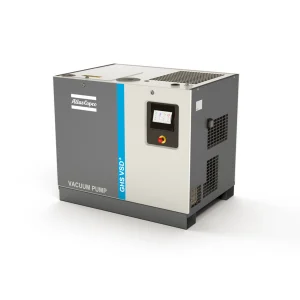 GHS 350 VSD+Pumping speed 400 m³/h 50 Hz400 m³/h 60 HzUltimate pressure 0.35 mbarRated motor power 5.5 kW 50 Hz5.5 kW 60 HzVariants 29
Becker KVT series 4 models
Becker U series 8 models
Becker VT series 7 models
Busch COBRA Industry series 36 models
Busch MINK series 32 models
Busch PANDA/PUMA series 26 models
Busch R5 series 58 models
Leybold CLAWVAC series 5 models
Leybold DRYVAC series 9 models
Leybold NOVADRY series 4 models
Leybold RUVAC WS/WSU series 8 models
Leybold SCREWLINE series 2 models
Leybold SOGEVAC series 23 models
No model matches these filters.
Atlas Copco DWS VSD+ series 6 models
Atlas Copco DZS VSD+ series 5 models
Atlas Copco GHS VSD+ series 21 models
Becker KVT series 4 models
Becker U series 8 models
Becker VT series 7 models
Busch COBRA Industry series 36 models
Busch MINK series 32 models
Busch PANDA/PUMA series 26 models
Busch R5 series 58 models
Leybold CLAWVAC series 5 models
Leybold DRYVAC series 9 models
Leybold NOVADRY series 4 models
Leybold RUVAC WS/WSU series 8 models
Leybold SCREWLINE series 2 models
Leybold SOGEVAC series 23 models
Models a manufacturer no longer carries in its current range are listed in its “Outdated models” section.
Industries
Laminating, pressing and composites: where the manufacturers name it
The manufacturers list these uses on their own pages.
Woodworking
Becker names laminating, coating and membrane pressing in furniture and door making with U5, KVT and VT; Busch names R5 for laminating presses that press veneers firmly onto panels; Elmo Rietschle names the even contact pressure in laminating and veneering; Leybold lists NOVADRY for 3D laminating presses and CLAWVAC and NOVADRY for bonding and pressing; Atlas Copco names GHS VSD+ for wood lamination.
Solar and photovoltaics
Atlas Copco describes the laminator, which draws the air out of the module, with approx. 200 mbar(a) and names DWS VSD+ and DZS VSD+; for bonding the layers into the module, Busch names COBRA, PANDA WV, MINK MM and R5; according to Leybold, the vacuum degasses the polymer during bonding to prevent bubbles (SCREWLINE, DRYVAC, CLAWVAC, RUVAC WSU 2001); Pfeiffer Vacuum lists laminating without a description.
Plastics and recycling
For resin transfer moulding (RTM) and vacuum bagging, Busch names MINK and R5; Leybold describes how vacuum compacts laminates and removes trapped air (SOGEVAC B, CLAWVAC B, VARODRY); Edwards lists bagging, infusion, VARTM and pultrusion for composites without a description.
Energy
In rotor blade production, according to Busch, the resin is drawn through the layers under the film (MINK, R5); Edwards names wet and dry pump carts that draw the resin into the fibres; Elmo Rietschle names the vacuum in the laminating cycle of solar modules.
Glass, ceramics and stone
For pressing and forming stone, Atlas Copco describes vibrating under vacuum, evacuating the press and holding the stone on the cutting table; as a contaminant, Atlas Copco names styrene.
Environmental and wastewater
Elmo Rietschle also lists solar module lamination under environmental technology: the vacuum works in the laminating cycle.
Frequently asked questions
Laminating, pressing and composites: frequently asked questions
How does a vacuum membrane press work?
The workpiece with veneer or film lies on the mould, with a membrane above it. The air underneath is extracted, and the air pressure presses the membrane with the veneer evenly onto every contour – Becker and Elmo Rietschle name this even contact pressure as the task of the vacuum. For this, Becker names a deep, stable ultimate vacuum and the series U5, KVT and VT.
Which vacuum pump for membrane presses and laminating presses?
For laminating, coating and membrane pressing, Becker names U5 (40–120 m³/h), KVT and VT (25–145 m³/h). Busch names R5 for laminating presses, Atlas Copco GHS VSD+ for wood lamination, and Leybold lists NOVADRY for 3D laminating presses as well as CLAWVAC and NOVADRY for bonding and pressing.
How much vacuum is needed for laminating?
For the solar module laminator, Atlas Copco names approx. 200 mbar(a). Becker gives 100–150 mbar for KVT/VT and 1 to ≤ 0.1 mbar for U5. For vacuum infusion, Leybold speaks of controlled pressure.
Oil-free or oil-lubricated for laminating?
Both are named. Becker lists the oil-lubricated U5 alongside the dry-running rotary vane vacuum pumps KVT and VT, Busch the oil-lubricated R5 alongside the dry MINK (claw) and COBRA (screw). For solar lamination, Leybold names the dry SCREWLINE, DRYVAC and CLAWVAC, and for composites also SOGEVAC B; for solar modules, Atlas Copco names the dry DWS VSD+ and DZS VSD+, and for wood the oil-lubricated screw vacuum pump GHS VSD+.
Which vacuum pump for laminating solar modules?
Atlas Copco names DWS VSD+ and DZS 100–400 VSD+ A at approx. 200 mbar(a), Busch COBRA (DS, NC, NX), PANDA WV, MINK MM and R5, Leybold SCREWLINE SP 630, DRYVAC, CLAWVAC and RUVAC WSU 2001. According to Leybold, the vacuum degasses the polymer when the module is bonded, so that no bubbles form; Busch describes the bonding of the layers into the module.
How does vacuum bagging work?
The fibre layers lie on the mould, a film over them is sealed and the space underneath is evacuated. Leybold describes the compaction and de-aeration of the laminate during curing; according to Leybold, vacuum infusion involves evacuating, infusing resin and compacting under controlled pressure. Busch names MINK and R5 for vacuum bagging.
Which vacuum pump for resin infusion and RTM?
Busch names MINK and R5 for resin transfer moulding (RTM), and likewise for rotor blade production by vacuum bagging, in which, according to Busch, the resin is drawn through the layers under the film. Edwards names wet and dry pump carts for the resin infusion of rotor blades. For resin injection (RTM), Leybold describes that air and moisture are removed so that the mould is filled without bubbles, and names SOGEVAC B, CLAWVAC B and VARODRY for composites.
Why do bubbles form when laminating, and how does vacuum help?
Air that remains between the layers or in the adhesive shows up as a bubble after curing. According to Leybold, the vacuum compacts the laminate and removes trapped air; in the solar module, it degasses the polymer during bonding. For RTM, Leybold names the removal of air and moisture before the mould is filled.
What pumping speed does a membrane press need?
For laminating, coating and membrane pressing, Becker names U5 with 40–120 m³/h and KVT/VT with 25–145 m³/h.
Can stone be pressed under vacuum?
Yes. In stone processing, Atlas Copco describes vibrating under vacuum, evacuating the press and holding the stone on the cutting table; as a contaminant for the pump, Atlas Copco names styrene.
A single pump or a central vacuum system?
A central system in a room of its own keeps noise and heat away from production and matches its output to the demand. Central vacuum systems are planned and built by Eugen Theis Vakuum, a company of the Ehrler & Beck group – more under Central Vacuum.
Does Ehrler & Beck also supply spare parts and service?
Yes. Ehrler & Beck offers original spare parts and accessories as well as maintenance and repair.
Which pump suits your process?
Tell us the application, the medium and the volume – we advise you on selection, spare parts and service.
