

Industry
Vacuum pumps for woodworking
Vacuum clamps panels on CNC machines, lifts and feeds them, presses veneers, dries and impregnates wood and extracts sawdust. Below you can see which series the manufacturers themselves name for these tasks – 462 models from 6 manufacturers.
Compare 462 modelsSee the applications
- 462Models
- 49Series
- 6Manufacturers
- 8Applications

In short
Vacuum pumps for woodworking – the key facts
- ClampingVacuum clamps hold panels without pressure marks. Busch lists 150 to 500 mbar (abs.) for this, and 300 to 900 mbar (abs.) for lifting and feeding.
- Pump typesFor clamping, the manufacturers name claw vacuum pumps, dry-running and oil-lubricated rotary vane vacuum pumps and screw vacuum pumps; side channel blowers for lifting and extraction, liquid ring pumps for drying and impregnation.
- SizeAtlas Copco names 200 to 300 m³/h for smaller tables and 800 to 900 m³/h for the central supply of several tables. Becker: in nesting, the leakage determines the sizing, not the ultimate pressure alone.
- Dust and energyAgainst wood dust, Becker recommends oil-free pumps with a large filter area. A central system keeps dust, noise and heat out of the production hall and, according to Becker, saves 30 to 50% energy.
Applications
What woodworking needs vacuum pumps for
For each application: what the vacuum does and which series the manufacturers name for it. The information comes from the manufacturers’ own pages.
Vacuum clamping on CNC machines
Vacuum clamps hold panels made of MDF, chipboard, plywood or solid wood in place during machining – without the pressure marks that mechanical clamps would leave in the wood. At manual workstations, suction cups hold the workpieces during milling, sanding or cutting. For clamping, Busch lists 150 to 500 mbar (abs.).
Lifting, moving and feeding
Vacuum lifters and grippers attach themselves to the panel surface by suction: they lift panels, separate them and place them on the saw or CNC machine. In feeding systems, suction cups hold the panels on their way between the workstations. For moving and lifting, Busch lists 300 to 900 mbar (abs.).
Laminating, veneering and membrane pressing
The vacuum removes the air from the press lay-up so that veneers, films or coatings adhere with even contact pressure and without air pockets. For high quality requirements, Becker names its oil-lubricated U 5 pumps; for smaller systems, the oil-free KVT series.
Thermoforming
Heated wooden panels or veneers are placed over a mould; the vacuum under the workpiece pulls it firmly against the mould (Busch). This produces curved surfaces and complex shapes.
- BuschR5
Vacuum drying
Under vacuum, the boiling point of water falls. Wood therefore dries at a lower temperature, without damage from too much heat. Busch and Elmo Rietschle name a reduction of the drying time from several weeks to a few days.
Impregnation
Vacuum ensures that impregnating and preserving agents penetrate the cell structure of the wood evenly and deeply – as protection against rot, insects and environmental influences.
Sawdust extraction
Cutting, milling and sanding produce sawdust. A vacuum-assisted collection system extracts it continuously so that no deposits build up. For this, Busch lists 800 to 900 mbar (abs.).
Central vacuum supply
Instead of a pump at each machine, a central system in a separate plant room supplies all machines. Becker and Busch name less noise and waste heat in production, Becker also less dust and fewer chips at the pumps; Becker puts the energy saving compared with individual solutions at 30 to 50%.
- BeckerVARIAIR KVT, VARIAIR KVX, VARIAIR VTLF, VARIAIR VXLF, VARIAIR BCV, VADS 1500+
- Atlas CopcoGHS VSD+
- LeyboldCLAWVAC (Leybold names CPi systems for this)
Manufacturers and series
6 manufacturers, 49 series for woodworking
Listed are the series the manufacturer itself names for woodworking. “Show only …” sets the filter of the product overview.
Atlas Copco
44 models · 5–5,136 m³/h
Becker
83 models · 1.9–1,180 m³/h
- VT7
- VX4
- U8
- KVT4
- KVX4
- SV16
- VARIAIR KVT3
- VARIAIR KVX3
- BCV7
- VARIAIR BCV3
- VARIAIR SV9
- VTLF6
- VXLF5
- VARIAIR VTLF2
- VARIAIR VXLF2
Busch
201 models · 3–16,160 m³/h
Edwards
5 models · 65–950 m³/h
Elmo Rietschle
120 models · 10–1,280 m³/h
- V-VGD2
- V-VTN3
- V-VCB2
- V-VCA/VCE2
- G-BH1001
- V-VCS13
- V-VCX7
- V-KTR4
- C-KLR2
- C-VLR7
- V-VTR2
- C-VLU4
- G-BH125
- G-BH29
- G-BH715
- G-BH91
- L-BL27
- L-BV24
- L-BV31
- L-BV55
- L-BV74
Leybold
9 models · 63–950 m³/h
For wood processing, Elmo Rietschle names its G (side channel), L (liquid ring), V (rotary vane) and C (claw) series without assigning them to individual applications. Edwards lists woodworking as a field of use for its EDC and nEDC claw vacuum pumps.
Product overview
All 462 models for woodworking compared
Use the filters on the left to narrow the selection – by manufacturer, technology and the models’ key figures, for 50 or 60 Hz.
Atlas Copco DVS series 10 models
 DVS 5Pumping speed 5 m³/h 50 Hz6 m³/h 60 HzUltimate pressure 120 mbarRated motor power 0.12 kW 50 Hz0.15 kW 60 HzVariants 3
Atlas Copco GHS VSD+ series 21 models
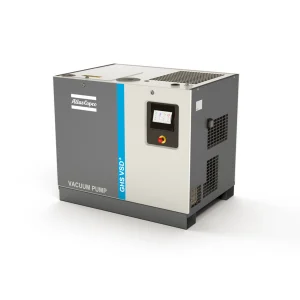 GHS 350 VSD+Pumping speed 400 m³/h 50 Hz400 m³/h 60 HzUltimate pressure 0.35 mbarRated motor power 5.5 kW 50 Hz5.5 kW 60 HzVariants 29
Atlas Copco GVS series 9 models
Atlas Copco GVS VSD+ series 4 models
Becker BCV series 7 models
Becker KVT series 4 models
Becker KVX series 4 models
Becker SV series 16 models
Becker U series 8 models
Becker VARIAIR BCV series 3 models
Becker VARIAIR KVT series 3 models
Becker VARIAIR KVX series 3 models
Becker VARIAIR SV series 9 models
Becker VARIAIR VTLF series 2 models
Becker VARIAIR VXLF series 2 models
Becker VTLF series 6 models
Becker VT series 7 models
Becker VXLF series 5 models
Becker VX series 4 models
Busch DOLPHIN series 70 models
Busch MINK series 32 models
Busch R5 series 58 models
Busch SAMOS series 31 models
Busch SECO series 10 models
Edwards EDC series 2 models
Edwards nEDC series 3 models
Elmo Rietschle C-KLR series 2 models
Elmo Rietschle C-VLR series 7 models
Elmo Rietschle C-VLU series 4 models
Elmo Rietschle G-BH1 series 25 models
Elmo Rietschle G-BH2 series 9 models
Elmo Rietschle G-BH7 series 15 models
Elmo Rietschle G-BH9 series 1 model
Elmo Rietschle G-BH100 series 1 model
Elmo Rietschle L-BL2 series 7 models
Elmo Rietschle L-BV2 series 4 models
Elmo Rietschle L-BV3 series 1 model
Elmo Rietschle L-BV5 series 5 models
Elmo Rietschle L-BV7 series 4 models
Elmo Rietschle V-KTR series 4 models
Elmo Rietschle V-VCA/VCE series 2 models
Elmo Rietschle V-VCB series 2 models
Elmo Rietschle V-VCS series 13 models
Elmo Rietschle V-VCX series 7 models
Elmo Rietschle V-VGD series 2 models
Elmo Rietschle V-VTN series 3 models
Elmo Rietschle V-VTR series 2 models
Leybold CLAWVAC series 5 models
Leybold NOVADRY series 4 models
No model matches these filters.
Atlas Copco DVS series 10 models
Atlas Copco GHS VSD+ series 21 models
Atlas Copco GVS series 9 models
Atlas Copco GVS VSD+ series 4 models
Becker BCV series 7 models
Becker KVT series 4 models
Becker KVX series 4 models
Becker SV series 16 models
Becker U series 8 models
Becker VARIAIR BCV series 3 models
Becker VARIAIR KVT series 3 models
Becker VARIAIR KVX series 3 models
Becker VARIAIR SV series 9 models
Becker VARIAIR VTLF series 2 models
Becker VARIAIR VXLF series 2 models
Becker VTLF series 6 models
Becker VT series 7 models
Becker VXLF series 5 models
Becker VX series 4 models
Busch DOLPHIN series 70 models
Busch MINK series 32 models
Busch R5 series 58 models
Busch SAMOS series 31 models
Busch SECO series 10 models
Edwards EDC series 2 models
Edwards nEDC series 3 models
Elmo Rietschle C-KLR series 2 models
Elmo Rietschle C-VLR series 7 models
Elmo Rietschle C-VLU series 4 models
Elmo Rietschle G-BH1 series 25 models
Elmo Rietschle G-BH2 series 9 models
Elmo Rietschle G-BH7 series 15 models
Elmo Rietschle G-BH9 series 1 model
Elmo Rietschle G-BH100 series 1 model
Elmo Rietschle L-BL2 series 7 models
Elmo Rietschle L-BV2 series 4 models
Elmo Rietschle L-BV3 series 1 model
Elmo Rietschle L-BV5 series 5 models
Elmo Rietschle L-BV7 series 4 models
Elmo Rietschle V-KTR series 4 models
Elmo Rietschle V-VCA/VCE series 2 models
Elmo Rietschle V-VCB series 2 models
Elmo Rietschle V-VCS series 13 models
Elmo Rietschle V-VCX series 7 models
Elmo Rietschle V-VGD series 2 models
Elmo Rietschle V-VTN series 3 models
Elmo Rietschle V-VTR series 2 models
Leybold CLAWVAC series 5 models
Leybold NOVADRY series 4 models
For central systems, Becker also names the screw vacuum pump VADS 1500+. Models a manufacturer no longer carries in its current range are listed in its “Outdated models” section.
Selection
Choosing a vacuum pump for woodworking
What the manufacturers highlight for use in woodworking.
Leakage counts for more than ultimate pressure
In nesting, the tool mills open contours through the panel; air flows in continuously through the cuts. Becker points out that it is then not the ultimate pressure alone that decides, but the suction capacity available under this leakage. The sizing depends on the panel size, the material density, the machining strategy and the total leakage.
Dust and chips
Chips and sawdust reach the pump through leaks. Becker recommends inlet filters with a large area and easily accessible elements; in the dry-running VTLF series, no oil can combine with wood dust to form deposits. For its CLAWVAC claw pumps, Leybold states that they can be cleaned on site within a few minutes after particles have entered.
Speed on demand
Frequency-controlled pumps adapt the suction capacity to the workpiece size and the demand. Atlas Copco names the GHS VSD+ for this, Becker its VARIAIR versions, Leybold the VAControl CAB control, which lowers the speed as soon as the required vacuum is reached.
Single pump or central system
Atlas Copco names pumps with 200 to 300 m³/h for smaller tables and 800 to 900 m³/h for pumps that supply several tables centrally. According to Atlas Copco, pumps directly at the machine give off more heat and noise to their surroundings; central pumps can be installed elsewhere. Atlas Copco considers single pumps sensible for a few machines and a central supply for larger production plants.
Frequently asked questions
Frequently asked questions about vacuum pumps in woodworking
Which vacuum pump is suitable for a CNC router with a vacuum table?
For clamping, the manufacturers name claw vacuum pumps (Becker BCV, Busch MINK, Leybold CLAWVAC, Atlas Copco DZS), dry-running rotary vane vacuum pumps (Becker VTLF, VXLF, KVT, KVX, Busch SECO, Atlas Copco DVS), oil-lubricated rotary vane vacuum pumps (Busch R5) and screw vacuum pumps (Atlas Copco GHS VSD+, Leybold NOVADRY). Becker lists for its series: BCV 275 to 600 m³/h and 150 to 200 mbar, VTLF and VXLF 280 to 570 m³/h and 200 to 350 mbar, KVT and KVX 67 to 145 m³/h and 100 mbar. More on this on the page Vacuum clamping on CNC machines.
How much vacuum does a vacuum table need?
For clamping on CNC machines, Busch lists 150 to 500 mbar (abs.), roughly 0.5 to 0.86 bar below ambient pressure; for moving and lifting 300 to 900 mbar (abs.); and for sawdust extraction 800 to 900 mbar (abs.). The lower the absolute pressure under the panel, the more strongly the ambient air presses it onto the table: at a pressure difference of 800 mbar, with around 80 kN per square metre. What matters is that the pump holds this vacuum even with leakage.
Why is wood held by vacuum and not clamped mechanically?
Mechanical clamps can damage wood and leave marks; magnetic clamping does not work with wood. Vacuum clamps hold the workpiece over its whole surface and without pressure marks, and the top side remains free for the tool – this is how Atlas Copco, Busch and Leybold describe it.
Oil-free or oil-lubricated vacuum pump for woodworking?
Both are named. For dust-intensive applications, Becker recommends oil-free pumps with a large filter area (VTLF, VXLF, BCV), because in them no oil can combine with wood dust to form deposits; for laminating systems with high quality requirements, on the other hand, Becker names its oil-lubricated U 5 series. For clamping, Busch names the dry-running MINK and SECO as well as the oil-lubricated R5, which Busch also lists for laminating presses and thermoforming. For woodworking, Atlas Copco lists the dry-running DVS, the oil-lubricated GVS and the oil-injected screw vacuum pump GHS VSD+.
Is a side channel blower suitable for the vacuum table?
For clamping on CNC machines, Becker and Busch do not name side channel blowers but claw, rotary vane and screw vacuum pumps. They list side channel blowers for tasks where a weaker vacuum is sufficient: Busch the SAMOS for lifting and feeding panels and for sawdust extraction (300 to 900 mbar abs.), Becker the SV series for vacuum lifters. Atlas Copco names its side channel blowers of the DB series for vacuum tables.
How large does the vacuum pump need to be?
Atlas Copco names 200 to 300 m³/h for smaller tables and 800 to 900 m³/h for pumps that supply several tables centrally. As the factors that determine the sizing, Becker names the panel size, the material density, the machining strategy and the total leakage – in nesting with open contours, it is not the ultimate pressure alone that decides, but the suction capacity available under this leakage.
Which vacuum pump for a veneer press and a membrane press?
For laminating and veneer presses, Busch names the oil-lubricated R5; Becker the oil-lubricated U 5 for high quality requirements and the oil-free KVT for smaller systems; Leybold the screw vacuum pump NOVADRY for 3D laminating presses; and Atlas Copco the GHS 1202 to 2002 VSD+ for wood laminating. The vacuum removes the air from the press lay-up so that veneer, film or coating adheres with even contact pressure and without air pockets.
Which vacuum pump for vacuum lifters and panel handling?
For moving and lifting, Busch lists 300 to 900 mbar (abs.) and the SAMOS, MINK and SECO series, and for feeding systems also the R5. Becker names the SV series for vacuum lifters and the BCV for pick and place, Leybold the CLAWVAC.
How does vacuum shorten wood drying?
Under vacuum, water boils at a lower temperature. The wood gives off its water faster and is not overheated in the process. Busch and Elmo Rietschle name a drying time of a few days instead of several weeks; Busch names the MINK and the DOLPHIN for this, Leybold the CLAWVAC and the NOVADRY.
What helps against wood dust in the vacuum pump?
Chips and sawdust reach the pump through leaks; a clogged inlet filter is the first thing to check when the suction capacity drops. Becker recommends inlet filters with a large area and easily accessible elements and names the oil-free VTLF, VXLF and BCV for dust-intensive applications. For the CLAWVAC, Leybold states that it can be cleaned on site within a few minutes after particles have entered. A central vacuum system outside the production area keeps dust and chips away from the pumps (Becker). Suitable filters: Spare parts and accessories.
A pump at each machine or a central vacuum system?
According to Atlas Copco, single pumps are often the better choice for a few CNC machines, and central pumps for larger production plants. Becker describes central systems that generate the vacuum outside the production area and control it to demand, and names 30 to 50% lower energy consumption compared with individual solutions. Central vacuum systems are planned and built by Eugen Theis Vakuum, a company of the Ehrler & Beck group – more under Central Vacuum.
Does Ehrler & Beck also supply spare parts and service?
Yes. Ehrler & Beck offers original spare parts and accessories as well as maintenance and repair.
Which pump suits your machine?
Tell us the application, the panel size and the number of machines – we advise you on selection, spare parts and service.
