

Application
Vacuum pumps for central vacuum supply
In a central vacuum supply, one pumping station generates the vacuum for many machines at once: according to Leybold, several machines are connected to one network with speed-controlled pumps; Becker describes a shared vacuum network instead of individual pumps that works on demand and outside production. Below you can see how the application works, what vacuum the manufacturers name and which of their series are intended for it – 285 models from 7 manufacturers.
Compare 285 modelsHow it works
- 285Models
- 27Series
- 7Manufacturers
- 100–400 mbar abs.House vacuum in IC manufacturing (Atlas Copco)
Touch the points: each part of the system explains itself.
In short
Central vacuum systems: the key facts
- One networkAccording to Leybold, in a central vacuum system several machines are connected to one network with speed-controlled pumps. For packaging lines Becker describes a shared vacuum network instead of individual pumps, and for the wood industry vacuum that is generated centrally, on demand and outside production.
- EnergyFor the wood industry, Becker names 30 to 50 % less energy with a payback period of 12 to 36 months, and for packaging lines up to 50 % less energy. For meat packaging, Atlas Copco names up to 50 % less energy and CO2, Leybold energy savings of often more than 50 % (Leybold figure).
- Pressure and pumping speedFor the house vacuum in IC manufacturing, Atlas Copco names 100 to 400 mbar abs. and 2,000 to 8,000 m³/h, in large fabs more than 12,000 m³/h. For electronics manufacturing Leybold names a central vacuum below 100 mbar, Elmo Rietschle 380 to 1,140 m³/h for the C-VLR 1000 VSD / HV+.
- Pressure controlAtlas Copco names several lines with precise pressure control; Elmo Rietschle describes the claw vacuum pump as part of a central vacuum system with setpoint pressure control. Leybold names speed-controlled pumps, Becker demand-controlled generation with VARIAIR.
Operating principle
How it works: Central vacuum systems
The drawing shows the basic principle in section. The systems and pumps of the individual manufacturers differ in detail.
- GenerationThe pumping station generates the vacuum centrally in one place; Becker names generation outside production.
- DistributionThe ring main and buffer tank carry the vacuum to all consumers; according to Leybold, several machines are connected to one network.
- ControlThe control system maintains the setpoint pressure (Elmo Rietschle) and adapts the pumps to the demand via their speed (Leybold, Becker).
Vacuum and sizing
Central vacuum systems: how much vacuum is needed
What the manufacturers say about pressure, pumping speed and sizing.
Which vacuum
For the house vacuum in IC manufacturing, Atlas Copco names 100 to 400 mbar abs., Leybold a central vacuum below 100 mbar for electronics manufacturing. The pressure depends on the connected consumers.
Which pumping speed
Atlas Copco names 2,000 to 8,000 m³/h for IC manufacturing and more than 12,000 m³/h for large fabs. For the C-VLR 1000 VSD / HV+, Elmo Rietschle names 380 to 1,140 m³/h (data sheet D1880). Otherwise the pumping speed follows from the number of consumers and their simultaneous demand.
What determines the sizing
The number of consumers and their simultaneous demand: Atlas Copco names several lines with precise pressure control, Becker demand-controlled generation. As benefits, Becker names 30 to 50 % less energy with a payback period of 12 to 36 months, Atlas Copco up to 50 % less energy and CO2, Leybold often more than 50 % (Leybold figure).
Pump types
Atlas Copco names oil-sealed, dry and liquid ring vacuum pumps with frequency control (VSD), Elmo Rietschle a claw vacuum pump with setpoint pressure control, Leybold speed-controlled pumps of the NOVADRY and CLAWVAC series (plus VACUBE). Becker names VACS with VARIAIR (KVT, KVX, VTLF, VXLF, BCV) and VADS, and for packaging lines U and U4 with RBP.
Technology
Central vacuum systems: the vacuum pumps the manufacturers name
Listed are the series the manufacturer itself names for this application. “Show only …” sets the filter of the product overview.
Oil-lubricated rotary vane vacuum pumps
84 models · 1.25–1,800 m³/h
Claw vacuum pumps
65 models · 18–1,150 m³/h
Screw vacuum pumps
64 models · 63–5,136 m³/h
Roots vacuum pumps
33 models · 14–12,000 m³/h
Dry-running rotary vane vacuum pumps
19 models · 55–495 m³/h
Liquid ring vacuum pumps
14 models · 740–36,600 m³/h
Claw compressors
3 models · 65–238 m³/h
Claw pressure/vacuum pumps
2 models · 94–117.8 m³/h
Screw compressors
1 model · 1,230 m³/h
Product overview
Central vacuum systems: all 285 models compared
Use the filters on the left to narrow the selection – by manufacturer, technology and the models’ key figures, for 50 or 60 Hz.
Atlas Copco AWL series 11 models
Atlas Copco DHS VSD+ series 1 model
Atlas Copco DZS series 8 models
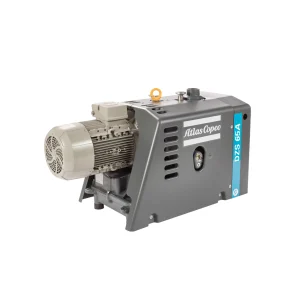 DZS 065APumping speed 65 m³/h 50 Hz78 m³/h 60 HzUltimate pressure 50 mbarRated motor power 1.8 kW 50 Hz2.2 kW 60 HzVariants 12
Atlas Copco GHS VSD+ series 21 models
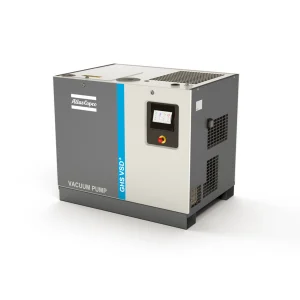 GHS 350 VSD+Pumping speed 400 m³/h 50 Hz400 m³/h 60 HzUltimate pressure 0.35 mbarRated motor power 5.5 kW 50 Hz5.5 kW 60 HzVariants 29
Atlas Copco LRP VSD+ series 3 models
Becker BCV series 7 models
Becker KVT series 4 models
Becker KVX series 4 models
Becker RBP series 3 models
Becker U4 series 6 models
Becker U series 8 models
Becker VADS series 3 models
Becker VTLF series 6 models
Becker VXLF series 5 models
Busch COBRA Industry series 36 models
Busch MINK series 32 models
Busch PANDA/PUMA series 26 models
Busch R5 series 58 models
Edwards EDC series 2 models
Edwards nEDC series 3 models
Elmo Rietschle C-KLR series 2 models
Elmo Rietschle C-VLR series 7 models
Elmo Rietschle C-VLU series 4 models
Leybold CLAWVAC series 5 models
Leybold NOVADRY series 4 models
Pfeiffer Vacuum ACP series 4 models
Pfeiffer Vacuum DuoVane series 12 models
No model matches these filters.
Atlas Copco AWL series 11 models
Atlas Copco DHS VSD+ series 1 model
Atlas Copco DZS series 8 models
Atlas Copco GHS VSD+ series 21 models
Atlas Copco LRP VSD+ series 3 models
Becker BCV series 7 models
Becker KVT series 4 models
Becker KVX series 4 models
Becker RBP series 3 models
Becker U4 series 6 models
Becker U series 8 models
Becker VADS series 3 models
Becker VTLF series 6 models
Becker VXLF series 5 models
Busch COBRA Industry series 36 models
Busch MINK series 32 models
Busch PANDA/PUMA series 26 models
Busch R5 series 58 models
Edwards EDC series 2 models
Edwards nEDC series 3 models
Elmo Rietschle C-KLR series 2 models
Elmo Rietschle C-VLR series 7 models
Elmo Rietschle C-VLU series 4 models
Leybold CLAWVAC series 5 models
Leybold NOVADRY series 4 models
Pfeiffer Vacuum ACP series 4 models
Pfeiffer Vacuum DuoVane series 12 models
Models a manufacturer no longer carries in its current range are listed in its “Outdated models” section.
Industries
Central vacuum systems: where the manufacturers name it
The manufacturers list these uses on their own pages.
Semiconductors, electronics and displays
Atlas Copco names central vacuum for all handling steps of IC manufacturing with GHS VSD+ at 100 to 400 mbar abs. and 2,000 to 8,000 m³/h, Leybold a central vacuum below 100 mbar with NOVADRY for electronics manufacturing.
Woodworking
For the wood industry, Becker names central, demand-controlled generation outside production with VACS with VARIAIR (KVT, KVX, VTLF, VXLF, BCV) and VADS: 30 to 50 % less energy, payback in 12 to 36 months.
Packaging
Becker names the central vacuum supply for packaging lines with U, U4 and RBP at up to 50 % less energy, and also names dairies in this context; Busch lists central vacuum systems with R5, MINK, COBRA and PANDA/PUMA.
Meat, poultry and fish
For meat packaging, Atlas Copco names a central vacuum system with several lines and precise pressure control made up of oil-sealed, dry or liquid ring vacuum pumps with VSD, with up to 50 % less energy and CO2.
Research, laboratory and analytics
Pfeiffer Vacuum names central vacuum systems as a shared vacuum supply for laboratories with ACP and DuoVane (plus COMBI and HiScroll).
Mechanical engineering and manufacturing
Leybold names central vacuum systems for general industry: several machines on one network with speed-controlled pumps (NOVADRY, CLAWVAC, plus VACUBE), often with more than 50 % energy savings.
Printing and paper
For printing and paper, Elmo Rietschle names a central air supply without describing it in more detail.
Frequently asked questions
Central vacuum systems: frequently asked questions
What is a central vacuum supply?
A pumping station generates the vacuum in one place and distributes it to many machines via a pipe network. According to Leybold, several machines are connected to one network with speed-controlled pumps; Becker describes a shared vacuum network instead of individual pumps. Atlas Copco names central vacuum systems for food, glass and brick production, Pfeiffer Vacuum as a shared vacuum supply for laboratories.
How does a central vacuum system work?
The pumping station evacuates all consumers via a ring main with a buffer tank. A control system maintains the setpoint pressure in the network – Elmo Rietschle describes the claw vacuum pump C-VLR 1000 VSD / HV+ as part of a central vacuum system with setpoint pressure control – and regulates the pumps via their speed (Leybold, Becker). For several lines, Atlas Copco names precise pressure control.
What are the advantages of central vacuum over individual pumps?
Becker names the shared vacuum network instead of individual pumps and generation outside production, centrally and on demand. Leybold names speed-controlled pumps to which several machines are connected, Atlas Copco precise pressure control for several lines. All three name lower energy demand as a result.
How much energy does a central vacuum system save?
For the wood industry, Becker names 30 to 50 % less energy with a payback period of 12 to 36 months, and for packaging lines up to 50 % less energy. For meat packaging, Atlas Copco names up to 50 % less energy and CO2. Leybold names energy savings of often more than 50 % (Leybold figure).
What vacuum does a central vacuum network need?
That depends on the consumers. For the house vacuum in IC manufacturing, Atlas Copco names 100 to 400 mbar abs., Leybold a central vacuum below 100 mbar for electronics manufacturing.
Which vacuum pump for a central vacuum system?
The manufacturers name different types: Atlas Copco oil-sealed, dry and liquid ring vacuum pumps with VSD as well as GHS VSD+, DZS, LRP VSD+, DHS VSD+ and AWL; Becker KVT, KVX, VTLF, VXLF, BCV, VADS and, for packaging lines, U, U4 and RBP; Busch R5, MINK, COBRA and PANDA/PUMA; Leybold NOVADRY and CLAWVAC; Elmo Rietschle the claw vacuum pump C-VLR; Edwards EDC and nEDC; Pfeiffer Vacuum ACP and DuoVane.
How is a central vacuum system controlled?
Via the pressure in the network: Elmo Rietschle names setpoint pressure control, Leybold speed-controlled pumps, Atlas Copco pumps with VSD and precise pressure control for several lines. Becker names demand-controlled generation with VARIAIR, in which the pumps deliver only as much as the consumers need at that moment.
When is a central vacuum supply worthwhile?
The manufacturers name it where many consumers need vacuum: several lines (Atlas Copco), several machines on one network (Leybold), packaging lines and the wood industry (Becker), laboratories (Pfeiffer Vacuum). For the wood industry, Becker names a payback period of 12 to 36 months.
What pumping speed does a central vacuum system need?
For the house vacuum in IC manufacturing, Atlas Copco names 2,000 to 8,000 m³/h, and more than 12,000 m³/h for large fabs. For the C-VLR 1000 VSD / HV+, Elmo Rietschle names 380 to 1,140 m³/h (data sheet D1880). Otherwise the pumping speed follows from the number of consumers and their simultaneous demand.
In which industries do the manufacturers name central vacuum systems?
Atlas Copco for IC manufacturing, meat packaging and food, glass and brick production; Becker for the wood industry, packaging lines and dairies; Leybold for electronics manufacturing and general industry; Pfeiffer Vacuum for laboratories and research; Elmo Rietschle as a central air supply for printing and paper.
Does Ehrler & Beck also supply spare parts and service?
Yes. Ehrler & Beck offers original spare parts and accessories as well as maintenance and repair.
Which pump suits your process?
Tell us the application, the medium and the volume – we advise you on selection, spare parts and service.
