

Application
Vacuum pumps for leak detection and leak testing
In leak detection, a test object or a test chamber is evacuated; a leak detector then detects the tracer gas that enters or escapes through leaks. Leybold describes leak testing with helium as the tracer gas for the quality control of systems and products, and according to Atlas Copco, a defined vacuum makes the smallest leaks detectable. Below you can see how the application works, what vacuum the manufacturers name and which of their series are intended for it – 319 models from 5 manufacturers.
Compare 319 modelsHow it works
- 319Models
- 25Series
- 5Manufacturers
- below 0.1 mbarTest chamber in refrigerant circuit testing (Leybold)
Touch the points: each part of the system explains itself.
In short
Leak detection and leak testing: the key facts
- Helium tracer gasLeybold describes helium leak testing as the quality control of systems and products; Pfeiffer Vacuum names the spraying of helium from outside, with the leak detector on the evacuated system locating the leaks.
- Test chamberFor leak testing of cooling circuits, Leybold describes an evacuated test chamber at typically below 0.1 mbar, in which a leak detector looks for escaping refrigerant.
- Leak ratesFor helium spraying, Pfeiffer Vacuum names leaks in the range of about 10⁻⁷ to 10⁻⁹ mbar·l/s, and for container closure integrity testing (CCIT) ≤10⁻⁹ mbar·l/s for leaks up to 0.1 µm and about 10⁻⁶ mbar·l/s from 0.2 µm.
- Pumping speedFor helium leak testing, Leybold names TRIVAC with 4–90 m³/h, SCROLLVAC with 3–18 m³/h, ECODRY with 25–65 m³/h and VARODRY with 65–200 m³/h, plus RUVAC with SOGEVAC or DRYVAC.
Operating principle
How it works: Leak detection and leak testing
The drawing shows the basic principle in section. The systems and pumps of the individual manufacturers differ in detail.
- EvacuationThe test chamber or test object is evacuated to the test pressure; for the test chamber in cooling circuit testing, Leybold names typically below 0.1 mbar.
- TestingHelium is used as the tracer gas or sprayed on from outside, and the leak detector detects it; in refrigerant circuit testing, according to Leybold, it looks for escaping refrigerant.
- EvaluationThe leak detector locates the leak or measures the leak rate; Pfeiffer Vacuum points out that spraying locates leaks but does not measure a leak rate.
Vacuum and sizing
Leak detection and leak testing: how much vacuum is needed
What the manufacturers say about pressure, pumping speed and sizing.
Which vacuum
For leak testing, Atlas Copco names low to high vacuum. Leybold describes the test chamber in cooling circuit testing as typically below 0.1 mbar. Pfeiffer Vacuum names the helium spray method for semiconductors, plant engineering and ultra-high vacuum.
Which pumping speed
For helium leak testing, Leybold names TRIVAC with 4–90 m³/h, SCROLLVAC with 3–18 m³/h, ECODRY with 25–65 m³/h and VARODRY with 65–200 m³/h, plus RUVAC with SOGEVAC or DRYVAC and TURBOVAC.
Which leak rates
For helium spraying, Pfeiffer Vacuum names leaks in the range of about 10⁻⁷ to 10⁻⁹ mbar·l/s. In container closure integrity testing (CCIT), the figures are ≤10⁻⁹ mbar·l/s for leaks up to 0.1 µm and about 10⁻⁶ mbar·l/s from 0.2 µm – non-destructive and down to −80 °C.
What the manufacturers point out
Pfeiffer Vacuum: spraying locates leaks but does not measure a leak rate. Leybold: air-conditioning compressors are tested before installation, and in the hydrogen infrastructure, pipes, valves, vessels, electrolysers and fuel cells must be leak-tight. Busch names leak detection as the end-of-line test of batteries, tanks and HVAC.
Technology
Leak detection and leak testing: the vacuum pumps the manufacturers name
Listed are the series the manufacturer itself names for this application. “Show only …” sets the filter of the product overview.
Oil-lubricated rotary vane vacuum pumps
138 models · 0.75–1,800 m³/h
Roots vacuum pumps
91 models · 14–13,540 m³/h
Screw vacuum pumps
45 models · 70–4,652 m³/h
Claw vacuum pumps
32 models · 18–1,150 m³/h
Scroll vacuum pumps
11 models · 3–43 m³/h
Rotary piston vacuum pumps
2 models · 234–442 m³/h
Product overview
Leak detection and leak testing: all 319 models compared
Use the filters on the left to narrow the selection – by manufacturer, technology and the models’ key figures, for 50 or 60 Hz.
Atlas Copco DRB series 4 models
 DRB 250Pumping speed 253 m³/h 50 Hz304 m³/h 60 HzUltimate pressure Rated motor power 1.1 kW 50 Hz1.1 kW 60 HzVariants 2
Atlas Copco GLS series 2 models
Atlas Copco GVD series 13 models
Busch COBRA Industry series 36 models
 COBRA NS 0070 CPumping speed 70 m³/h 50 Hz85 m³/h 60 HzUltimate pressure 0.03 mbarRated motor power 4 kW 50 Hz4.4 kW 60 HzVariants
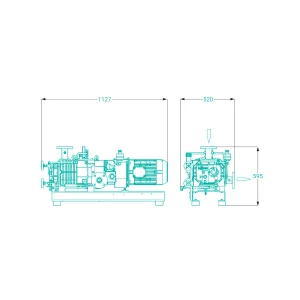 COBRA NC 0100 BPumping speed 110 m³/h 50 Hz130 m³/h 60 HzUltimate pressure 0.05 mbarRated motor power 3.5 kW 50 Hz4.8 kW 60 HzVariants 4
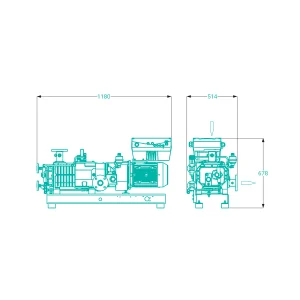 COBRA NC 0100 B ECOTORQUEPumping speed 130 m³/h 50 Hz130 m³/h 60 HzUltimate pressure 0.05 mbarRated motor power 4.8 kW 50 Hz4.8 kW 60 HzVariants
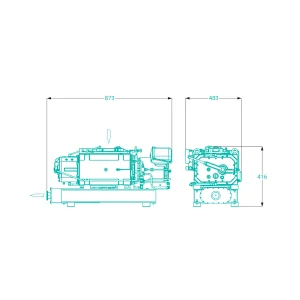 COBRA NS 0160 CPumping speed 135 m³/h 50 Hz170 m³/h 60 HzUltimate pressure 0.03 mbarRated motor power 5.5 kW 50 Hz6.6 kW 60 HzVariants
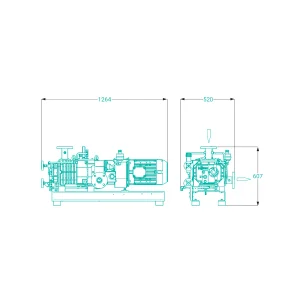 COBRA NC 0200 BPumping speed 220 m³/h 50 Hz265 m³/h 60 HzUltimate pressure 0.05 mbarRated motor power 6 kW 50 Hz7.6 kW 60 HzVariants 4
Busch MINK series 32 models
Busch PANDA/PUMA series 26 models
Busch R5 series 58 models
Edwards E2M series 9 models
Edwards E2S series 3 models
Edwards nXRi series 5 models
Edwards Stokes series 4 models
Edwards XDS series 2 models
Leybold DRYVAC series 9 models
Leybold ECODRY series 5 models
Leybold RUVAC WA/WAU series 8 models
Leybold RUVAC WH/WHU series 7 models
Leybold RUVAC WS/WSU series 8 models
Leybold SCROLLVAC series 5 models
Leybold SOGEVAC series 23 models
Leybold TRIVAC series 20 models
Pfeiffer Vacuum A 100/200 L series 3 models
Pfeiffer Vacuum ACP series 4 models
Pfeiffer Vacuum DuoVane series 12 models
Pfeiffer Vacuum HiLobe series 17 models
Pfeiffer Vacuum HiScroll series 4 models
No model matches these filters.
Atlas Copco DRB series 4 models
Atlas Copco GLS series 2 models
Atlas Copco GVD series 13 models
Busch COBRA Industry series 36 models
Busch MINK series 32 models
Busch PANDA/PUMA series 26 models
Busch R5 series 58 models
Edwards E2M series 9 models
Edwards E2S series 3 models
Edwards nXRi series 5 models
Edwards Stokes series 4 models
Edwards XDS series 2 models
Leybold DRYVAC series 9 models
Leybold ECODRY series 5 models
Leybold RUVAC WA/WAU series 8 models
Leybold RUVAC WH/WHU series 7 models
Leybold RUVAC WS/WSU series 8 models
Leybold SCROLLVAC series 5 models
Leybold SOGEVAC series 23 models
Leybold TRIVAC series 20 models
Pfeiffer Vacuum A 100/200 L series 3 models
Pfeiffer Vacuum ACP series 4 models
Pfeiffer Vacuum DuoVane series 12 models
Pfeiffer Vacuum HiLobe series 17 models
Pfeiffer Vacuum HiScroll series 4 models
Models a manufacturer no longer carries in its current range are listed in its “Outdated models” section.
Industries
Leak detection and leak testing: where the manufacturers name it
The manufacturers list these uses on their own pages.
Battery manufacturing
Leybold describes the helium leak test of the finished cell and names TRIVAC and SCROLLVAC for it; Busch and Pfeiffer Vacuum also list leak detection in battery manufacturing.
Automotive and transport
Busch names leak detection and end-of-line leak testing of batteries, tanks and HVAC with COBRA; Pfeiffer Vacuum also lists the application for automotive and transport.
Hydrogen and fuel cells
According to Leybold, pipes, valves, vessels, electrolysers and fuel cells must be leak-tight; Busch and Pfeiffer Vacuum also name leak detection for the hydrogen industry.
Refrigeration and air conditioning
Busch and Pfeiffer Vacuum list leak detection for refrigeration and air conditioning; on this, Leybold describes the evacuated test chamber at typically below 0.1 mbar, in which a leak detector looks for escaping refrigerant, and the helium leak detection of air-conditioning compressors before installation.
Research, laboratory and analytics
Busch names leak detectors in the laboratory with COBRA and R5; Pfeiffer Vacuum lists leak detection for research and analytics and names ACP, DuoVane and HiScroll for it.
Semiconductors, electronics and displays
Pfeiffer Vacuum expressly names the helium spray method for semiconductors, plant engineering and ultra-high vacuum.
Pharmaceuticals and biotechnology
Pfeiffer Vacuum describes container closure integrity testing (CCIT) as non-destructive proof of the tightness of sterile packaging down to −80 °C.
Medical and healthcare
Pfeiffer Vacuum names the leak testing of medical equipment and the CCIT test for medical devices too.
Aerospace
Atlas Copco names leak testing in aerospace: a defined vacuum, from low to high vacuum, makes the smallest leaks detectable.
Chemicals
Pfeiffer Vacuum also lists leak detection for the chemical industry, without describing it there in more detail.
Energy
Pfeiffer Vacuum names leak detection for the energy sector; Leybold describes it for battery cells and the hydrogen infrastructure.
Frequently asked questions
Leak detection and leak testing: frequently asked questions
How does leak detection with vacuum work?
The test object or test chamber is evacuated, and a leak detector detects the tracer gas that flows through the leaks. Leybold describes leak testing with helium as the tracer gas for the quality control of systems and products. In the spray method, according to Pfeiffer Vacuum, helium is sprayed on from outside, and the leak detector on the evacuated system locates the leaks. Atlas Copco sums it up like this: a defined vacuum makes the smallest leaks detectable.
Which vacuum pump is suitable for helium leak detection?
As backing pumps for helium leak testing, Leybold names TRIVAC (4–90 m³/h), SCROLLVAC (3–18 m³/h), ECODRY (25–65 m³/h) and VARODRY (65–200 m³/h), plus RUVAC with SOGEVAC or DRYVAC. Pfeiffer Vacuum names ACP, DuoVane and HiScroll for leak detection. Busch names COBRA, PANDA/PUMA, R5 and MINK, Edwards E2M, E2S, XDS, nXRi and Stokes, Atlas Copco GVD, GLS and DRB.
How much vacuum does a leak test need?
That depends on the test: Atlas Copco names low to high vacuum. For the test chamber in cooling circuit testing, Leybold describes typically below 0.1 mbar. Pfeiffer Vacuum also names the helium spray method for systems in ultra-high vacuum.
Which leak rate can be detected with helium?
For helium spraying, Pfeiffer Vacuum names leaks in the range of about 10⁻⁷ to 10⁻⁹ mbar·l/s. For container closure integrity testing (CCIT), Pfeiffer Vacuum gives ≤10⁻⁹ mbar·l/s for leaks up to 0.1 µm and about 10⁻⁶ mbar·l/s from 0.2 µm.
Oil-free or oil-lubricated for leak detection?
The manufacturers name both. Leybold lists the oil-lubricated rotary vane vacuum pump TRIVAC as well as the dry SCROLLVAC and ECODRY; Pfeiffer Vacuum names the oil-lubricated DuoVane alongside HiScroll and ACP; Edwards the oil-lubricated E2M and E2S alongside XDS and nXRi; Busch the oil-lubricated R5 alongside COBRA and MINK. Which design suits depends on the test object and the system.
How are battery cells tested for leaks?
Leybold describes the helium leak test of the finished cell and names TRIVAC and SCROLLVAC for it. Busch names leak detection and end-of-line leak testing of batteries with COBRA, and Pfeiffer Vacuum also lists leak detection in battery manufacturing.
How is a refrigerant circuit tested for leaks?
For this, Leybold describes a test chamber that is evacuated to typically below 0.1 mbar; inside it, a leak detector looks for escaping refrigerant. According to Leybold, air-conditioning compressors are already tested for leaks with helium before they are installed. Busch and Pfeiffer Vacuum also list leak detection for refrigeration and air conditioning.
What is a CCIT test for pharmaceutical packaging?
CCIT stands for container closure integrity testing. Pfeiffer Vacuum describes it as non-destructive proof of the tightness of sterile packaging and medical devices, also at temperatures down to −80 °C, with leak rates of ≤10⁻⁹ mbar·l/s for leaks up to 0.1 µm and about 10⁻⁶ mbar·l/s from 0.2 µm.
What is the difference between locating leaks and measuring the leak rate?
In helium spraying, according to Pfeiffer Vacuum, helium is sprayed on from outside, and the leak detector on the evacuated system shows where the leak is – no leak rate is measured in the process. To determine a leak rate, Pfeiffer Vacuum names the CCIT test with values down to ≤10⁻⁹ mbar·l/s.
Which vacuum pump for end-of-line leak testing?
For leak detection and end-of-line testing, Busch names COBRA, PANDA/PUMA and R5, in its product finder also MINK, and describes the testing of batteries, tanks and HVAC. For leak detection and end-of-line testing, Pfeiffer Vacuum names A 100/200 L, ACP, DuoVane, HiLobe and HiScroll.
A single pump or a central vacuum system?
A central system in a room of its own keeps noise and heat away from production and matches its output to the demand. Central vacuum systems are planned and built by Eugen Theis Vakuum, a company of the Ehrler & Beck group – more under Central Vacuum.
Does Ehrler & Beck also supply spare parts and service?
Yes. Ehrler & Beck offers original spare parts and accessories as well as maintenance and repair.
Which pump suits your process?
Tell us the application, the medium and the volume – we advise you on selection, spare parts and service.
