

Industry
Vacuum pumps for glass, ceramics and stone
In the container glass industry, vacuum forms bottles and jars; in ceramics, it removes air and gases from the raw clay before forming; in stone production, it holds slabs during forming, handling and polishing (Atlas Copco, Elmo Rietschle). For glass fibre production, Edwards names the handling of process dust. Below you can see which series the manufacturers themselves name for these tasks – 171 models from 3 manufacturers.
Compare 171 modelsSee the applications
- 171Models
- 22Series
- 3Manufacturers
- 4Applications

In short
Glass, ceramics and stone: vacuum pumps – the key facts
- IS machinesFor glass forming in IS machines, Atlas Copco names 150 to 300 mbar, 100 to 250 m³/h per section and 600 to 1,500 m³/h per machine, up to 4,000 m³/h, with the GHS VSD+; the moulds are evacuated through fine holes.
- Clay degassingFor degassing moist clay, Atlas Copco names the GHS VSD+ in the Humid version with Vapor Control Algorithm. For clay preparation and the extrusion of bricks and roof tiles, Elmo Rietschle names the L and C series.
- Pumping speedAtlas Copco specifies the GHS VSD+ series for the container glass industry at 350 to 5,400 m³/h, and for stone production on its own or with a booster.
- Less compressed airFor glass forming with vacuum instead of compressed air, Atlas Copco names faster forming and up to 5 times less air and energy.
Applications
Glass, ceramics and stone: what vacuum pumps are used for
For each application: what the vacuum does and which series the manufacturers name for it. The information comes from the manufacturers’ own pages.
Clay degassing for bricks and ceramics
Before forming, the pressure in the degassing chamber is lowered; air and gases leave the moist clay, the clay becomes denser and the surface has fewer holes and bubbles (Atlas Copco). Elmo Rietschle describes vacuum extruders that remove air bubbles from the clay mix. For large quantities of clay, Atlas Copco names batch processing with the GHS VSD+; Leybold also names CLAWVAC and NOVADRY for ceramics and bricks.
Glass forming in IS machines
The moulds are evacuated through fine holes; forming becomes faster and needs less compressed air (Atlas Copco). Atlas Copco names 150 to 300 mbar, 100 to 250 m³/h per section and 600 to 1,500 m³/h per IS machine, up to 4,000 m³/h, with the GHS VSD+. Leybold lists glass bottle forming with the NOVADRY.
- Atlas CopcoGHS VSD+
Pressing, forming and polishing stone
For engineered and natural stone slabs, the material is vibrated under vacuum, the press is evacuated and the stone is held on the cutting table and during polishing (Atlas Copco). Atlas Copco names the GHS VSD+ for this, on its own or with a booster, and points out styrene as a contaminant.
- Atlas CopcoGHS VSD+ also names the DB blowers for vacuum tables
Handling and lifting slabs
Vacuum lifters grip heavy slabs, and vacuum grippers work on pick-and-place robots (Atlas Copco). For holding, lifting and transporting, Atlas Copco names the GHS 1202 to 2002.
- Atlas CopcoGHS VSD+ also names DVS, GVS A, DZS, DHS VSD+ and DB
Manufacturers and series
Glass, ceramics and stone: 3 manufacturers, 22 series
Listed are the series the manufacturer itself names for this industry. “Show only …” sets the filter of the product overview.
Atlas Copco
128 models · 5–5,136 m³/h
Elmo Rietschle
34 models · 94–950 m³/h
Leybold
9 models · 63–950 m³/h
Edwards names the industry without naming a series for it.
Product overview
Glass, ceramics and stone: all 171 models compared
Use the filters on the left to narrow the selection – by manufacturer, technology and the models’ key figures, for 50 or 60 Hz.
Atlas Copco DBD series 6 models
 DBD 90Pumping speed 91 m³/h 50 Hz110 m³/h 60 HzUltimate pressure 650 – 700 mbarRated motor power 1.1 – 1.5 kW 50 Hz1.3 – 1.7 kW 60 HzVariants 2
Atlas Copco DBDt series 17 models
 DBDt 140Pumping speed 139 m³/h 50 Hz168 m³/h 60 HzUltimate pressure 700 mbarRated motor power 2.2 kW 50 Hz2.6 kW 60 HzVariants 1
Atlas Copco DBS series 29 models
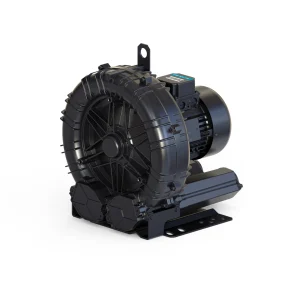 DBS 70Pumping speed 74 m³/h 50 Hz89 m³/h 60 HzUltimate pressure 850 – 900 mbarRated motor power 0.37 – 0.55 kW 50 Hz0.42 – 0.65 kW 60 HzVariants 2
Atlas Copco DBSt series 12 models
Atlas Copco DHS VSD+ series 1 model
Atlas Copco DVS series 10 models
Atlas Copco DWS VSD+ series 6 models
Atlas Copco DZS series 8 models
Atlas Copco DZS VSD+ series 5 models
Atlas Copco GHS VSD+ series 21 models
Atlas Copco GVS series 9 models
Atlas Copco GVS VSD+ series 4 models
Elmo Rietschle C-KLR series 2 models
Elmo Rietschle C-VLR series 7 models
Elmo Rietschle C-VLU series 4 models
Elmo Rietschle L-BL2 series 7 models
Elmo Rietschle L-BV2 series 4 models
Elmo Rietschle L-BV3 series 1 model
Elmo Rietschle L-BV5 series 5 models
Elmo Rietschle L-BV7 series 4 models
Leybold CLAWVAC series 5 models
Leybold NOVADRY series 4 models
No model matches these filters.
Atlas Copco DBD series 6 models
Atlas Copco DBDt series 17 models
Atlas Copco DBS series 29 models
Atlas Copco DBSt series 12 models
Atlas Copco DHS VSD+ series 1 model
Atlas Copco DVS series 10 models
Atlas Copco DWS VSD+ series 6 models
Atlas Copco DZS series 8 models
Atlas Copco DZS VSD+ series 5 models
Atlas Copco GHS VSD+ series 21 models
Atlas Copco GVS series 9 models
Atlas Copco GVS VSD+ series 4 models
Elmo Rietschle C-KLR series 2 models
Elmo Rietschle C-VLR series 7 models
Elmo Rietschle C-VLU series 4 models
Elmo Rietschle L-BL2 series 7 models
Elmo Rietschle L-BV2 series 4 models
Elmo Rietschle L-BV3 series 1 model
Elmo Rietschle L-BV5 series 5 models
Elmo Rietschle L-BV7 series 4 models
Leybold CLAWVAC series 5 models
Leybold NOVADRY series 4 models
Models a manufacturer no longer carries in its current range are listed in its “Outdated models” section.
Selection
Glass, ceramics and stone: choosing a vacuum pump
What the manufacturers highlight for use in this industry.
Moist clay
The raw clay releases moisture into the vacuum. For this, Atlas Copco names the GHS VSD+ in the Humid version with Vapor Control Algorithm, and Elmo Rietschle names the L and C series for clay preparation and extrusion.
Pumping speed per machine
For IS machines, Atlas Copco calculates with 100 to 250 m³/h per section and 600 to 1,500 m³/h per machine, up to 4,000 m³/h, at 150 to 300 mbar; the GHS VSD+ covers 350 to 5,400 m³/h.
Dust and styrene
For glass fibre production, Edwards names dry screw and scroll pumps for handling process dust. Atlas Copco points out styrene as a contaminant when engineered stone is pressed.
Frequently asked questions
Glass, ceramics and stone: frequently asked questions about vacuum pumps
Which vacuum pump is suitable for clay degassing?
Atlas Copco names the GHS VSD+ in the Humid version with Vapor Control Algorithm, and for moulded parts and extrusion also GVS VSD+ and GHS 402 to 2002. Elmo Rietschle names the L and C series for clay preparation and the extrusion of bricks and roof tiles, and Leybold names CLAWVAC and NOVADRY.
Why is clay degassed before forming?
When the pressure in the degassing chamber is lowered, air and gases leave the moist clay; the clay becomes denser and fewer holes and bubbles form on the surface (Atlas Copco). Elmo Rietschle describes vacuum extruders that remove air bubbles from the clay mix.
Which vacuum pump for glass forming in IS machines?
Atlas Copco names the GHS VSD+ series with 350 to 5,400 m³/h; the moulds are evacuated through fine holes. Leybold lists glass bottle forming with the NOVADRY.
How much vacuum does an IS machine need?
Atlas Copco names 150 to 300 mbar, 100 to 250 m³/h per section and 600 to 1,500 m³/h per IS machine, and up to 4,000 m³/h in large installations.
Why vacuum instead of compressed air in glass forming?
For vacuum forming in IS machines, Atlas Copco names faster forming, less compressed air and up to 5 times less air and energy.
Which vacuum pump for stone processing?
Atlas Copco names the GHS VSD+, on its own or with a booster, for forming, handling and polishing engineered and natural stone slabs, and the DB blowers for vacuum tables.
Which vacuum pump for vacuum lifters in the glass and stone industry?
For holding, lifting and transporting heavy slabs, Atlas Copco names the GHS 1202 to 2002, and for pick & place also DVS, GVS A, DZS, DHS VSD+ and DB.
Which vacuum pump for glass fibre production?
For glass fibre production, Edwards names dry screw and scroll pumps that can handle process dust, without naming a series.
Does Ehrler & Beck also supply spare parts and service?
Yes. Ehrler & Beck offers original spare parts and accessories as well as maintenance and repair.
Which pump suits your process?
Tell us the application, the medium and the number of machines – we advise you on selection, spare parts and service.
