

Application
Vacuum pumps for space simulation and altitude simulation
In a space simulation chamber, satellite components, engines and optics are tested before launch under space-like vacuum and extreme temperatures; altitude chambers and low-density wind tunnels reproduce the thin air of high altitudes. Leybold describes vacuum chambers that simulate space conditions for tests before launch; for this Edwards names below 10⁻¹⁰ mbar at −80 to +180 °C. Below you can see how the application works, what vacuum the manufacturers name and which of their series are intended for it – 200 models from 5 manufacturers.
Compare 200 modelsHow it works
- 200Models
- 24Series
- 5Manufacturers
- below 10⁻¹⁰ mbarChamber pressure in space simulation (Edwards)
Touch the points: each part of the system explains itself.
In short
Space and altitude simulation: the key facts
- Chamber pressureFor space simulation, Edwards names below 10⁻¹⁰ mbar at −80 to +180 °C, and for this the Roots pumps EH and GMB as well as EXS.
- Thermal vacuumLeybold describes thermal vacuum chambers (TVAC) with 70–400 K in which components are tested against temperature extremes and radiation; for thermal vacuum testing Edwards names mXDS, nXDS, XDS, EDS, GXS and nXRi.
- Backing pumpsFor space applications, Leybold names backing pumps down to 1×10⁻² mbar – DRYVAC, RUVAC, TRIVAC B, SCREWLINE SP, ECODRY plus and LEYVAC – with TURBOVAC and COOLVAC as high vacuum pumps.
- Propulsion testsAtlas Copco describes test stands for liquid rocket engines that simulate altitude and vacuum for thrust and combustion data; for ion thrusters Pfeiffer Vacuum names 10⁻⁷ to a few 10⁻⁵ hPa, Leybold long-term tests of electric propulsion systems and thrusters.
Operating principle
How it works: Space and altitude simulation
The drawing shows the basic principle in section. The systems and pumps of the individual manufacturers differ in detail.
- EvacuationThe pumping station lowers the chamber pressure; according to Leybold, the backing pumps reach down to 1×10⁻² mbar, and the turbo pumps and cryopumps that Leybold names alongside them reach the ultimate pressure – Edwards names below 10⁻¹⁰ mbar.
- Temperature cyclingThe chamber runs temperature cycles: Leybold names 70–400 K, Edwards −80 to +180 °C.
- TestingPropulsion tests, mass loss (TML) and bake-out take place under vacuum; Leybold describes the measurement of material degradation over a long period, Atlas Copco test stands that provide thrust and combustion data.
Vacuum and sizing
Space and altitude simulation: how much vacuum is needed
What the manufacturers say about pressure, pumping speed and sizing.
Which vacuum
Edwards: below 10⁻¹⁰ mbar. Pfeiffer Vacuum: 10⁻⁷ to a few 10⁻⁵ hPa for ion thrusters. Leybold: backing pumps down to 1×10⁻² mbar, below that TURBOVAC and COOLVAC. Busch describes ultra-high vacuum that reproduces the orbit.
Which pumping speed
The pumping speed depends on the chamber volume and the gas load from the test specimen; pumping stations consisting of a Roots pump and a backing pump are named (Atlas Copco DRB and ZRS, Leybold RUVAC, Edwards EH and GMB, Pfeiffer Vacuum HiLobe).
What determines the sizing
The temperature range of the chamber (70–400 K according to Leybold, −80 to +180 °C according to Edwards), outgassing and bake-out (Edwards), the duration of the long-term tests (Leybold) and the type of test – thermal vacuum, propulsion or optics (Pfeiffer Vacuum).
Related test stands
Atlas Copco names altitude simulation with DRB and GHS VSD+ as well as low-density wind tunnels with ZRS, Edwards such wind tunnels with EH and GMB. Becker names vacuum chambers for altitude training in which the air pressure is reduced.
Technology
Space and altitude simulation: the vacuum pumps the manufacturers name
Listed are the series the manufacturer itself names for this application. “Show only …” sets the filter of the product overview.
Screw vacuum pumps
98 models · 70–5,760 m³/h
Roots vacuum pumps
70 models · 14–44,300 m³/h
Oil-lubricated rotary vane vacuum pumps
20 models · 2.7–79 m³/h
Scroll vacuum pumps
12 models · 3–43 m³/h
Becker names the application without naming a series for it.
Product overview
Space and altitude simulation: all 200 models compared
Use the filters on the left to narrow the selection – by manufacturer, technology and the models’ key figures, for 50 or 60 Hz.
Atlas Copco DRB series 4 models
 DRB 250Pumping speed 253 m³/h 50 Hz304 m³/h 60 HzUltimate pressure Rated motor power 1.1 kW 50 Hz1.1 kW 60 HzVariants 2
Atlas Copco DWS VSD+ series 6 models
Atlas Copco GHS VSD+ series 21 models
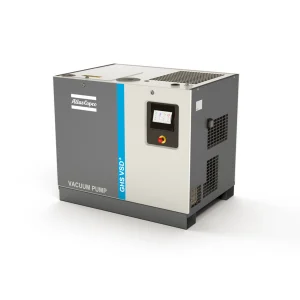 GHS 350 VSD+Pumping speed 400 m³/h 50 Hz400 m³/h 60 HzUltimate pressure 0.35 mbarRated motor power 5.5 kW 50 Hz5.5 kW 60 HzVariants 29
Atlas Copco ZRS series 5 models
Busch COBRA Industry series 36 models
Edwards EDS series 3 models
Edwards EH series 5 models
Edwards EXS series 11 models
Edwards GMB series 2 models
Edwards GXS series 10 models
Edwards mXDS series 2 models
Edwards nXDS series 4 models
Edwards nXRi series 5 models
Edwards XDS series 2 models
Leybold DRYVAC series 9 models
Leybold ECODRY series 5 models
Leybold RUVAC WA/WAU series 8 models
Leybold RUVAC WH/WHU series 7 models
Leybold RUVAC WS/WSU series 8 models
Leybold SCREWLINE series 2 models
Leybold TRIVAC series 20 models
Pfeiffer Vacuum ACP series 4 models
Pfeiffer Vacuum HiLobe series 17 models
Pfeiffer Vacuum HiScroll series 4 models
No model matches these filters.
Atlas Copco DRB series 4 models
Atlas Copco DWS VSD+ series 6 models
Atlas Copco GHS VSD+ series 21 models
Atlas Copco ZRS series 5 models
Busch COBRA Industry series 36 models
Edwards EDS series 3 models
Edwards EH series 5 models
Edwards EXS series 11 models
Edwards GMB series 2 models
Edwards GXS series 10 models
Edwards mXDS series 2 models
Edwards nXDS series 4 models
Edwards nXRi series 5 models
Edwards XDS series 2 models
Leybold DRYVAC series 9 models
Leybold ECODRY series 5 models
Leybold RUVAC WA/WAU series 8 models
Leybold RUVAC WH/WHU series 7 models
Leybold RUVAC WS/WSU series 8 models
Leybold SCREWLINE series 2 models
Leybold TRIVAC series 20 models
Pfeiffer Vacuum ACP series 4 models
Pfeiffer Vacuum HiLobe series 17 models
Pfeiffer Vacuum HiScroll series 4 models
Models a manufacturer no longer carries in its current range are listed in its “Outdated models” section.
Industries
Space and altitude simulation: where the manufacturers name it
The manufacturers list these uses on their own pages.
Aerospace
Atlas Copco describes the testing of components under space-like vacuum and test stands for liquid rocket engines; Edwards names thermal vacuum testing (TVAC) for space qualification with mXDS, nXDS, XDS, EDS, GXS and nXRi.
Research, laboratory and analytics
Leybold, Edwards, Pfeiffer Vacuum and Busch list space simulation under research: Leybold names TVAC chambers, the coating of large telescope mirrors with silver and aluminium and the cooling of telescope detectors down to 4 K, Pfeiffer Vacuum thermal vacuum tests, propulsion tests and telescope optics, Busch COBRA for space research.
Automotive and transport
Busch and Pfeiffer Vacuum also list the simulation of space conditions under automotive and transport; there Busch describes ultra-high vacuum that reproduces the orbit, with COBRA.
Medical and healthcare
In medical technology, Becker names altitude training in vacuum chambers in which the air pressure is reduced.
Frequently asked questions
Space and altitude simulation: frequently asked questions
How does a space simulation chamber work?
A vacuum chamber is evacuated and temperature-controlled until the conditions in space are reproduced; components, engines and optics are tested in it. Leybold describes vacuum chambers that simulate space conditions for tests before launch, Edwards names below 10⁻¹⁰ mbar at −80 to +180 °C, Busch ultra-high vacuum that reproduces the orbit.
Which vacuum pump for space simulation?
Leybold names DRYVAC, RUVAC, TRIVAC B, SCREWLINE SP, ECODRY plus and LEYVAC as backing pumps down to 1×10⁻² mbar, and TURBOVAC and COOLVAC as high vacuum pumps. Edwards names EH, GMB and EXS for space simulation and mXDS, nXDS, XDS, EDS, GXS and nXRi for thermal vacuum testing. Atlas Copco names DWS VSD+ and ZRS, Pfeiffer Vacuum scroll, screw and booster pumps, in the product finder ACP, HiScroll and HiLobe, Busch COBRA.
How much vacuum does a thermal vacuum chamber (TVAC) need?
For space simulation, Edwards names below 10⁻¹⁰ mbar. For the backing pumps Leybold names down to 1×10⁻² mbar; turbo pumps and cryopumps do the rest. For ion thruster tests Pfeiffer Vacuum names 10⁻⁷ to a few 10⁻⁵ hPa.
What temperatures are used in TVAC tests?
For thermal vacuum chambers in which components are tested against temperature extremes and radiation, Leybold names 70–400 K; Edwards names −80 to +180 °C and describes thermal vacuum testing as vacuum plus extreme temperature.
Oil-free or oil-lubricated for space simulation?
Both are named. Leybold lists the oil-lubricated TRIVAC B alongside the dry DRYVAC, SCREWLINE SP and ECODRY plus; for thermal vacuum testing Edwards names dry scroll and screw pumps (mXDS, nXDS, XDS, EDS, GXS) and the nXRi; Atlas Copco the oil-lubricated screw pump GHS VSD+ for altitude simulation and the dry DWS VSD+ for space simulation.
How are rocket engines tested under vacuum?
Atlas Copco describes test stands for liquid rocket engines that simulate altitude and vacuum in order to obtain thrust and combustion data. Leybold names long-term tests of electric propulsion systems and thrusters under space conditions, Pfeiffer Vacuum propulsion tests with 10⁻⁷ to a few 10⁻⁵ hPa for ion thrusters, Edwards the testing of ion thrusters with their outgassing.
What is a TML test?
TML stands for the mass loss of a material in vacuum. Leybold describes the measurement of material degradation over a long period together with bake-out; Edwards names bake-out and TML alongside propulsion testing and points out outgassing.
Which vacuum pump for altitude simulation?
For altitude simulation, Atlas Copco names the DRB Roots pumps and the GHS 1202–2002 VSD+ screw pumps. Becker names vacuum chambers for altitude training in which the air pressure is reduced, without naming a series.
Which vacuum pump for low-density wind tunnels?
Atlas Copco names the ZRS Roots pumps for this, Edwards the EH and GMB Roots pumps – both manufacturers list the application without describing it in more detail.
What if the test specimen outgasses in the vacuum?
Edwards names bake-out alongside propulsion testing and points out the outgassing that the pumping station must remove; in the TML test, according to Leybold, material degradation is measured over a long period. The pumping station must be designed so that it pumps away the released gases throughout the entire test.
A single pump or a central vacuum system?
A central system in a room of its own keeps noise and heat away from production and matches its output to the demand. Central vacuum systems are planned and built by Eugen Theis Vakuum, a company of the Ehrler & Beck group – more under Central Vacuum.
Does Ehrler & Beck also supply spare parts and service?
Yes. Ehrler & Beck offers original spare parts and accessories as well as maintenance and repair.
Which pump suits your process?
Tell us the application, the medium and the volume – we advise you on selection, spare parts and service.
