

Industry
Vacuum pumps for automotive and transport
In automotive manufacturing, vacuum tests the tightness of batteries, tanks and air-conditioning systems, draws the gases out of the die-casting mould, evacuates brake and air-conditioning lines before filling and maintains the atmosphere in vacuum furnaces, electron beam welding systems and space simulation chambers. For the industry, Busch names casting, drying, line filling, leak testing and handling, and Pfeiffer Vacuum leak detection, space simulation and coating. Below you can see which series the manufacturers themselves name for these tasks – 390 models from 4 manufacturers.
Compare 390 modelsSee the applications
- 390Models
- 23Series
- 4Manufacturers
- 8Applications

In short
Automotive and transport: vacuum pumps – the key facts
- Leak rate ≤ 10⁻⁹ mbar·l/sFor integral leak testing under vacuum on batteries, tanks, air conditioning and hydraulics, Pfeiffer Vacuum names leak rates down to ≤10⁻⁹ mbar·l/s; Busch names the end-of-line testing of batteries, tanks and HVAC with COBRA.
- Vacuum furnacePfeiffer Vacuum names hardening at about 10⁻³ hPa and 800–1,000 °C and low-pressure carburising at 1 to 10⁻² hPa and 900–1,050 °C; Busch names a hot zone of usually 1,200 °C, and above 2,000 °C for special processes.
- Die castingIn vacuum die casting, according to Busch, the gases are removed from the mould (aluminium, magnesium); Busch names R5, MINK, COBRA and PANDA/PUMA for this, Pfeiffer Vacuum HiLobe and COMBI.
- Electron beamBusch names pore-free welds in electron beam welding with COBRA, PANDA/PUMA and R5; for electron beam melting in 3D printing, Pfeiffer Vacuum names about 5×10⁻⁵ hPa – the vacuum prevents oxidation and guides the beam.
Applications
Automotive and transport: what vacuum pumps are used for
For each application: what the vacuum does and which series the manufacturers name for it. The information comes from the manufacturers’ own pages.
Leak detection and end-of-line leak testing
At the end of the line, the component is evacuated and tested for tightness. Pfeiffer Vacuum describes integral leak testing under vacuum for batteries, tanks, air conditioning and hydraulics with leak rates down to ≤10⁻⁹ mbar·l/s and names A 100/200 L, ACP, DuoVane, HiLobe and HiScroll for it (as well as COMBI); in helium spraying, the leak detector locates leaks of about 10⁻⁷ to 10⁻⁹ mbar·l/s. Busch names the leak testing of batteries, tanks and HVAC with COBRA as well as PANDA/PUMA, R5 and MINK.
- Pfeiffer VacuumA 100/200 L, ACP, DuoVane, HiLobe, HiScroll
- BuschCOBRA Industry, PANDA/PUMA, R5, MINK
Vacuum die casting
Vacuum draws the gases out of the die-casting mould before the aluminium or magnesium is injected – this is how Busch describes it, naming R5, MINK, COBRA and PANDA/PUMA. For vacuum die casting, Pfeiffer Vacuum names HiLobe and COMBI.
- BuschR5, MINK, COBRA Industry, PANDA/PUMA
- Pfeiffer VacuumHiLobe also names COMBI
Evacuating and filling: brake and air-conditioning lines
According to Busch, brake and air-conditioning lines are evacuated before filling so that no air remains in the system; Busch names R5 and DOLPHIN for this. For vacuum evacuation and filling as well as liquid extraction and filling, Pfeiffer Vacuum names DuoVane and HiScroll.
More on Evacuating and filling: brake and air-conditioning lines →
Heat treatment and vacuum furnaces
There is no oxygen in the vacuum furnace, so components are hardened and brazed without oxidation – Busch names the low-oxygen furnace atmosphere, for example in case hardening, and a hot zone of usually 1,200 °C with COBRA, MINK, PANDA/PUMA and R5, as well as carburising and nitriding. Pfeiffer Vacuum names tempering at 10 to 10⁻³ hPa and 150–650 °C, hardening at about 10⁻³ hPa and 800–1,000 °C, low-pressure carburising at 1 to 10⁻² hPa, plasma nitriding at about 10⁻² to 10⁻³ hPa and brazing or sintering at 10⁻² to 10⁻⁵ hPa; as pumps HiScroll, HiLobe and UnoLine Plus (BA 501), for annealing A4, TORRI and COBRA BC/DS, plus ACP and DuoVane.
- BuschCOBRA Industry, MINK, PANDA/PUMA, R5
- Pfeiffer VacuumHiScroll, HiLobe, UnoLine Plus, A4, TORRI, ACP, DuoVane also names COMBI and COBRA BC/DS
Electron beam welding
The electron beam needs vacuum, and according to Busch the weld is free of pores; Busch names COBRA, PANDA/PUMA and R5. For electron beam welding, Pfeiffer Vacuum names DuoVane, HiLobe and HiScroll as well as COMBI.
- BuschCOBRA Industry, PANDA/PUMA, R5
- Pfeiffer VacuumDuoVane, HiLobe, HiScroll also names COMBI
3D printing and additive manufacturing
In electron beam melting, according to Pfeiffer Vacuum, the vacuum prevents the metal powder from oxidising and guides the beam, at about 5×10⁻⁵ hPa; ACP, DuoVane, HiLobe and HiScroll as well as COMBI are named. For additive manufacturing, Busch names stable vacuum conditions with COBRA, PANDA/PUMA and R5.
- Pfeiffer VacuumACP, DuoVane, HiLobe, HiScroll
- BuschCOBRA Industry, PANDA/PUMA, R5
Space and altitude simulation
Test chambers simulate space – according to Pfeiffer Vacuum for thermal vacuum and propulsion tests and telescope optics, and for ion thrusters at 10⁻⁷ to a few 10⁻⁵ hPa; scroll, screw and Roots pumps are named, specifically ACP, HiLobe and HiScroll as well as COMBI. Busch names recreating the orbit in ultra-high vacuum with COBRA.
- Pfeiffer VacuumACP, HiLobe, HiScroll
- BuschCOBRA Industry
Handling, parts cleaning, coating and vacuum toilets
Busch names four further tasks for the industry: fast component handling by pick & place with MINK, SAMOS, SECO and TYR; contamination-free parts cleaning by vacuum with MINK, COBRA, DOLPHIN, PANDA/PUMA and R5; functional and protective coatings, for example on bipolar plates, with COBRA, PANDA/PUMA and R5; and the vacuum supply and disposal of waste water in trains and ships with MINK, R5, SECO and TYR. Busch lists the moulding of plastics, composites and rubber (vulcanisation) without a series.
- BuschMINK, SAMOS, SECO, TYR, COBRA Industry, DOLPHIN, PANDA/PUMA, R5
More on Handling, parts cleaning, coating and vacuum toilets →
Manufacturers and series
Automotive and transport: 4 manufacturers, 23 series
Listed are the series the manufacturer itself names for this industry. “Show only …” sets the filter of the product overview.
Atlas Copco
21 models · 0.75–1,900 m³/h
Busch
301 models · 3–16,160 m³/h
Edwards
11 models · 38.5–5,525 m³/h
Pfeiffer Vacuum
57 models · 1.25–13,540 m³/h
Product overview
Automotive and transport: all 390 models compared
Use the filters on the left to narrow the selection – by manufacturer, technology and the models’ key figures, for 50 or 60 Hz.
Atlas Copco DWS VSD+ series 6 models
Atlas Copco GLS series 2 models
Atlas Copco GVD series 13 models
Busch COBRA Industry series 36 models
 COBRA NS 0070 CPumping speed 70 m³/h 50 Hz85 m³/h 60 HzUltimate pressure 0.03 mbarRated motor power 4 kW 50 Hz4.4 kW 60 HzVariants
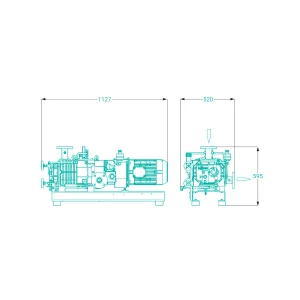 COBRA NC 0100 BPumping speed 110 m³/h 50 Hz130 m³/h 60 HzUltimate pressure 0.05 mbarRated motor power 3.5 kW 50 Hz4.8 kW 60 HzVariants 4
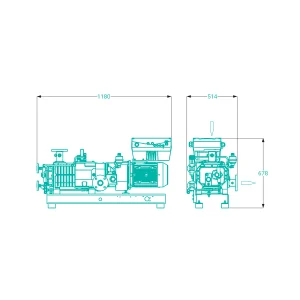 COBRA NC 0100 B ECOTORQUEPumping speed 130 m³/h 50 Hz130 m³/h 60 HzUltimate pressure 0.05 mbarRated motor power 4.8 kW 50 Hz4.8 kW 60 HzVariants
Busch COBRA Semicon series 22 models
Busch DOLPHIN series 70 models
Busch MINK series 32 models
Busch PANDA/PUMA series 26 models
Busch R5 series 58 models
Busch SAMOS series 31 models
Busch SECO series 10 models
Busch TYR series 16 models
Edwards nES Ex series 5 models
Edwards Stokes Microvac series 2 models
Edwards Stokes series 4 models
Pfeiffer Vacuum A4 series 12 models
Pfeiffer Vacuum A 100/200 L series 3 models
Pfeiffer Vacuum ACP series 4 models
Pfeiffer Vacuum DuoVane series 12 models
Pfeiffer Vacuum HiLobe series 17 models
Pfeiffer Vacuum HiScroll series 4 models
Pfeiffer Vacuum TORRI series 4 models
Pfeiffer Vacuum UnoLine Plus series 1 model
No model matches these filters.
Atlas Copco DWS VSD+ series 6 models
Atlas Copco GLS series 2 models
Atlas Copco GVD series 13 models
Busch COBRA Industry series 36 models
Busch COBRA Semicon series 22 models
Busch DOLPHIN series 70 models
Busch MINK series 32 models
Busch PANDA/PUMA series 26 models
Busch R5 series 58 models
Busch SAMOS series 31 models
Busch SECO series 10 models
Busch TYR series 16 models
Edwards nES Ex series 5 models
Edwards Stokes Microvac series 2 models
Edwards Stokes series 4 models
Pfeiffer Vacuum A4 series 12 models
Pfeiffer Vacuum A 100/200 L series 3 models
Pfeiffer Vacuum ACP series 4 models
Pfeiffer Vacuum DuoVane series 12 models
Pfeiffer Vacuum HiLobe series 17 models
Pfeiffer Vacuum HiScroll series 4 models
Pfeiffer Vacuum TORRI series 4 models
Pfeiffer Vacuum UnoLine Plus series 1 model
Models a manufacturer no longer carries in its current range are listed in its “Outdated models” section.
Selection
Automotive and transport: choosing a vacuum pump
What the manufacturers highlight for use in this industry.
Leak rate and ultimate pressure
The test sets the pressure: Pfeiffer Vacuum names leak rates down to ≤10⁻⁹ mbar·l/s for integral leak testing, about 5×10⁻⁵ hPa for electron beam melting, 10⁻² to 10⁻⁵ hPa for vacuum furnaces and 10⁻⁷ to 10⁻⁵ hPa for ion thruster tests. A backing pump alone does not reach the lowest of these pressures: for the industry, Pfeiffer Vacuum lists turbo pumps as well as boosters, rotary vane, scroll and multi-stage Roots pumps, and Busch combines COBRA with PANDA/PUMA.
Oil-free or oil-lubricated
For evacuating brake and air-conditioning lines and for die casting, Busch names the oil-lubricated R5 rotary vane pumps, and for test benches, furnaces and coating the dry COBRA and MINK. Pfeiffer Vacuum names the DuoVane rotary vane pumps alongside the dry HiScroll scroll pumps and the ACP multi-stage Roots pumps. For the automotive industry, Atlas Copco lists the oil-sealed GVD and GLS and the dry DWS VSD+ screw pumps, and Edwards the Stokes and Microvac rotary piston pumps as well as nES Ex.
One pump per station
For the automotive industry, Busch names casting, drying, line filling, leak testing and handling – and different series for each task: MINK, SAMOS, SECO and TYR for pick & place, R5 and DOLPHIN for line filling, COBRA for end-of-line testing, COBRA with PANDA/PUMA for furnaces and welding systems. Which station is to be supplied determines the ultimate pressure, pumping speed and design.
Temperature and process gases
According to Busch, vacuum furnaces run with hot zones of usually 1,200 °C, and above 2,000 °C in special processes; Pfeiffer Vacuum names process gases in low-pressure carburising (carbon diffusion) and plasma nitriding. In die casting, according to Busch, the gases from the mould reach the pump. The pump has to match what comes out of the furnace, the mould or the test piece.
Frequently asked questions
Automotive and transport: frequently asked questions about vacuum pumps
Which vacuum pump for leak testing batteries?
Busch names the end-of-line leak testing of batteries, tanks and HVAC with COBRA as well as PANDA/PUMA, R5 and MINK. For integral leak testing under vacuum on batteries, tanks, air conditioning and hydraulics, Pfeiffer Vacuum names A 100/200 L, ACP, DuoVane, HiLobe and HiScroll with leak rates down to ≤10⁻⁹ mbar·l/s.
Which leak rate is achieved in leak testing in automotive manufacturing?
For integral testing under vacuum, Pfeiffer Vacuum names leak rates down to ≤10⁻⁹ mbar·l/s. In helium spraying, the leak detector locates leaks of about 10⁻⁷ to 10⁻⁹ mbar·l/s on the evacuated system, but does not measure a leak rate. For the backing pumps, Pfeiffer Vacuum names ACP, DuoVane and HiScroll.
Which vacuum pump is suitable for vacuum die casting?
Busch names the removal of the gases from the mould in the die casting of aluminium and magnesium with R5, MINK, COBRA and PANDA/PUMA. For vacuum die casting, Pfeiffer Vacuum names HiLobe and COMBI.
Which vacuum pump for evacuating brake and air-conditioning lines?
Busch names the evacuation of brake and air-conditioning lines before filling with R5 and DOLPHIN. For vacuum evacuation and filling, Pfeiffer Vacuum names DuoVane and HiScroll.
How much vacuum does a vacuum furnace need for hardening?
Pfeiffer Vacuum names hardening at about 10⁻³ hPa and 800–1,000 °C, tempering at 10 to 10⁻³ hPa and 150–650 °C, low-pressure carburising at 1 to 10⁻² hPa and 900–1,050 °C, plasma nitriding at about 10⁻² to 10⁻³ hPa and brazing or sintering at 10⁻² to 10⁻⁵ hPa. As pumps, Pfeiffer Vacuum names HiScroll, HiLobe and UnoLine Plus, and Busch names COBRA, MINK, PANDA/PUMA and R5 for furnaces with hot zones of usually 1,200 °C.
Which vacuum pump for electron beam welding?
Busch names COBRA, PANDA/PUMA and R5 and describes pore-free welds. Pfeiffer Vacuum names DuoVane, HiLobe and HiScroll as well as COMBI.
Which vacuum pump for metal 3D printing?
For electron beam melting, Pfeiffer Vacuum names about 5×10⁻⁵ hPa, so that the powder does not oxidise and the beam is guided, and as pumps ACP, DuoVane, HiLobe and HiScroll. Busch names stable vacuum conditions for additive manufacturing with COBRA, PANDA/PUMA and R5.
Which vacuum pump for a thermal vacuum chamber (space simulation)?
For thermal vacuum and propulsion tests and telescope optics, Pfeiffer Vacuum names scroll, screw and Roots pumps, specifically ACP, HiLobe and HiScroll, and for ion thruster tests 10⁻⁷ to a few 10⁻⁵ hPa. Busch names recreating the orbit in ultra-high vacuum with COBRA.
Oil-free or oil-lubricated for automotive manufacturing?
Both are named: Busch lists the oil-lubricated R5 for line filling and die casting and the dry COBRA and MINK for test benches, furnaces, coating and handling; Pfeiffer Vacuum names DuoVane alongside the dry HiScroll and ACP. Atlas Copco lists the oil-sealed GVD and GLS and the dry DWS VSD+; Edwards lists Stokes, Microvac, E2M18/28 and nES Ex – both without describing the tasks.
Which vacuum pump for vacuum toilets in trains and ships?
Busch names vacuum supply and disposal systems for waste water in trains and ships and, for them, MINK, R5, SECO and TYR.
Does Ehrler & Beck also supply spare parts and service?
Yes. Ehrler & Beck offers original spare parts and accessories as well as maintenance and repair.
Which pump suits your process?
Tell us the application, the medium and the number of machines – we advise you on selection, spare parts and service.
