

Application
Vacuum pumps for vacuum forming and thermoforming
In vacuum forming (thermoforming) a heated plastic sheet or film is placed over a mould and the air between the material and the mould is extracted; the air pressure presses the soft material into every contour. The same principle forms the bottom film of thermoform packaging, blister cavities, the pouch film of battery cells and veneer over wooden moulds. Below you can see how the application works, what vacuum the manufacturers name and which of their series are intended for it – 401 models from 6 manufacturers.
Compare 401 modelsHow it works
- 401Models
- 22Series
- 6Manufacturers
- 50–200 mbarBCV series on inline thermoformers (Becker)
Touch the points: each part of the system explains itself.
In short
Thermoforming: the key facts
- Three types of vacuumOn inline thermoformers Becker distinguishes forming vacuum, evacuation vacuum and control vacuum; the evacuation vacuum determines the residual oxygen in the pack.
- Pumping speedFor inline thermoformers Becker names U5 with 65–360 m³/h, BCV with 100–600 m³/h at 50–200 mbar and RBP with 500–2,400 m³/h; Elmo Rietschle lists the screw vacuum pumps S-VSI 100 and S-VSI 300 with 110–380 m³/h and an ultimate vacuum of 0.1 mbar (abs.).
- Heated sheetAccording to Leybold, the heated plastic sheet is drawn onto the mould by vacuum; Leybold names SOGEVAC SV 220 B and SV 320 B as well as VACUBE for this. Pfeiffer Vacuum describes PVC that is heated and formed under vacuum at 1–10 hPa and 100–250 °C.
- PackagingBusch describes how the bottom film of thermoform packaging is formed into a tray and how vacuum forms blister cavities; for the forming station Busch names MINK and R5, for the sealing and evacuation station COBRA, PANDA/PUMA and R5.
Operating principle
How it works: Thermoforming
The drawing shows the basic principle in section. The systems and pumps of the individual manufacturers differ in detail.
- HeatingThe sheet or film is heated until it is formable. Pfeiffer Vacuum names 100–250 °C for PVC.
- SuctionThe air between the material and the mould is extracted, and the air pressure presses the material into the mould. Leybold describes the heated plastic sheet that is drawn onto the mould by vacuum; Pfeiffer Vacuum names 1–10 hPa.
- CoolingThe part cools in the mould and keeps its contour; the vacuum is released and the part is removed. In thermoform packaging machines the sealing and evacuation station follows (Busch).
Vacuum and sizing
Thermoforming: how much vacuum is needed
What the manufacturers say about pressure, pumping speed and sizing.
What vacuum
For BCV on inline thermoformers Becker names 50–200 mbar and describes that the evacuation vacuum determines the residual oxygen. Pfeiffer Vacuum names 1–10 hPa for thermoforming PVC. Elmo Rietschle states an ultimate vacuum of 0.1 mbar (abs.) for S-VSI 100 and S-VSI 300.
What pumping speed
Becker: U5 65–360 m³/h, BCV 100–600 m³/h, RBP 500–2,400 m³/h. Elmo Rietschle: S-VSI 100 and S-VSI 300 with 110–380 m³/h.
What determines the sizing
Becker separates forming, evacuation and control vacuum and works through an example for the BCV 300 with 2.9 kW instead of 4 kW. For thermoform packaging machines Busch distinguishes the forming station (MINK, R5) and the sealing and evacuation station (COBRA, PANDA/PUMA, R5).
What the manufacturers point out
Elmo Rietschle lists vacuum forming in data sheet D832 only as an application of the dry screw vacuum pump, without describing it. Edwards names claw vacuum pumps for vacuum forming and scroll vacuum pumps for shaping, Pfeiffer Vacuum HiScroll for injection moulding. For EPS moulded parts Atlas Copco names AWS and LRP VSD+; Elmo Rietschle describes the conveying of EPS and steam moulding processes.
Technology
Thermoforming: the vacuum pumps the manufacturers name
Listed are the series the manufacturer itself names for this application. “Show only …” sets the filter of the product overview.
Oil-lubricated rotary vane vacuum pumps
100 models · 3–1,800 m³/h
Liquid ring vacuum pumps
95 models · 25–26,000 m³/h
Screw vacuum pumps
71 models · 70–5,740 m³/h
Claw vacuum pumps
44 models · 18–1,150 m³/h
Side channel blowers
31 models · 40–2,200 m³/h
Roots vacuum pumps
29 models · 250–12,000 m³/h
Rotary lobe blowers
16 models · 535–4,000 m³/h
Dry-running rotary vane vacuum pumps
10 models · 3–83 m³/h
Scroll vacuum pumps
4 models · 6.1–43 m³/h
Screw compressors
1 model · 1,230 m³/h
Edwards names the application without naming a series for it.
Product overview
Thermoforming: all 401 models compared
Use the filters on the left to narrow the selection – by manufacturer, technology and the models’ key figures, for 50 or 60 Hz.
Atlas Copco AWS series 22 models
Atlas Copco GHS VSD+ series 21 models
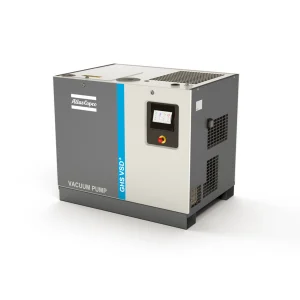 GHS 350 VSD+Pumping speed 400 m³/h 50 Hz400 m³/h 60 HzUltimate pressure 0.35 mbarRated motor power 5.5 kW 50 Hz5.5 kW 60 HzVariants 29
Atlas Copco LRP VSD+ series 3 models
Becker BCV series 7 models
Becker RBP series 3 models
Becker U4 series 6 models
Becker U O2-PACK series 5 models
Becker U series 8 models
Becker VADS series 3 models
Busch COBRA Industry series 36 models
Busch DOLPHIN series 70 models
Busch MINK series 32 models
Busch PANDA/PUMA series 26 models
Busch R5 series 58 models
Busch SAMOS series 31 models
Busch SECO series 10 models
Busch TYR series 16 models
Elmo Rietschle S-SVT series 11 models
Elmo Rietschle S-VSI series 1 model
Leybold CLAWVAC series 5 models
Leybold SOGEVAC series 23 models
Pfeiffer Vacuum HiScroll series 4 models
No model matches these filters.
Atlas Copco AWS series 22 models
Atlas Copco GHS VSD+ series 21 models
Atlas Copco LRP VSD+ series 3 models
Becker BCV series 7 models
Becker RBP series 3 models
Becker U4 series 6 models
Becker U O2-PACK series 5 models
Becker U series 8 models
Becker VADS series 3 models
Busch COBRA Industry series 36 models
Busch DOLPHIN series 70 models
Busch MINK series 32 models
Busch PANDA/PUMA series 26 models
Busch R5 series 58 models
Busch SAMOS series 31 models
Busch SECO series 10 models
Busch TYR series 16 models
Elmo Rietschle S-SVT series 11 models
Elmo Rietschle S-VSI series 1 model
Leybold CLAWVAC series 5 models
Leybold SOGEVAC series 23 models
Pfeiffer Vacuum HiScroll series 4 models
Models a manufacturer no longer carries in its current range are listed in its “Outdated models” section.
Industries
Thermoforming: where the manufacturers name it
The manufacturers list these uses on their own pages.
Plastics and recycling
Becker, Busch, Edwards, Elmo Rietschle and Pfeiffer Vacuum name thermoforming in the plastics industry: according to Busch, thermoplastic sheets are drawn into shape by vacuum (R5, MINK), Edwards describes claw vacuum pumps that draw the film onto the mould, Pfeiffer Vacuum names 1–10 hPa for PVC, Becker lists thermoforming, injection moulding and rubber moulding only as uses, Elmo Rietschle lists vacuum forming in the S-VSI data sheet.
Packaging
For inline thermoformers Becker names forming, evacuation and control vacuum (U5, BCV, RBP), Busch describes thermoform packaging and blister packaging – the bottom film is formed into a tray, the vacuum forms the blister cavities – with MINK, R5, SAMOS, SECO and TYR, Elmo Rietschle lists forming and blister packaging without description.
Battery manufacturing
Leybold describes the thermoforming of the pouch film of pouch cells under vacuum and names VARODRY, SOGEVAC and CLAWVAC for it.
Medical and healthcare
Atlas Copco names thermoforming and injection moulding for medical devices: vacuum removes the air from the moulds for syringes, housings and connectors.
Confectionery and bakery
Busch names moulding and forming in confectionery production: starch moulds are degassed before casting, with DOLPHIN, R5 and MINK.
Woodworking
Busch describes the vacuum forming of wood and veneer over a mould and names R5 for it.
Fish farming and aquaculture
In fish farming and aquaculture Busch names the thermoforming of packaging with MINK and R5.
Mechanical engineering and manufacturing
Leybold lists vacuum forming under general industry: the heated plastic sheet is drawn onto the mould by vacuum; SOGEVAC SV 220 B, SV 320 B and VACUBE are named.
Frequently asked questions
Thermoforming: frequently asked questions
How does thermoforming with vacuum work?
A thermoplastic sheet or film is heated and placed over the mould; then the air between the material and the mould is extracted. The air pressure presses the soft material into the mould. Leybold describes it as a heated plastic sheet that is drawn onto the mould by vacuum, Busch as thermoplastic sheets that are drawn into shape by vacuum. Pfeiffer Vacuum names 1–10 hPa at 100–250 °C for PVC.
Which vacuum pump is suitable for thermoforming machines?
For thermoforming Busch names R5 and MINK, Becker U5, U5 O2-PACK, BCV and RBP for inline thermoformers (U4 and VADS 250 also in the table), Leybold SOGEVAC SV 220 B and SV 320 B, Atlas Copco GHS VSD+ for thermoforming and plastics forming, Elmo Rietschle S-VSI 100 and S-VSI 300, Edwards claw vacuum pumps. Which series fits depends on the vacuum and pumping speed required.
How much vacuum is needed for thermoforming?
For BCV on inline thermoformers Becker names 50–200 mbar, Pfeiffer Vacuum 1–10 hPa for thermoforming PVC. Elmo Rietschle states an ultimate vacuum of 0.1 mbar (abs.) for S-VSI. In thermoform packaging, according to Becker, the evacuation vacuum determines the residual oxygen in the pack.
Oil-free or oil-lubricated for thermoforming?
The manufacturers name both. Busch lists the oil-lubricated rotary vane vacuum pump R5 and the dry claw vacuum pump MINK side by side, Becker the oil-lubricated U5 and the dry claw vacuum pump BCV, Leybold SOGEVAC (oil-lubricated) and, for pouch film, also CLAWVAC. Edwards names claw vacuum pumps, Elmo Rietschle the dry screw vacuum pump S-VSI.
What pumping speed does a thermoforming machine need?
For inline thermoformers Becker names, depending on the series, 65–360 m³/h (U5), 100–600 m³/h (BCV) and 500–2,400 m³/h (RBP), Elmo Rietschle 110–380 m³/h for S-VSI 100 and S-VSI 300.
What is the difference between forming vacuum, evacuation vacuum and control vacuum?
On inline thermoformers Becker distinguishes three vacuum circuits: the forming vacuum draws the film into the mould, the evacuation vacuum determines the residual oxygen in the pack, and the control vacuum is a separate circuit for the machine. Becker names U5, U5 O2-PACK, RBP and BCV for this.
Which vacuum pump for thermoform packaging machines?
On thermoform packaging machines Busch distinguishes the forming station, for which MINK and R5 are named, and the sealing and evacuation station with COBRA, PANDA/PUMA and R5. Becker names U5, U5 O2-PACK, RBP and BCV for inline thermoformers; Leybold names VARODRY, SOGEVAC and CLAWVAC for thermoforming pouch film.
Why are blister packs formed with vacuum?
According to Busch, the vacuum forms the blister cavities: the film is drawn into the mould before the product is inserted and the lidding film is applied. Busch names MINK, R5, SAMOS, SECO and TYR for this; Elmo Rietschle lists blister packaging without further description.
Can wood and veneer be vacuum formed?
Yes. In woodworking Busch describes how wood and veneer are drawn over a mould by vacuum, and names the R5 series for this.
Which vacuum pump for EPS moulded parts?
For moulding expanded polystyrene (EPS) Atlas Copco names the liquid ring vacuum pumps AWS and LRP VSD+. Elmo Rietschle describes the conveying of EPS and steam moulding processes, Edwards lists EPS foaming and moulding without description.
A single pump or a central vacuum system?
A central system in a room of its own keeps noise and heat away from production and matches its output to the demand. Central vacuum systems are planned and built by Eugen Theis Vakuum, a company of the Ehrler & Beck group – more under Central Vacuum.
Does Ehrler & Beck also supply spare parts and service?
Yes. Ehrler & Beck offers original spare parts and accessories as well as maintenance and repair.
Which pump suits your process?
Tell us the application, the medium and the volume – we advise you on selection, spare parts and service.
