

Application
Vacuum pumps for gas and vapour recovery
In gas and vapour recovery, the vacuum pump draws vapours and gases out of storage tanks, lines or processes instead of flaring them or letting them escape; they are condensed, compressed or returned in a circuit – from flare gas and helium to the surplus hydrogen of a fuel cell. Below you can see how the application works, what vacuum the manufacturers name and which of their series are intended for it – 318 models from 5 manufacturers.
Compare 318 modelsHow it works
- 318Models
- 18Series
- 5Manufacturers
- 20–70 %of the H₂ feed back into the stack (Busch)
Touch the points: each part of the system explains itself.
In short
Gas and vapour recovery: the key facts
- Vapours from tanksBusch describes the extraction of vapours from storage tanks (COBRA, DOLPHIN, R5); Edwards names pumps that draw gases out of lines and tanks (LR compressors, chemical dry pumps, nES Ex).
- Flare gasAccording to Busch, waste gases and flare gases are extracted and compressed (DOLPHIN incl. LN compressor, MINK); Edwards names the use of the hydrocarbons as fuel with LR compressors.
- HydrogenAccording to Busch, with MINK MH 0018 A, 20–70 % of the H₂ feed goes back into the stack of the fuel cell as surplus hydrogen.
- HeliumFor helium recovery, cryostats and superconducting magnets, Leybold names ECODRY 65 He plus with a leak rate below 5×10⁻⁸ mbar·l/s for closed circuits of permanent gases; for helium-3 and helium-4, Edwards lists XDS, nXRi, EXS and nXQ55i.
Operating principle
How it works: Gas and vapour recovery
The drawing shows the basic principle in section. The systems and pumps of the individual manufacturers differ in detail.
- ExtractionThe pump draws vapours and gases out of tanks and lines (Busch, Edwards) or takes up the surplus hydrogen of the stack (Busch).
- CondensingCondensable components are cooled and separated as liquid; for gas circulation, Becker names heat exchangers that cool the gas. According to Busch, flare gas is compressed – DOLPHIN with LN compressor.
- ReturningThe gas is used as fuel (Edwards), goes back into the stack (Busch) or remains in a closed circuit (Leybold, Becker).
Vacuum and sizing
Gas and vapour recovery: how much vacuum is needed
What the manufacturers say about pressure, pumping speed and sizing.
Which vacuum
For ECODRY 65 He plus, Leybold gives a leak rate below 5×10⁻⁸ mbar·l/s – important because helium must not be lost in closed circuits; for gas circulation, Becker names gas-tight blowers with KF flanges.
Which pumping speed
For helium return, Edwards names nXQ55i with up to 52 m³/h. For hydrogen recirculation, Busch names 20–70 % of the H₂ feed that goes back into the stack.
What determines the sizing
The gas: hydrocarbons from tanks and flares (Busch, Edwards), helium in cryostats (Leybold, Edwards), hydrogen in fuel cells (Busch) or expensive gases that, according to Becker, are to remain in the circuit without loss – and whether the gas is only extracted or also compressed (Busch: DOLPHIN with LN compressor).
What the manufacturers point out
Becker assigns gas circulation to the blowers (compressors) and names heat exchangers for cooling; for vapour recovery, Edwards names the nES Ex alongside LR compressors and chemical dry pumps; Atlas Copco names liquid ring systems for vapour recovery and DWS VSD+ for gas recovery and circulation without a description.
Technology
Gas and vapour recovery: the vacuum pumps the manufacturers name
Listed are the series the manufacturer itself names for this application. “Show only …” sets the filter of the product overview.
Liquid ring vacuum pumps
103 models · 20–16,160 m³/h
Oil-lubricated rotary vane vacuum pumps
63 models · 3–1,800 m³/h
Screw vacuum pumps
53 models · 70–5,760 m³/h
Side channel blowers
53 models · 24–2,200 m³/h
Claw vacuum pumps
32 models · 18–1,150 m³/h
Roots vacuum pumps
10 models · 25–120 m³/h
Radial blowers
2 models · 1,570 m³/h
Scroll vacuum pumps
2 models · 35–40 m³/h
Pfeiffer Vacuum names the application without naming a series for it.
Product overview
Gas and vapour recovery: all 318 models compared
Use the filters on the left to narrow the selection – by manufacturer, technology and the models’ key figures, for 50 or 60 Hz.
Atlas Copco DWS VSD+ series 6 models
Becker SV series 16 models
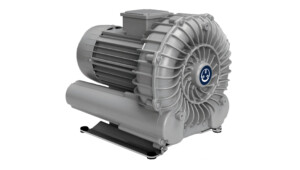 SV 130/2Pumping speed 70 m³/h 50 Hz85 m³/h 60 HzUltimate pressure 620 – 830 mbarRated motor power 0.55 – 1.1 kW 50 Hz0.66 – 1.3 kW 60 HzVariants 11
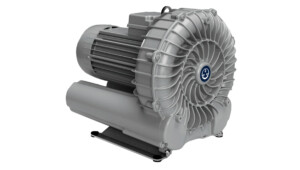 SV 200/2Pumping speed 90 m³/h 50 Hz110 m³/h 60 HzUltimate pressure 670 mbarRated motor power 1.1 – 1.5 kW 50 Hz1.3 – 1.8 kW 60 HzVariants 9SV 130/1Pumping speed 130 m³/h 50 Hz160 m³/h 60 HzUltimate pressure 760 – 925 mbarRated motor power 0.55 – 1.5 kW 50 Hz0.66 – 1.8 kW 60 HzVariants 19SV 200/1Pumping speed 180 m³/h 50 Hz230 m³/h 60 HzUltimate pressure 785 – 850 mbarRated motor power 1.1 – 1.5 kW 50 Hz1.3 – 1.8 kW 60 HzVariants 9
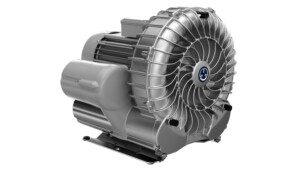 SV 400/2Pumping speed 195 m³/h 50 Hz235 m³/h 60 HzUltimate pressure 560 mbarRated motor power 3 – 5.5 kW 50 Hz3.6 – 6.6 kW 60 HzVariants 12
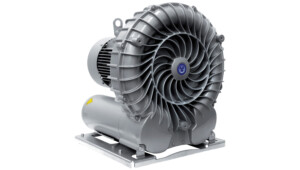 SV 700/2Pumping speed 375 m³/h 50 Hz435 m³/h 60 HzUltimate pressure 600 mbarRated motor power 7.5 kW 50 Hz9 kW 60 HzVariants 3SV 400/1Pumping speed 390 m³/h 50 Hz470 m³/h 60 HzUltimate pressure 685 – 790 mbarRated motor power 3 – 5.5 kW 50 Hz3.6 – 6.6 kW 60 HzVariants 12SV 700/1Pumping speed 750 m³/h 50 Hz900 m³/h 60 HzUltimate pressure 660 – 800 mbarRated motor power 5.5 – 11 kW 50 Hz6.6 – 13.2 kW 60 HzVariants 10
Becker VARIAIR RV series 1 model
Becker VASF series 6 models
Becker VATP series 1 model
Busch COBRA Industry series 36 models
Busch DOLPHIN series 70 models
Busch MINK series 32 models
Busch R5 series 58 models
Busch SAMOS series 31 models
Edwards EXS series 11 models
Edwards LR1A series 12 models
Edwards LR1C series 9 models
Edwards LR1D series 12 models
Edwards nES Ex series 5 models
Edwards nXRi series 5 models
Edwards XDS series 2 models
Leybold ECODRY series 5 models
No model matches these filters.
Atlas Copco DWS VSD+ series 6 models
Becker SV series 16 models
Becker VARIAIR RV series 1 model
Becker VASF series 6 models
Becker VATP series 1 model
Busch COBRA Industry series 36 models
Busch DOLPHIN series 70 models
Busch MINK series 32 models
Busch R5 series 58 models
Busch SAMOS series 31 models
Edwards EXS series 11 models
Edwards LR1A series 12 models
Edwards LR1C series 9 models
Edwards LR1D series 12 models
Edwards nES Ex series 5 models
Edwards nXRi series 5 models
Edwards XDS series 2 models
Leybold ECODRY series 5 models
Models a manufacturer no longer carries in its current range are listed in its “Outdated models” section.
Industries
Gas and vapour recovery: where the manufacturers name it
The manufacturers list these uses on their own pages.
Oil and gas
Busch describes the extraction of vapours from storage tanks (COBRA, DOLPHIN, R5) and flare gas recovery, in which waste gas and flare gas are extracted and compressed (DOLPHIN incl. LN compressor, MINK); Edwards names pumps that draw gases out of lines and tanks (LR compressors, chemical dry pumps, nES Ex), and the use of the hydrocarbons from flare gas as fuel.
Hydrogen and fuel cells
In the fuel cell, Busch describes hydrogen recirculation with MINK MH 0018 A: 20–70 % of the H₂ feed goes back into the stack as surplus hydrogen.
Environmental and wastewater
Busch and Pfeiffer Vacuum also assign the application to environmental technology; for exhaust gas recovery, Busch names MINK, for circulation DOLPHIN and SAMOS, and Pfeiffer Vacuum lists both in its product finder without a description.
Mining
Busch and Pfeiffer Vacuum also assign the application to mining: for exhaust gas recovery, Busch names MINK, for circulation DOLPHIN and SAMOS, and Pfeiffer Vacuum lists both in its product finder.
Mechanical engineering and manufacturing
Becker describes gas circulation with gas-tight blowers (SV, VASF, VARIAIR RV, VATP, with KF flanges) that convey expensive gases in a circuit without loss while heat exchangers provide cooling; gas circulation in CO₂ lasers is also named.
Packaging
In dry secondary packaging, Becker names the circulation of oxygen-reduced air for a longer shelf life of food.
Frequently asked questions
Gas and vapour recovery: frequently asked questions
How does vapour recovery with vacuum pumps work?
The vacuum pump draws off the vapours that form in storage tanks and lines – Busch describes extraction from storage tanks, Edwards pumps that draw gases out of lines and tanks. The vapours are cooled and condensed, or compressed and, according to Edwards, used as fuel.
Which vacuum pump for vapour recovery from storage tanks?
Busch names COBRA, DOLPHIN and R5, Edwards LR compressors, chemical dry pumps and the explosion-proof nES Ex, Atlas Copco liquid ring systems. For exhaust gas recovery, Busch names MINK, and Pfeiffer Vacuum lists it in its product finder.
Which vacuum pump for flare gas recovery?
Busch names DOLPHIN – also with an LN compressor – and MINK: waste gas and flare gas are extracted and compressed. Edwards names LR compressors, with which the hydrocarbons are used as fuel instead of being flared.
How does hydrogen recirculation in fuel cells work?
The stack does not use all the hydrogen supplied; the surplus is extracted and fed back in. For this, Busch names MINK MH 0018 A and 20–70 % of the H₂ feed that goes back into the stack.
Which vacuum pump for helium recovery?
Leybold names ECODRY 65 He plus for helium recovery, cryostats, dilution refrigeration and superconducting magnets – closed circuits of permanent gases with a leak rate below 5×10⁻⁸ mbar·l/s. For helium-3 and helium-4, Edwards lists XDS, nXRi, EXS and nXQ55i, the nXQ55i with up to 52 m³/h of helium.
What is gas circulation and which blowers are suitable for it?
In gas circulation, a gas is conveyed in a closed circuit, for example in CO₂ lasers or as oxygen-reduced air in packaging. For this, Becker names gas-tight side channel and radial blowers (SV, VASF, VARIAIR RV, VATP) with KF flanges that convey expensive gases without loss, and heat exchangers that cool the gas; for circulation, Busch names DOLPHIN and SAMOS.
Oil-free or oil-lubricated for gas recovery?
The manufacturers name both: Busch the oil-lubricated R5, the dry COBRA and MINK and the liquid ring vacuum pump DOLPHIN; Edwards the oil-lubricated, explosion-proof nES Ex, chemical dry pumps, liquid ring compressors of the LR series and, for helium, the dry XDS, nXRi and EXS; Leybold the dry ECODRY for helium. For expensive or pure gases, Leybold (leak rate) and Becker (gas-tight) speak of tight circuits.
How much vacuum does gas recovery need?
Tightness and throughput are named: Leybold a leak rate below 5×10⁻⁸ mbar·l/s for ECODRY 65 He plus, Edwards up to 52 m³/h of helium for nXQ55i, Busch 20–70 % of the H₂ feed in recirculation.
Why explosion-proof pumps for vapour recovery?
Vapours from oil and gas plants are flammable. For vapour recovery, Edwards names the explosion-proof nES Ex alongside LR compressors and chemical dry pumps; for vapours from storage tanks, Busch names COBRA, DOLPHIN and R5.
A single pump or a central vacuum system?
A central system in a room of its own keeps noise and heat away from production and matches its output to the demand. Central vacuum systems are planned and built by Eugen Theis Vakuum, a company of the Ehrler & Beck group – more under Central Vacuum.
Does Ehrler & Beck also supply spare parts and service?
Yes. Ehrler & Beck offers original spare parts and accessories as well as maintenance and repair.
Which pump suits your process?
Tell us the application, the medium and the volume – we advise you on selection, spare parts and service.
