

Application
Vacuum pumps for modified atmosphere packaging (MAP)
In modified atmosphere packaging (MAP), the air in the pack is replaced by a gas mixture: the vacuum pump evacuates the chamber or tray, then protective gas flows in, and only after that is the pack sealed. Leybold describes it for thermoformers and tray sealers as evacuating and flushing with gas; according to Atlas Copco, the protective gas can also have a high oxygen content. Below you can see how the application works, what vacuum the manufacturers name and which of their series are intended for it – 185 models from 5 manufacturers.
Compare 185 modelsHow it works
- 185Models
- 10Series
- 5Manufacturers
- 0.1 mbar (abs.)Ultimate pressure of the S-VSI 300 OXY (Elmo Rietschle)
Touch the points: each part of the system explains itself.
In short
Modified atmosphere packaging (MAP): the key facts
- Gas instead of airBusch describes MAP as replacing the air with a gas mixture, Atlas Copco as exchanging the air for protective gas, also with a high oxygen content, and Leybold as evacuating and flushing with gas on thermoformers and tray sealers.
- Oxygen in the gasBecause the protective gas can be rich in oxygen, Atlas Copco names hydrocarbon-free pumps with oxygen-compatible seals. Elmo Rietschle lists the screw vacuum pump S-VSI 300 in the OXY version, which extracts gases with an increased oxygen content; Elmo Rietschle expressly names MAP as an example of this.
- Oil-lubricated or dryFor MAP, the manufacturers name both: Busch the oil-lubricated rotary vane vacuum pump R5 and the dry claw vacuum pump MINK, Leybold the oil-lubricated SOGEVAC and the dry screw vacuum pump NOVADRY, Atlas Copco the oil-lubricated GVS A and GVS VSD+ as well as dry screw and claw vacuum pumps.
- Pumping speedIn its product finder, Busch also lists the Roots pumps PANDA and PUMA for MAP packaging, Pfeiffer Vacuum HiLobe. For the S-VSI 300 OXY, Elmo Rietschle gives up to 380 m³/h.
Operating principle
How it works: Modified atmosphere packaging (MAP)
The drawing shows the basic principle in section. The systems and pumps of the individual manufacturers differ in detail.
- EvacuationThe vacuum pump extracts the air from the chamber and the pack. Leybold describes this for thermoformers and tray sealers; for the S-VSI 300 OXY, Elmo Rietschle gives up to 380 m³/h and 0.1 mbar (abs.).
- Gas fillingThe protective gas flows in and replaces the air: according to Busch, a gas mixture, according to Atlas Copco, also with a high oxygen content.
- SealingThe sealing tool closes the pack with the protective gas inside; the chamber is then vented and the pack removed.
Vacuum and sizing
Modified atmosphere packaging (MAP): how much vacuum is needed
What the manufacturers say about pressure, pumping speed and sizing.
Which vacuum
For the S-VSI 300 OXY, Elmo Rietschle gives an ultimate pressure of 0.1 mbar (abs.) and a pumping speed of up to 380 m³/h. How deeply the pack is evacuated before gas filling depends on the product and the machine.
Oxygen
Atlas Copco points out that the protective gas can have a high oxygen content, and names hydrocarbon-free dry screw and claw vacuum pumps with oxygen-compatible seals. For this, Elmo Rietschle lists the OXY version of the S-VSI 300, which extracts gases with an increased oxygen content.
Which pumps
Leybold names SOGEVAC and NOVADRY for thermoformers and tray sealers; Busch R5 and MINK, and in its product finder PANDA and PUMA; Atlas Copco GVS A and GVS VSD+; Pfeiffer Vacuum HiLobe; Elmo Rietschle the S-VSI 300 OXY. Which pump fits depends on whether a thermoformer, a tray sealer or a chamber machine is supplied.
Technology
Modified atmosphere packaging (MAP): the vacuum pumps the manufacturers name
Listed are the series the manufacturer itself names for this application. “Show only …” sets the filter of the product overview.
Oil-lubricated rotary vane vacuum pumps
94 models · 3–1,800 m³/h
Roots vacuum pumps
43 models · 250–13,540 m³/h
Claw vacuum pumps
32 models · 18–1,150 m³/h
Screw vacuum pumps
16 models · 63–5,740 m³/h
Product overview
Modified atmosphere packaging (MAP): all 185 models compared
Use the filters on the left to narrow the selection – by manufacturer, technology and the models’ key figures, for 50 or 60 Hz.
Atlas Copco GVS series 9 models
Atlas Copco GVS VSD+ series 4 models
 GVS 80 VSD+Pumping speed 78 m³/h 50 Hz78 m³/h 60 HzUltimate pressure 0.5 mbarRated motor power 2.2 kW 50 Hz2.2 kW 60 HzVariants 1
 GVS 120 VSD+Pumping speed 117 m³/h 50 Hz117 m³/h 60 HzUltimate pressure 0.5 mbarRated motor power 3.7 kW 50 Hz3.7 kW 60 HzVariants 1
Busch MINK series 32 models
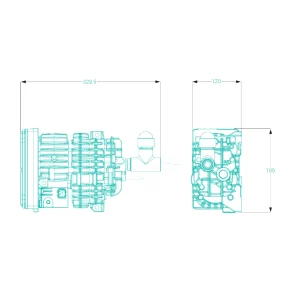 MINK MB 0018 APumping speed 18 m³/h 50 Hz18 m³/h 60 HzUltimate pressure 600 mbarRated motor power 0.5 kW 50 Hz0.5 kW 60 HzVariants 2
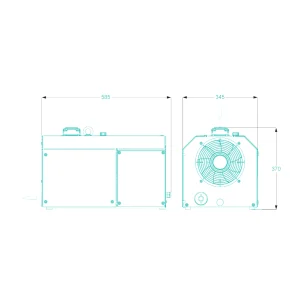 MINK MV 0040 E ECOTORQUEPumping speed 40 m³/h 50 Hz40 m³/h 60 HzUltimate pressure 40 mbarRated motor power Variants
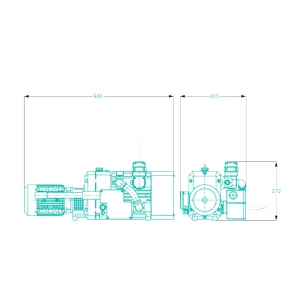 MINK MI 2124 BVPumping speed 50 m³/h 50 Hz60 m³/h 60 HzUltimate pressure 20 mbarRated motor power 2 kW 50 Hz2.4 kW 60 HzVariants
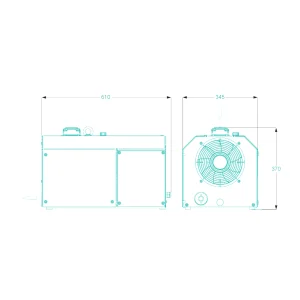 MINK MV 0060 E ECOTORQUEPumping speed 60 m³/h 50 Hz60 m³/h 60 HzUltimate pressure 40 mbarRated motor power Variants
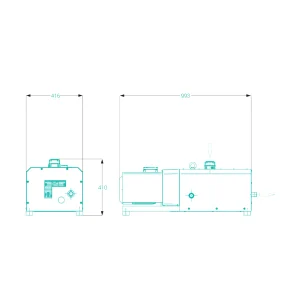 MINK MM 0084 APumping speed 62 m³/h 50 Hz75 m³/h 60 HzUltimate pressure 60 mbarRated motor power 1.5 kW 50 Hz1.7 kW 60 HzVariants
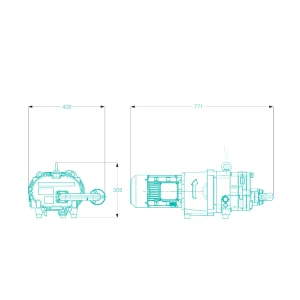 MINK MM 1104 CVMPumping speed 62 m³/h 50 HzUltimate pressure 400 mbarRated motor power 1.3 kW 50 HzVariants
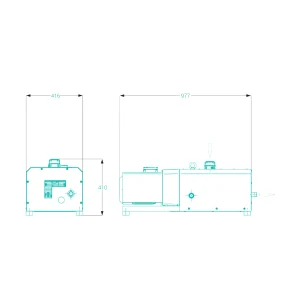 MINK MM 0104 APumping speed 80 m³/h 50 Hz95 m³/h 60 HzUltimate pressure 60 mbarRated motor power 2.2 kW 50 Hz2.4 kW 60 HzVariants
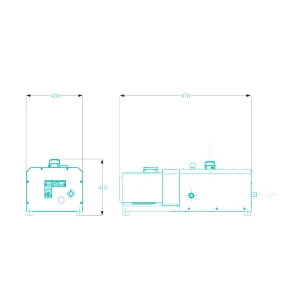 MINK MM 1144 BVPumping speed 80 m³/h 50 Hz95 m³/h 60 HzUltimate pressure 60 mbarRated motor power 2.2 kW 50 Hz2.4 kW 60 HzVariants 9
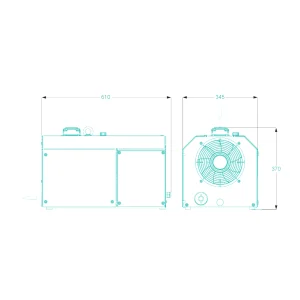 MINK MV 0080 E ECOTORQUEPumping speed 80 m³/h 50 Hz80 m³/h 60 HzUltimate pressure 40 mbarRated motor power Variants
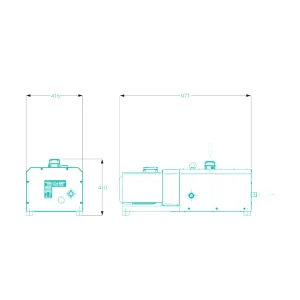 MINK MM 0142 APumping speed 110 m³/h 50 Hz135 m³/h 60 HzUltimate pressure 40 mbarRated motor power 3 kW 50 Hz3.4 kW 60 HzVariants
Busch PANDA/PUMA series 26 models
Busch R5 series 58 models
Elmo Rietschle S-SVT series 11 models
Elmo Rietschle S-VSI series 1 model
Leybold NOVADRY series 4 models
Leybold SOGEVAC series 23 models
Pfeiffer Vacuum HiLobe series 17 models
No model matches these filters.
Atlas Copco GVS series 9 models
Atlas Copco GVS VSD+ series 4 models
Busch MINK series 32 models
Busch PANDA/PUMA series 26 models
Busch R5 series 58 models
Elmo Rietschle S-SVT series 11 models
Elmo Rietschle S-VSI series 1 model
Leybold NOVADRY series 4 models
Leybold SOGEVAC series 23 models
Pfeiffer Vacuum HiLobe series 17 models
Models a manufacturer no longer carries in its current range are listed in its “Outdated models” section.
Industries
Modified atmosphere packaging (MAP): where the manufacturers name it
The manufacturers list these uses on their own pages.
Packaging
Busch describes MAP as replacing the air with a gas mixture, Leybold the evacuation and gas flushing on thermoformers and tray sealers with SOGEVAC and NOVADRY; Elmo Rietschle lists packaging under a protective atmosphere for packaging machine manufacturing, without describing it in more detail.
Meat, poultry and fish
Atlas Copco names MAP for meat packaging: air is exchanged for protective gas, also with a high oxygen content, with hydrocarbon-free pumps and oxygen-compatible seals.
Fish farming and aquaculture
For fish from aquaculture, Busch names the replacement of the air with protective gas with MINK and R5, and in its product finder also PANDA and PUMA; Pfeiffer Vacuum lists HiLobe for MAP packaging.
Frequently asked questions
Modified atmosphere packaging (MAP): frequently asked questions
How does modified atmosphere packaging (MAP) work?
The vacuum pump evacuates the chamber or tray, then a gas mixture flows in and replaces the air, and finally the pack is sealed. Busch describes it as replacing the air with a gas mixture, Leybold as evacuating and flushing with gas on thermoformers and tray sealers.
Which vacuum pump for MAP packaging?
Leybold names SOGEVAC and NOVADRY, Busch R5 and MINK, and in its product finder PANDA and PUMA, Atlas Copco GVS A and GVS VSD+, Pfeiffer Vacuum HiLobe. Elmo Rietschle names the S-VSI 300 in the OXY version if the protective gas contains a lot of oxygen.
How much vacuum does modified atmosphere packaging need?
For the S-VSI 300 OXY, Elmo Rietschle gives an ultimate pressure of 0.1 mbar (abs.) and up to 380 m³/h. How deeply the pack is evacuated before gas filling depends on the product and the machine.
Oil-free or oil-lubricated for modified atmosphere packaging?
Both are named: Busch the oil-lubricated rotary vane vacuum pump R5 and the dry claw vacuum pump MINK, Leybold the oil-lubricated SOGEVAC and the dry screw vacuum pump NOVADRY, Atlas Copco the oil-lubricated GVS A and GVS VSD+ and, for oxygen-rich protective gas, dry, hydrocarbon-free screw and claw vacuum pumps.
Why does MAP need oxygen-compatible vacuum pumps?
Because, according to Atlas Copco, the protective gas can have a high oxygen content. Atlas Copco therefore names hydrocarbon-free pumps with oxygen-compatible seals; Elmo Rietschle offers the S-VSI 300 as an OXY version that extracts gases with an increased oxygen content; Elmo Rietschle expressly names MAP as an example of this.
What is the difference between vacuum packaging and MAP?
In vacuum packaging, the air is removed and the pack is sealed immediately. In MAP, evacuation is followed by gas filling: according to Busch, the air is replaced by a gas mixture, and only then is the pack sealed. In fish farming, Busch names both processes with MINK and R5.
Which vacuum pump for thermoformers and tray sealers with gas filling?
Leybold names SOGEVAC and NOVADRY: thermoformers and tray sealers are evacuated and flushed with gas. Busch lists R5 and MINK and, in its product finder, PANDA and PUMA for MAP packaging.
Which pump for MAP of meat?
For meat packaging under protective gas, Atlas Copco names dry screw and claw vacuum pumps, hydrocarbon-free and with oxygen-compatible seals; on the product pages of the GVS A and GVS VSD+, Atlas Copco also lists MAP.
Which vacuum pump for MAP of fish?
For fish from aquaculture, Busch names MINK and R5, and in its product finder also PANDA and PUMA; Pfeiffer Vacuum lists HiLobe for MAP packaging.
A single pump or a central vacuum system?
A central system in a room of its own keeps noise and heat away from production and matches its output to the demand. Central vacuum systems are planned and built by Eugen Theis Vakuum, a company of the Ehrler & Beck group – more under Central Vacuum.
Does Ehrler & Beck also supply spare parts and service?
Yes. Ehrler & Beck offers original spare parts and accessories as well as maintenance and repair.
Which pump suits your process?
Tell us the application, the medium and the volume – we advise you on selection, spare parts and service.
