

Application
Vacuum pumps for distillation and solvent recovery
Under vacuum, liquids boil at a lower temperature. In vacuum distillation this is used to separate mixtures, recover solvents or split crude oil residues – Busch describes it as gentle separation through lowered boiling points, Edwards as boiling at a lower temperature, Atlas Copco as separation at low temperature with reuse of the solvents. Below you can see how the application works, what vacuum the manufacturers name and which of their series are intended for it – 282 models from 3 manufacturers.
Compare 282 modelsHow it works
- 282Models
- 14Series
- 3Manufacturers
- 10–50 hPaCrude oil distillation (Busch)
Touch the points: each part of the system explains itself.
In short
Distillation and solvent recovery: the key facts
- Boiling pointBusch: vacuum lowers the boiling points and separates gently. Edwards: boiling at a lower temperature. Atlas Copco: separation at low temperature, the solvents are reused.
- Pressure rangesIn its product finder Busch places solvent recovery above 1 hPa and vacuum distillation below 1 hPa; for crude oil distillation Busch names 10–50 hPa.
- Example systemBusch describes an example system for 8 mbar with two booster stages PANDA WV and a DOLPHIN LB as the liquid ring vacuum pump.
- Without crackingBusch: in the atmospheric stage temperatures of approx. 350–370 °C are reached, above 370 °C cracking begins – the residue is therefore separated under vacuum. Edwards describes vacuum distillation in refineries in the same way: residues without thermal cracking, with steam ejectors and hybrid systems with LR.
Operating principle
How it works: Distillation and solvent recovery
The drawing shows the basic principle in section. The systems and pumps of the individual manufacturers differ in detail.
- EvacuatingThe vacuum pump lowers the pressure in the column and the condenser to the operating pressure – according to Busch above 1 hPa for solvent recovery, below 1 hPa for vacuum distillation.
- EvaporatingThe mixture is heated and boils at a lower temperature than at atmospheric pressure (Edwards). With crude oil, according to Busch, the temperature stays below the limit of 370 °C at which cracking begins.
- CondensingThe vapour is liquefied in the condenser and collected in the receiver; non-condensable gases pass through the pump into the exhaust air. According to Atlas Copco, recovered solvents are reused.
Vacuum and sizing
Distillation and solvent recovery: how much vacuum is needed
What the manufacturers say about pressure, pumping speed and sizing.
Which vacuum
In its product finder Busch places solvent recovery above 1 hPa and vacuum distillation below 1 hPa; for crude oil distillation Busch names 10–50 hPa and an example system for 8 mbar. For short path distillation Edwards names a low operating pressure.
Pumping systems
For low pressures the manufacturers describe pumping systems: Busch two booster stages PANDA WV upstream of a DOLPHIN LB, Atlas Copco the Roots pumps ZRS with liquid ring systems, mechanical vapour recompression and ejectors, Edwards the Roots pump EH and, for refineries, steam ejectors in a hybrid system with LR. For short path distillation Edwards names oil vapour boosters, which are not part of our range.
Solvents and explosion protection
Busch also names the DOLPHIN in ATEX version for petroleum refining, Edwards names the E2M Ex. For solvent recovery Edwards lists LR and XDS, Atlas Copco names ethanol, methanol and acetone as vapours of mechanical vapour recompression.
Control
For distillation in the beverage industry Elmo Rietschle names vacuum control, and for chemicals it lists continuous and batch distillation as well as solvent recovery. The boiling temperature follows the pressure – whoever controls the pressure controls the temperature.
Technology
Distillation and solvent recovery: the vacuum pumps the manufacturers name
Listed are the series the manufacturer itself names for this application. “Show only …” sets the filter of the product overview.
Liquid ring vacuum pumps
103 models · 20–16,160 m³/h
Oil-lubricated rotary vane vacuum pumps
71 models · 0.75–1,800 m³/h
Roots vacuum pumps
36 models · 250–12,000 m³/h
Screw vacuum pumps
36 models · 70–4,652 m³/h
Claw vacuum pumps
34 models · 18–1,150 m³/h
Scroll vacuum pumps
2 models · 35–40 m³/h
Elmo Rietschle names the application without naming a series for it. Pfeiffer Vacuum names the application without naming a series for it.
Product overview
Distillation and solvent recovery: all 282 models compared
Use the filters on the left to narrow the selection – by manufacturer, technology and the models’ key figures, for 50 or 60 Hz.
Atlas Copco ZRS series 5 models
Busch COBRA Industry series 36 models
 COBRA NS 0070 CPumping speed 70 m³/h 50 Hz85 m³/h 60 HzUltimate pressure 0.03 mbarRated motor power 4 kW 50 Hz4.4 kW 60 HzVariants
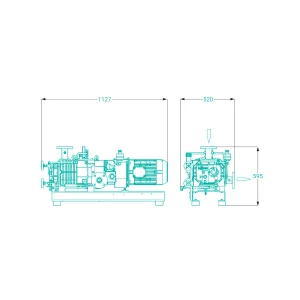 COBRA NC 0100 BPumping speed 110 m³/h 50 Hz130 m³/h 60 HzUltimate pressure 0.05 mbarRated motor power 3.5 kW 50 Hz4.8 kW 60 HzVariants 4
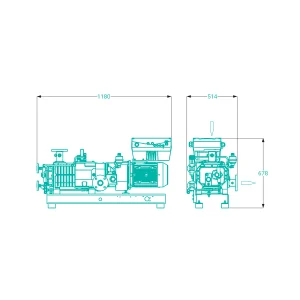 COBRA NC 0100 B ECOTORQUEPumping speed 130 m³/h 50 Hz130 m³/h 60 HzUltimate pressure 0.05 mbarRated motor power 4.8 kW 50 Hz4.8 kW 60 HzVariants
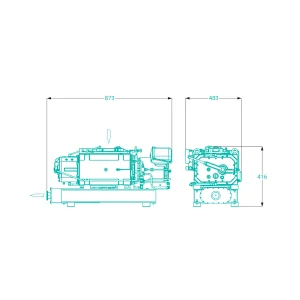 COBRA NS 0160 CPumping speed 135 m³/h 50 Hz170 m³/h 60 HzUltimate pressure 0.03 mbarRated motor power 5.5 kW 50 Hz6.6 kW 60 HzVariants
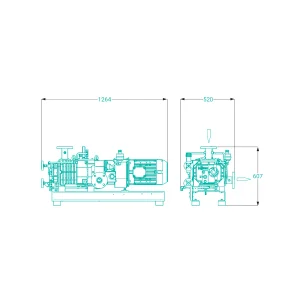 COBRA NC 0200 BPumping speed 220 m³/h 50 Hz265 m³/h 60 HzUltimate pressure 0.05 mbarRated motor power 6 kW 50 Hz7.6 kW 60 HzVariants 4
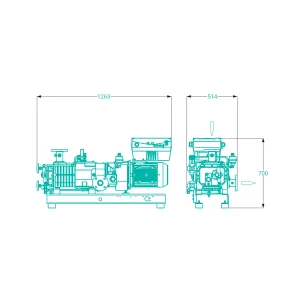 COBRA NC 0200 B ECOTORQUEPumping speed 265 m³/h 50 Hz265 m³/h 60 HzUltimate pressure 0.05 mbarRated motor power 7.6 kW 50 Hz7.6 kW 60 HzVariants
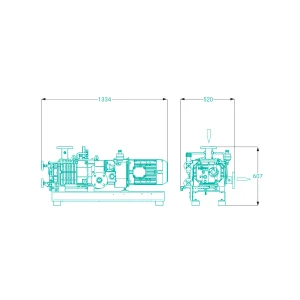 COBRA NC 0300 BPumping speed 320 m³/h 50 Hz385 m³/h 60 HzUltimate pressure 0.05 mbarRated motor power 7.5 kW 50 Hz9.5 kW 60 HzVariants 4
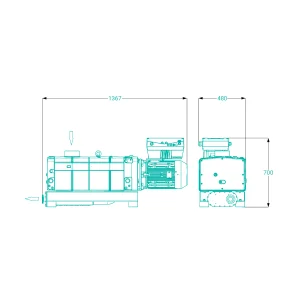 COBRA NC 0400 BPumping speed 350 m³/h 50 Hz420 m³/h 60 HzUltimate pressure 0.05 mbarRated motor power 7.5 kW 50 Hz9.5 kW 60 HzVariants
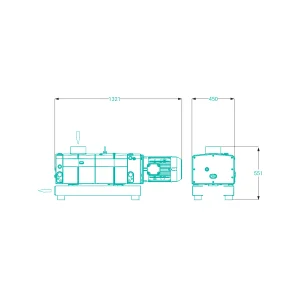 COBRA NX 0450 APumping speed 350 m³/h 50 Hz420 m³/h 60 HzUltimate pressure 0.1 mbarRated motor power 7.5 kW 50 Hz9.5 kW 60 HzVariants
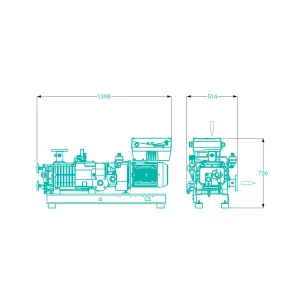 COBRA NC 0300 B ECOTORQUEPumping speed 385 m³/h 50 Hz385 m³/h 60 HzUltimate pressure 0.05 mbarRated motor power 9.5 kW 50 Hz9.5 kW 60 HzVariants
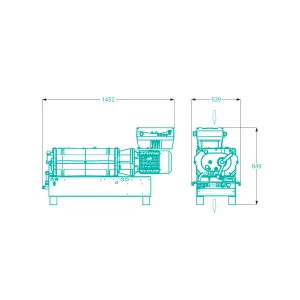 COBRA NC 0400 B ECOTORQUEPumping speed 420 m³/h 50 Hz420 m³/h 60 HzUltimate pressure 0.05 mbarRated motor power 9.5 kW 50 Hz9.5 kW 60 HzVariants
 COBRA NX 0450 A ECOTORQUEPumping speed 420 m³/h 50 Hz420 m³/h 60 HzUltimate pressure 0.1 mbarRated motor power 11 kW 50 Hz11 kW 60 HzVariants
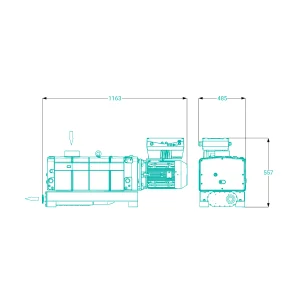 COBRA NC 0500 BPumping speed 490 m³/h 50 Hz490 m³/h 60 HzUltimate pressure 0.01 mbarRated motor power 9 kW 50 Hz9 kW 60 HzVariants
 COBRA NC 0630 C VRPumping speed 580 m³/h 50 Hz680 m³/h 60 HzUltimate pressure 25 mbarRated motor power 22 kW 50 Hz22 kW 60 HzVariants
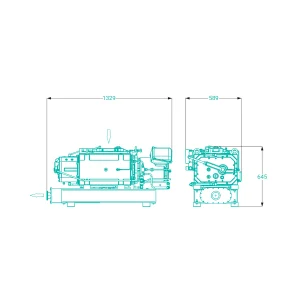 COBRA NS 0600 CPumping speed 600 m³/h 50 Hz600 m³/h 60 HzUltimate pressure 0.01 mbarRated motor power 15 kW 50 Hz15 kW 60 HzVariants
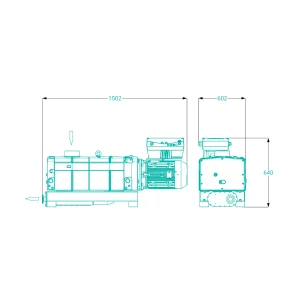 COBRA NC 0630 CPumping speed 630 m³/h 50 Hz630 m³/h 60 HzUltimate pressure 0.01 mbarRated motor power 15 kW 50 Hz17 kW 60 HzVariants
 COBRA NC 0630 C ECOTORQUEPumping speed 630 m³/h 50 Hz630 m³/h 60 HzUltimate pressure 0.01 mbarRated motor power 17 kW 50 Hz17 kW 60 HzVariants
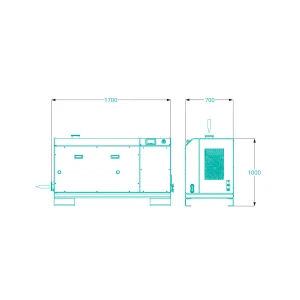 COBRA DX 0650 A PLUSPumping speed 650 m³/h 50 Hz650 m³/h 60 HzUltimate pressure 0.1 mbarRated motor power 15 kW 50 Hz15 kW 60 HzVariants
Busch DOLPHIN series 70 models
Busch HUCKEPACK series 4 models
Busch MINK series 32 models
Busch PANDA/PUMA series 26 models
Busch R5 series 58 models
Edwards E2M series 9 models
Edwards EH series 5 models
Edwards GV series 2 models
Edwards LR1A series 12 models
Edwards LR1C series 9 models
Edwards LR1D series 12 models
Edwards XDS series 2 models
No model matches these filters.
Atlas Copco ZRS series 5 models
Busch COBRA Industry series 36 models
Busch DOLPHIN series 70 models
Busch HUCKEPACK series 4 models
Busch MINK series 32 models
Busch PANDA/PUMA series 26 models
Busch R5 series 58 models
Edwards E2M series 9 models
Edwards EH series 5 models
Edwards GV series 2 models
Edwards LR1A series 12 models
Edwards LR1C series 9 models
Edwards LR1D series 12 models
Edwards XDS series 2 models
Models a manufacturer no longer carries in its current range are listed in its “Outdated models” section.
Industries
Distillation and solvent recovery: where the manufacturers name it
The manufacturers list these uses on their own pages.
Chemicals
Busch, Edwards, Elmo Rietschle and Pfeiffer Vacuum name distillation and solvent recovery for chemicals: vacuum lowers the boiling points (Busch), Edwards names EH, LR, E2M Ex, XDS and GV, Elmo Rietschle continuous and batch distillation.
Pharmaceuticals and biotechnology
For the pharmaceutical industry Atlas Copco describes separation at low temperature and the reuse of solvents; Busch names above 1 hPa for solvent recovery and below 1 hPa for vacuum distillation, with R5, MINK, DOLPHIN, COBRA, HUCKEPACK and PANDA/PUMA; Pfeiffer Vacuum lists the application in its product finder.
Oil and gas
Busch describes crude oil distillation at 10–50 hPa, in which the residue is separated without cracking (DOLPHIN, also ATEX), Edwards describes vacuum distillation in refineries with steam ejectors and hybrid systems with LR.
Food and beverage
Edwards also names distillation for food and describes edible oil refining, in which impurities are removed from the crude edible oil.
Beverages and bottling
For the beverage industry Elmo Rietschle names vacuum control for distillation.
Frequently asked questions
Distillation and solvent recovery: frequently asked questions
How does vacuum distillation work?
The vacuum pump lowers the pressure in the column and the condenser. Under vacuum the mixture boils at a lower temperature – Busch describes it as gentle separation through lowered boiling points, Edwards as boiling at a lower temperature. The vapour is liquefied in the condenser, the pump removes the non-condensable gases.
How much vacuum does distillation need?
In its product finder Busch places solvent recovery above 1 hPa and vacuum distillation below 1 hPa; for crude oil distillation Busch names 10–50 hPa, and Busch describes an example system for 8 mbar. For short path distillation Edwards names a low operating pressure.
Which vacuum pump is suitable for distillation?
Busch names DOLPHIN, COBRA, R5, HUCKEPACK and PANDA/PUMA, Edwards names EH, LR, E2M Ex, XDS and GV, Atlas Copco names the Roots pumps ZRS with liquid ring systems and ejectors. For low pressures Busch describes a pumping system of two booster stages PANDA WV and one DOLPHIN LB.
Which vacuum pump for solvent recovery?
Edwards lists LR and XDS for this. For solvent recovery Busch names R5, MINK, DOLPHIN, COBRA, HUCKEPACK and PANDA/PUMA and places them above 1 hPa in its product finder. Atlas Copco describes the reuse of the solvents after separation at low temperature.
Why is crude oil distilled under vacuum?
Busch describes it as follows: in the atmospheric stage temperatures of approx. 350–370 °C are reached, above 370 °C cracking begins. The residue is therefore separated under vacuum at 10–50 hPa, without cracking. For this vacuum distillation in refineries Edwards names steam ejectors and hybrid systems with LR.
Oil-free or oil-lubricated for distillation?
Both are named. Busch names the oil-lubricated R5 and HUCKEPACK, the dry COBRA and the liquid ring vacuum pump DOLPHIN; Edwards names the oil-lubricated E2M Ex, the dry scroll vacuum pump XDS and the liquid ring vacuum pumps LR. Explosion-protected versions are named by Busch (DOLPHIN in ATEX version for petroleum refining) and Edwards (E2M Ex).
What is short path distillation?
In short path distillation the condenser sits close to the evaporator, so the vapour travels only a short distance. Edwards lists it as an application with a low operating pressure and names oil vapour boosters for it; these pumps are not part of our range.
How is the pressure controlled in distillation?
Via a control valve between the condenser and the pump, or via the pump itself. For distillation in the beverage industry Elmo Rietschle names vacuum control. Since the boiling temperature depends on the pressure, the pressure control sets the temperature.
Which solvents are recovered with vacuum?
For mechanical vapour recompression Atlas Copco names ethanol, methanol and acetone. Busch names distillation for chemicals, pharmaceuticals, crude oil and essential oils, Edwards for chemicals and for food, for example edible oil refining, in which impurities are removed from the crude edible oil.
What can be done if the operating pressure is not reached?
For low pressures the manufacturers describe pumping systems of a Roots pump and a backing pump: Busch two booster stages PANDA WV upstream of a DOLPHIN LB for 8 mbar, Atlas Copco ZRS with liquid ring systems, Edwards the Roots pump EH. In its product finder Busch places vacuum distillation below 1 hPa and solvent recovery above 1 hPa.
A single pump or a central vacuum system?
A central system in a room of its own keeps noise and heat away from production and matches its output to the demand. Central vacuum systems are planned and built by Eugen Theis Vakuum, a company of the Ehrler & Beck group – more under Central Vacuum.
Does Ehrler & Beck also supply spare parts and service?
Yes. Ehrler & Beck offers original spare parts and accessories as well as maintenance and repair.
Which pump suits your process?
Tell us the application, the medium and the volume – we advise you on selection, spare parts and service.
