

Application
Vacuum pumps for evacuating and filling refrigeration, air-conditioning and brake systems
Refrigeration circuits, air-conditioning systems and hydraulic brake systems are evacuated before filling: the vacuum pump removes air and moisture from the closed system so that no gas bubbles remain when it is filled with refrigerant or brake fluid. According to Leybold, leak detection and repair under vacuum are part of this on the production line. Below you can see how the application works, what vacuum the manufacturers name and which of their series are intended for it – 198 models from 4 manufacturers.
Compare 198 modelsHow it works
- 198Models
- 10Series
- 4Manufacturers
- below 0.1 mbarTarget vacuum in the cooling circuit (Leybold)
Touch the points: each part of the system explains itself.
In short
Evacuation and charging (refrigeration, air conditioning, brakes): the key facts
- Target vacuumAccording to Leybold, cooling circuits are evacuated on the production line before refrigerant charging, and the target vacuum is usually below 0.1 mbar; Leybold names TRIVAC B, TRIVAC T, NEO D and RUVAC WAU as well as the PHOENIX leak detector.
- BrakesAccording to Leybold, the brake system is pre-evacuated before it is filled with DOT fluid so that no gas bubbles remain – with TRIVAC B DOT, 16–40 m³/h. For evacuating brake and air-conditioning lines before filling, Busch names R5.
- Leak tightnessPfeiffer Vacuum describes integral leak testing under vacuum down to ≤10⁻⁹ mbar·l/s for air-conditioning, hydraulic, tank and battery systems (DuoVane, HiLobe); Leybold names leak detection and repair under vacuum.
- RepairAccording to Leybold, leaking circuits are pumped out before repair, often with explosion protection – Leybold names TRIVAC B ATEX for this.
Operating principle
How it works: Evacuation and charging (refrigeration, air conditioning, brakes)
The drawing shows the basic principle in section. The systems and pumps of the individual manufacturers differ in detail.
- EvacuationThe circuit is pumped out on the production line until the target vacuum is reached – according to Leybold usually below 0.1 mbar; according to Leybold, brake systems are pre-evacuated before they are filled with DOT fluid.
- TestingThe system is tested for leak tightness under vacuum: Leybold names leak detection and repair under vacuum, Pfeiffer Vacuum integral leak testing down to ≤10⁻⁹ mbar·l/s.
- FillingRefrigerant (Leybold: TRIVAC, NEO D) or brake fluid (Leybold: TRIVAC B DOT; Busch: R5) flows into the evacuated system; with no residual air left, no gas bubbles remain.
Vacuum and sizing
Evacuation and charging (refrigeration, air conditioning, brakes): how much vacuum is needed
What the manufacturers say about pressure, pumping speed and sizing.
Which vacuum
For refrigerators and air-conditioning systems Leybold names a target vacuum of usually below 0.1 mbar. For integral leak testing Pfeiffer Vacuum names leak rates down to ≤10⁻⁹ mbar·l/s.
Which pumping speed
For filling hydraulic vehicle brakes Leybold names TRIVAC B DOT with 16–40 m³/h. For refrigeration circuits the pumping speed depends on the volume of the system and the cycle time on the production line.
What the manufacturers point out
For emptying leaking circuits before repair, often with explosion protection, Leybold names TRIVAC B ATEX; the English Leybold page on SOGEVAC B also names a SOGEVAC B DOT version. Busch lists the application as liquid extraction and liquid filling (R5, DOLPHIN); Edwards lists XDS and GV for refrigeration, air conditioning and brake lines without a description.
Technology
Evacuation and charging (refrigeration, air conditioning, brakes): the vacuum pumps the manufacturers name
Listed are the series the manufacturer itself names for this application. “Show only …” sets the filter of the product overview.
Oil-lubricated rotary vane vacuum pumps
95 models · 1.25–1,800 m³/h
Liquid ring vacuum pumps
70 models · 25–16,160 m³/h
Roots vacuum pumps
25 models · 210–13,540 m³/h
Scroll vacuum pumps
6 models · 6.1–43 m³/h
Claw vacuum pumps
2 models · 82–110 m³/h
Product overview
Evacuation and charging (refrigeration, air conditioning, brakes): all 198 models compared
Use the filters on the left to narrow the selection – by manufacturer, technology and the models’ key figures, for 50 or 60 Hz.
Busch DOLPHIN series 70 models
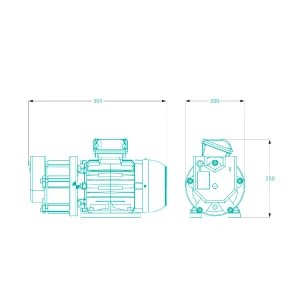 DOLPHIN LX 0030 BPumping speed 25 m³/h 50 Hz31 m³/h 60 HzUltimate pressure 33 mbarRated motor power 1.1 kW 50 Hz1.5 kW 60 HzVariants
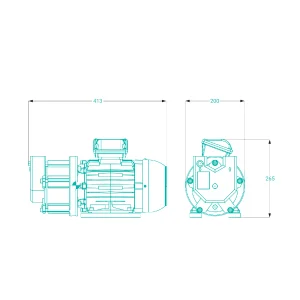 DOLPHIN LX 0055 BPumping speed 45 m³/h 50 Hz56 m³/h 60 HzUltimate pressure 33 mbarRated motor power 1.5 kW 50 Hz2.2 kW 60 HzVariants 1
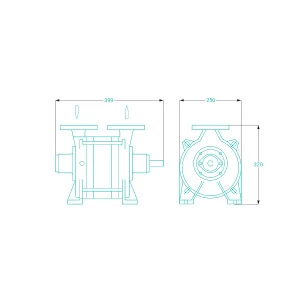 DOLPHIN LA 0053 APumping speed 50 m³/h 50 Hz60 m³/h 60 HzUltimate pressure 130 mbarRated motor power 1.5 kW 50 Hz2.2 kW 60 HzVariants
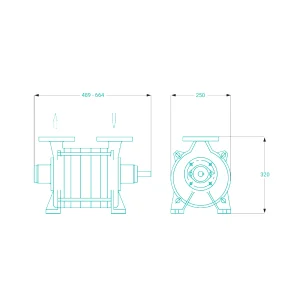 DOLPHIN LB 0063 APumping speed 60 m³/h 50 Hz65 m³/h 60 HzUltimate pressure 33 mbarRated motor power 3 kW 50 Hz4 kW 60 HzVariants
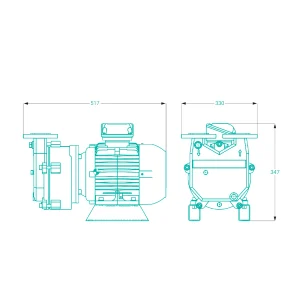 DOLPHIN LX 0110 CPumping speed 72 m³/h 50 Hz83 m³/h 60 HzUltimate pressure 33 mbarRated motor power 2.2 kW 50 Hz3 kW 60 HzVariants
 DOLPHIN LM 0100 APumping speed 82 m³/h 50 Hz97 m³/h 60 HzUltimate pressure 130 mbarRated motor power 2.2 kW 50 Hz3 kW 60 HzVariants
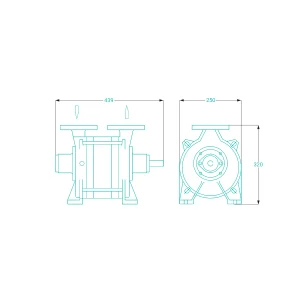 DOLPHIN LA 0103 APumping speed 100 m³/h 50 Hz135 m³/h 60 HzUltimate pressure 130 mbarRated motor power 4 kW 50 Hz4 kW 60 HzVariants
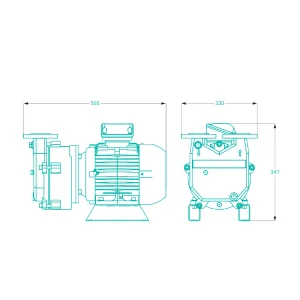 DOLPHIN LX 0140 CPumping speed 100 m³/h 50 Hz120 m³/h 60 HzUltimate pressure 33 mbarRated motor power 3 kW 50 Hz4 kW 60 HzVariants
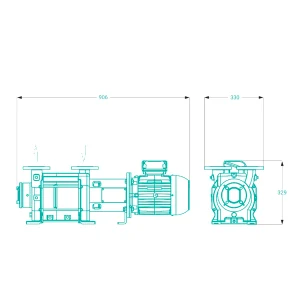 DOLPHIN LT 0130 APumping speed 105 m³/h 50 Hz128 m³/h 60 HzUltimate pressure 33 mbarRated motor power 3 kW 50 Hz4 kW 60 HzVariants
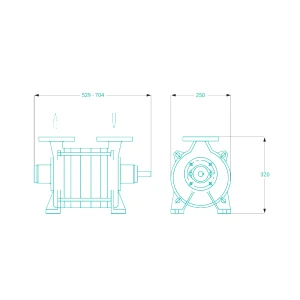 DOLPHIN LB 0113 APumping speed 110 m³/h 50 Hz120 m³/h 60 HzUltimate pressure 33 mbarRated motor power 4 kW 50 Hz4 kW 60 HzVariants
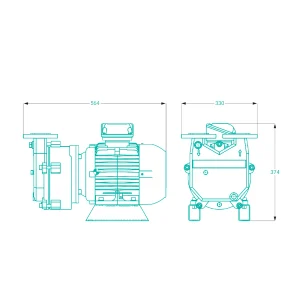 DOLPHIN LX 0180 CPumping speed 122 m³/h 50 Hz144 m³/h 60 HzUltimate pressure 33 mbarRated motor power 4 kW 50 Hz5.5 kW 60 HzVariants
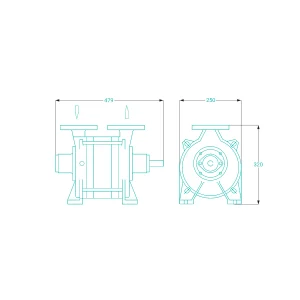 DOLPHIN LA 0143 APumping speed 140 m³/h 50 Hz190 m³/h 60 HzUltimate pressure 130 mbarRated motor power 4 kW 50 Hz5.5 kW 60 HzVariants
 DOLPHIN LB 0144 APumping speed 140 m³/h 50 Hz180 m³/h 60 HzUltimate pressure 33 mbarRated motor power 4 kW 50 Hz5.5 kW 60 HzVariants
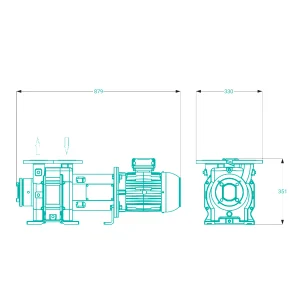 DOLPHIN LM 0180 APumping speed 144 m³/h 50 Hz180 m³/h 60 HzUltimate pressure 130 mbarRated motor power 4 kW 50 Hz5.5 kW 60 HzVariants
 DOLPHIN LT 0170 APumping speed 144 m³/h 50 Hz162 m³/h 60 HzUltimate pressure 33 mbarRated motor power 4 kW 50 Hz5.5 kW 60 HzVariants
 DOLPHIN LB 0184 APumping speed 180 m³/h 50 Hz225 m³/h 60 HzUltimate pressure 33 mbarRated motor power 5.5 kW 50 Hz7.5 kW 60 HzVariants
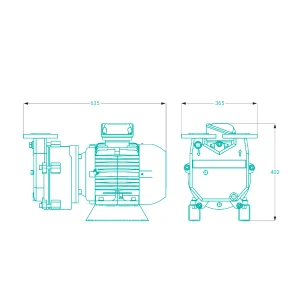 DOLPHIN LX 0260 CPumping speed 200 m³/h 50 Hz239 m³/h 60 HzUltimate pressure 33 mbarRated motor power 5.5 kW 50 Hz7.5 kW 60 HzVariants
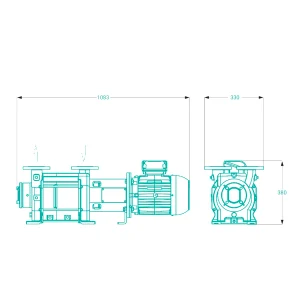 DOLPHIN LT 0220 APumping speed 203 m³/h 50 Hz230 m³/h 60 HzUltimate pressure 33 mbarRated motor power 5.5 kW 50 Hz7.5 kW 60 HzVariants
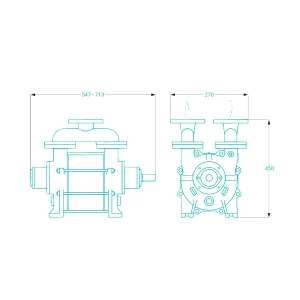 DOLPHIN LA 0224 APumping speed 220 m³/h 50 Hz270 m³/h 60 HzUltimate pressure 130 mbarRated motor power 5.5 kW 50 Hz7.5 kW 60 HzVariants
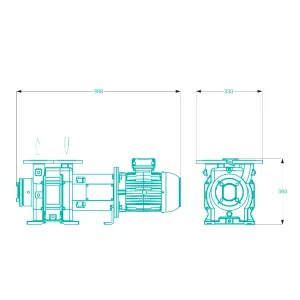 DOLPHIN LM 0270 APumping speed 220 m³/h 50 Hz267 m³/h 60 HzUltimate pressure 130 mbarRated motor power 5.5 kW 50 Hz7.5 kW 60 HzVariants
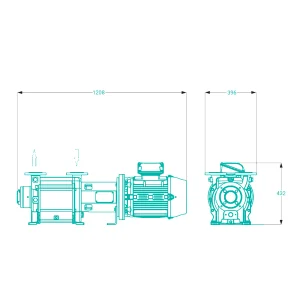 DOLPHIN LT 0320 APumping speed 255 m³/h 50 Hz320 m³/h 60 HzUltimate pressure 33 mbarRated motor power 7.5 kW 50 Hz11 kW 60 HzVariants
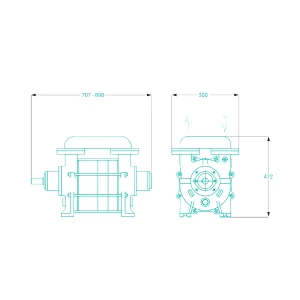 DOLPHIN LB 0265 APumping speed 260 m³/h 50 Hz325 m³/h 60 HzUltimate pressure 33 mbarRated motor power 9.2 kW 50 Hz11 kW 60 HzVariants
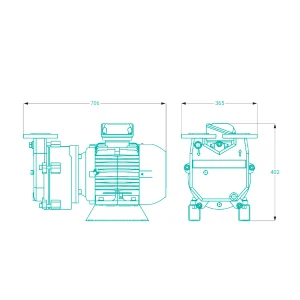 DOLPHIN LX 0330 CPumping speed 280 m³/h 50 Hz330 m³/h 60 HzUltimate pressure 33 mbarRated motor power 7.5 kW 50 Hz11 kW 60 HzVariants
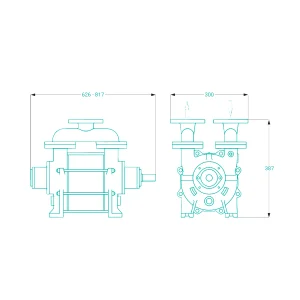 DOLPHIN LA 0325 APumping speed 320 m³/h 50 Hz350 m³/h 60 HzUltimate pressure 150 mbarRated motor power 11 kW 50 Hz15 kW 60 HzVariants
Busch R5 series 58 models
Edwards GV series 2 models
Edwards XDS series 2 models
Leybold NEO D series 5 models
Leybold RUVAC WA/WAU series 8 models
Leybold TRIVAC series 20 models
Pfeiffer Vacuum DuoVane series 12 models
Pfeiffer Vacuum HiLobe series 17 models
Pfeiffer Vacuum HiScroll series 4 models
No model matches these filters.
Busch DOLPHIN series 70 models
Busch R5 series 58 models
Edwards GV series 2 models
Edwards XDS series 2 models
Leybold NEO D series 5 models
Leybold RUVAC WA/WAU series 8 models
Leybold TRIVAC series 20 models
Pfeiffer Vacuum DuoVane series 12 models
Pfeiffer Vacuum HiLobe series 17 models
Pfeiffer Vacuum HiScroll series 4 models
Models a manufacturer no longer carries in its current range are listed in its “Outdated models” section.
Industries
Evacuation and charging (refrigeration, air conditioning, brakes): where the manufacturers name it
The manufacturers list these uses on their own pages.
Refrigeration and air conditioning
Busch names vacuum evacuation and vacuum filling as well as liquid extraction and liquid filling with R5 and DOLPHIN, Pfeiffer Vacuum the same applications with DuoVane and HiScroll; Leybold describes evacuating the cooling circuits of refrigerators and air-conditioning systems on the production line to usually below 0.1 mbar (TRIVAC B, TRIVAC T, NEO D, RUVAC WAU), Edwards lists XDS and GV.
Automotive and transport
Busch names the evacuation of brake and air-conditioning lines before filling with R5; Pfeiffer Vacuum integral leak testing of air-conditioning, hydraulic, tank and battery systems under vacuum (DuoVane, HiLobe); Leybold the filling of hydraulic vehicle brakes with TRIVAC B DOT (16–40 m³/h); Edwards lists XDS and GV for brake lines.
Frequently asked questions
Evacuation and charging (refrigeration, air conditioning, brakes): frequently asked questions
Why must a refrigeration circuit be evacuated before filling?
So that no air and no moisture remain in the system. Leybold describes the evacuation of cooling circuits on the production line before refrigerant charging, and for brake systems pre-evacuation so that no gas bubbles remain after filling. Moisture evaporates under vacuum and is pumped out with the air.
How much vacuum is needed to evacuate an air-conditioning system?
For refrigerators and air-conditioning systems Leybold names a target vacuum of usually below 0.1 mbar.
Which vacuum pump for refrigerant charging on the production line?
For refrigerant charging Leybold names TRIVAC and NEO D, for refrigerators and air-conditioning systems TRIVAC B, TRIVAC T, NEO D and RUVAC WAU as well as the PHOENIX leak detector. Busch names R5 and DOLPHIN, Pfeiffer Vacuum DuoVane and HiScroll, Edwards XDS and GV.
Which vacuum pump for evacuating brake lines?
For filling hydraulic vehicle brakes Leybold names TRIVAC B DOT with 16–40 m³/h; the brake system is pre-evacuated before it is filled with DOT fluid. For brake and air-conditioning lines Busch names R5, Edwards lists XDS and GV.
Oil-free or oil-lubricated for evacuating and filling?
Leybold names oil-lubricated rotary vane vacuum pumps (TRIVAC, NEO D) and the Roots pump RUVAC WAU, Busch the oil-lubricated R5, Pfeiffer Vacuum the oil-lubricated DuoVane alongside the dry scroll vacuum pump HiScroll, Edwards the dry scroll vacuum pump XDS and the claw vacuum pump GV. So both designs are represented.
How is the leak tightness of a refrigeration circuit tested?
Under vacuum: Leybold names leak detection and repair under vacuum as part of production, and the PHOENIX leak detector; Pfeiffer Vacuum describes integral leak testing under vacuum down to ≤10⁻⁹ mbar·l/s for air-conditioning, hydraulic, tank and battery systems with DuoVane and HiLobe.
What to do if a refrigeration circuit leaks?
According to Leybold, the leaking circuit is pumped out before repair – often with explosion protection; Leybold names TRIVAC B ATEX for this. The circuit is then repaired, evacuated again and filled.
Which vacuum pump for refrigerator production?
Leybold describes evacuating the cooling circuits on the production line to usually below 0.1 mbar and names TRIVAC B, TRIVAC T, NEO D and RUVAC WAU as well as the PHOENIX leak detector; for vacuum evacuation and vacuum filling Busch names R5, Pfeiffer Vacuum DuoVane and HiScroll.
What pumping speed does a pump need for evacuating and filling?
For brake filling Leybold names 16–40 m³/h (TRIVAC B DOT). For refrigeration and air-conditioning circuits the pumping speed depends on the volume of the system and the cycle time on the production line.
A single pump or a central vacuum system?
A central system in a room of its own keeps noise and heat away from production and matches its output to the demand. Central vacuum systems are planned and built by Eugen Theis Vakuum, a company of the Ehrler & Beck group – more under Central Vacuum.
Does Ehrler & Beck also supply spare parts and service?
Yes. Ehrler & Beck offers original spare parts and accessories as well as maintenance and repair.
Which pump suits your process?
Tell us the application, the medium and the volume – we advise you on selection, spare parts and service.
