

Application
Vacuum pumps for vacuum sewerage
In a vacuum sewerage system, negative pressure conveys the wastewater through a pipe network to the vacuum station – according to Atlas Copco without a gradient, at 250–400 mbar. Busch names the same technology as a vacuum supply and disposal system for wastewater in trains and ships, Leybold lists vacuum toilets. Below you can see how the application works, what vacuum the manufacturers name and which of their series are intended for it – 182 models from 4 manufacturers.
Compare 182 modelsHow it works
- 182Models
- 10Series
- 4Manufacturers
- 250–400 mbarvacuum in the sewer system (Atlas Copco)
Touch the points: each part of the system explains itself.
In short
Vacuum sewerage: the key facts
- Without a gradientAtlas Copco describes vacuum sewerage like this: negative pressure conveys the wastewater to the vacuum station without a gradient. The pipes therefore need no gradient, unlike a gravity sewer.
- 250–400 mbarFor vacuum sewerage, Atlas Copco names 250–400 mbar and the series GHS VSD+ and DZS for it.
- Trains and shipsBusch names vacuum supply and disposal systems for wastewater in trains and ships with the series MINK, R5, SECO and TYR; the Busch product finder lists the same series for vacuum sewerage.
- ManufacturersAtlas Copco, Becker, Busch, Edwards and Leybold list the application; Leybold names NOVADRY for vacuum toilets, Edwards its liquid ring series LR1A, LR1C and LR1D for water and wastewater, and Becker names negative pressure for vacuum sewerage without a series.
Operating principle
How it works: Vacuum sewerage
The drawing shows the basic principle in section. The systems and pumps of the individual manufacturers differ in detail.
- CollectionThe wastewater collects in the collection chamber of the building connection. When it reaches the set level, the vacuum valve opens.
- ConveyingThe negative pressure in the pipe network draws wastewater and air to the vacuum station. Atlas Copco describes this as conveying without a gradient at 250–400 mbar.
- HoldingThe vacuum pumps maintain the negative pressure in the collection tank, and the collected wastewater is pumped on. The control system switches the pumps on and off according to the pressure.
Vacuum and sizing
Vacuum sewerage: how much vacuum is needed
What the manufacturers say about pressure, pumping speed and sizing.
Which vacuum
For vacuum sewerage, Atlas Copco names 250–400 mbar. The size of the vacuum station depends on the number of connections and the length of the pipe network.
Which pumps
Atlas Copco names GHS VSD+ (screw vacuum pumps) and DZS (claw vacuum pumps), Busch MINK (claw), R5 (oil-lubricated rotary vane), SECO (dry-running rotary vane) and TYR (rotary lobe blowers), Edwards the liquid ring series LR1A, LR1C and LR1D, Leybold NOVADRY (screw vacuum pumps) for vacuum toilets.
Where it is used
Atlas Copco and Becker name vacuum sewerage in wastewater technology, Busch as a vacuum supply and disposal system for wastewater in trains and ships, Edwards under water, wastewater and water treatment, Leybold as vacuum toilets.
What the manufacturers point out
Atlas Copco emphasises that the negative pressure conveys the wastewater without a gradient. Becker and Leybold only list the application without describing it; Edwards names it on the page of its claw vacuum pumps and of its liquid ring series without a description.
Technology
Vacuum sewerage: the vacuum pumps the manufacturers name
Listed are the series the manufacturer itself names for this application. “Show only …” sets the filter of the product overview.
Oil-lubricated rotary vane vacuum pumps
58 models · 3–1,800 m³/h
Claw vacuum pumps
37 models · 18–1,150 m³/h
Liquid ring vacuum pumps
33 models · 20–8,100 m³/h
Screw vacuum pumps
25 models · 63–5,136 m³/h
Rotary lobe blowers
16 models · 535–4,000 m³/h
Dry-running rotary vane vacuum pumps
10 models · 3–83 m³/h
Claw compressors
3 models · 65–238 m³/h
Becker names the application without naming a series for it.
Product overview
Vacuum sewerage: all 182 models compared
Use the filters on the left to narrow the selection – by manufacturer, technology and the models’ key figures, for 50 or 60 Hz.
Atlas Copco DZS series 8 models
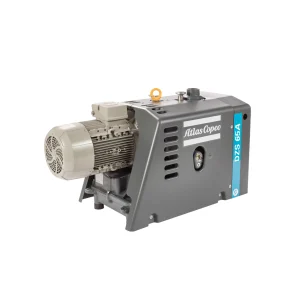 DZS 065APumping speed 65 m³/h 50 Hz78 m³/h 60 HzUltimate pressure 50 mbarRated motor power 1.8 kW 50 Hz2.2 kW 60 HzVariants 12
Atlas Copco GHS VSD+ series 21 models
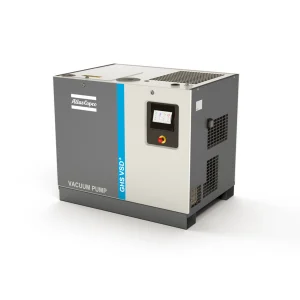 GHS 350 VSD+Pumping speed 400 m³/h 50 Hz400 m³/h 60 HzUltimate pressure 0.35 mbarRated motor power 5.5 kW 50 Hz5.5 kW 60 HzVariants 29
Busch MINK series 32 models
Busch R5 series 58 models
Busch SECO series 10 models
Busch TYR series 16 models
Edwards LR1A series 12 models
Edwards LR1C series 9 models
Edwards LR1D series 12 models
Leybold NOVADRY series 4 models
No model matches these filters.
Atlas Copco DZS series 8 models
Atlas Copco GHS VSD+ series 21 models
Busch MINK series 32 models
Busch R5 series 58 models
Busch SECO series 10 models
Busch TYR series 16 models
Edwards LR1A series 12 models
Edwards LR1C series 9 models
Edwards LR1D series 12 models
Leybold NOVADRY series 4 models
Models a manufacturer no longer carries in its current range are listed in its “Outdated models” section.
Industries
Vacuum sewerage: where the manufacturers name it
The manufacturers list these uses on their own pages.
Environmental and wastewater
Atlas Copco (GHS VSD+, DZS; 250–400 mbar, conveying without a gradient), Becker (without a series), Busch (MINK, R5, SECO, TYR) and Leybold (NOVADRY for vacuum toilets) name vacuum sewerage in environmental and wastewater technology.
Automotive and transport
For automotive and transport, Busch names vacuum supply and disposal systems that remove wastewater in trains and ships by negative pressure, with the series MINK, R5, SECO and TYR.
Frequently asked questions
Vacuum sewerage: frequently asked questions
How does a vacuum sewerage system work?
The wastewater flows into collection chambers at the building connections. When the vacuum valve opens, the negative pressure in the pipe network draws wastewater and air to the vacuum station, where the wastewater collects in a tank and is pumped on. Atlas Copco describes it like this: negative pressure conveys wastewater to the vacuum station without a gradient.
How much vacuum does a vacuum sewerage system need?
For vacuum sewerage, Atlas Copco names 250–400 mbar.
Which vacuum pump is suitable for vacuum sewerage?
Atlas Copco names GHS VSD+ and DZS, Busch MINK, R5, SECO and TYR, Edwards its liquid ring series LR1A, LR1C and LR1D for water and wastewater, Leybold NOVADRY for vacuum toilets. Becker names negative pressure for vacuum sewerage without naming a series.
Why vacuum sewerage instead of a gravity sewer?
According to Atlas Copco, the negative pressure conveys the wastewater to the vacuum station without a gradient. The pipes therefore do not have to be laid with a gradient, as a gravity sewer requires.
Oil-free or oil-lubricated for vacuum sewerage?
Both are named. Dry-running pumps are the claw vacuum pumps DZS (Atlas Copco) and MINK (Busch), the dry-running rotary vane vacuum pumps SECO and the rotary lobe blowers TYR (Busch) and the screw vacuum pumps NOVADRY (Leybold); oil-lubricated pumps are R5 (Busch, rotary vane) and GHS VSD+ (Atlas Copco, screw). Edwards names liquid ring vacuum pumps with water as the operating liquid (LR1A, LR1C, LR1D).
Which vacuum pump for vacuum toilets in trains and ships?
For wastewater in trains and ships, Busch names its vacuum supply and disposal systems with the series MINK, R5, SECO and TYR. Leybold lists vacuum toilets for its NOVADRY series without describing the application.
Which manufacturers name vacuum sewerage?
It is named by Atlas Copco (with 250–400 mbar and the series GHS VSD+ and DZS), Busch (MINK, R5, SECO, TYR), Edwards (LR1A, LR1C, LR1D), Leybold (NOVADRY, vacuum toilets) and Becker, which lists the application without a series.
What does the vacuum station do in a vacuum sewerage system?
The vacuum station maintains the negative pressure in the pipe network and receives the wastewater in the collection tank, from which it is pumped on to the sewage treatment plant. The control system switches its vacuum pumps on and off according to the pressure in the tank. Atlas Copco names 250–400 mbar for the negative pressure.
What if moisture or wastewater travels towards the vacuum pump?
Between the collection tank and the pumps there is a filter that retains particles and moisture; the pumps draw in only air. For water and wastewater, Edwards names its liquid ring series LR1A, LR1C and LR1D, which work with water as the operating liquid.
A single pump or a central vacuum system?
A central system in a room of its own keeps noise and heat away from production and matches its output to the demand. Central vacuum systems are planned and built by Eugen Theis Vakuum, a company of the Ehrler & Beck group – more under Central Vacuum.
Does Ehrler & Beck also supply spare parts and service?
Yes. Ehrler & Beck offers original spare parts and accessories as well as maintenance and repair.
Which pump suits your process?
Tell us the application, the medium and the volume – we advise you on selection, spare parts and service.
