

Application
Vacuum pumps for textile machines
In textile machines vacuum draws in and guides threads, extracts edge trims, lint and dirt on weaving and knitting machines, and draws the air out of the yarn during steaming. Elmo Rietschle names yarn handling and edge extraction on air-jet weaving machines and dirt extraction on knitting machines with side channel blowers, Atlas Copco yarn processing for its DB side channel blowers. Below you can see how the application works, what vacuum the manufacturers name and which of their series are intended for it – 115 models from 2 manufacturers.
Compare 115 modelsHow it works
- 115Models
- 9Series
- 2Manufacturers
- 1Industries
Touch the points: each part of the system explains itself.
In short
Textile machines: the key facts
- Yarn handlingFor air-jet weaving machines Elmo Rietschle names yarn handling and edge extraction.
- Dirt extractionOn circular and flat knitting machines Elmo Rietschle names dirt extraction with side channel blowers of the G-BH1, G-BH2, G-BH7, G-BH9 and G-BH100 series.
- Yarn processingAtlas Copco lists yarn processing for its side channel blowers DBS, DBSt, DBD and DBDt, without a description.
- Steam treatmentElmo Rietschle names the steam treatment of yarn as an application, without a description and without a series.
Operating principle
How it works: Textile machines
The drawing shows the basic principle in section. The systems and pumps of the individual manufacturers differ in detail.
- SuctionThe suction nozzle draws in the thread and guides it – on air-jet weaving machines Elmo Rietschle calls this yarn handling.
- HoldingThe air flow holds the thread on its path; at the edge and at the needles of the knitting machine it carries lint and dirt along.
- RemovalThe air flows through the filter to the side channel blower, which releases it again oil-free; fibres and dirt stay in the filter.
Vacuum and sizing
Textile machines: how much vacuum is needed
What the manufacturers say about pressure, pumping speed and sizing.
What vacuum
For textile machines Elmo Rietschle and Atlas Copco name side channel blowers; they work with a lot of air at low negative pressure. The requirement depends on the number of nozzles and extraction points.
What determines the sizing
Elmo Rietschle distinguishes yarn handling and edge extraction on air-jet weaving machines from dirt extraction on circular and flat knitting machines (G-BH1 to G-BH100); Elmo Rietschle names the steam treatment of yarn without a series. Atlas Copco lists yarn processing for DB without further details.
Product overview
Textile machines: all 115 models compared
Use the filters on the left to narrow the selection – by manufacturer, technology and the models’ key figures, for 50 or 60 Hz.
Atlas Copco DBD series 6 models
 DBD 90Pumping speed 91 m³/h 50 Hz110 m³/h 60 HzUltimate pressure 650 – 700 mbarRated motor power 1.1 – 1.5 kW 50 Hz1.3 – 1.7 kW 60 HzVariants 2
Atlas Copco DBDt series 17 models
 DBDt 140Pumping speed 139 m³/h 50 Hz168 m³/h 60 HzUltimate pressure 700 mbarRated motor power 2.2 kW 50 Hz2.6 kW 60 HzVariants 1
Atlas Copco DBS series 29 models
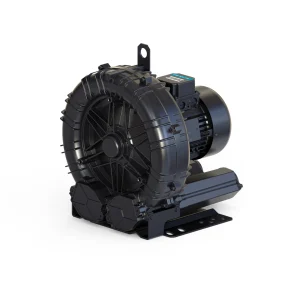 DBS 70Pumping speed 74 m³/h 50 Hz89 m³/h 60 HzUltimate pressure 850 – 900 mbarRated motor power 0.37 – 0.55 kW 50 Hz0.42 – 0.65 kW 60 HzVariants 2
Atlas Copco DBSt series 12 models
Elmo Rietschle G-BH1 series 25 models
Elmo Rietschle G-BH2 series 9 models
Elmo Rietschle G-BH7 series 15 models
Elmo Rietschle G-BH9 series 1 model
Elmo Rietschle G-BH100 series 1 model
No model matches these filters.
Atlas Copco DBD series 6 models
Atlas Copco DBDt series 17 models
Atlas Copco DBS series 29 models
Atlas Copco DBSt series 12 models
Elmo Rietschle G-BH1 series 25 models
Elmo Rietschle G-BH2 series 9 models
Elmo Rietschle G-BH7 series 15 models
Elmo Rietschle G-BH9 series 1 model
Elmo Rietschle G-BH100 series 1 model
Models a manufacturer no longer carries in its current range are listed in its “Outdated models” section.
Industries
Textile machines: where the manufacturers name it
The manufacturers list these uses on their own pages.
Textiles
For the textile industry Elmo Rietschle names air-jet weaving machines (yarn handling, edge extraction), circular and flat knitting machines (dirt extraction with G-BH side channel blowers) and the steam treatment of yarn.
Frequently asked questions
Textile machines: frequently asked questions
What is vacuum used for in textile machines?
Elmo Rietschle names three tasks: yarn handling and edge extraction on air-jet weaving machines, dirt extraction on circular and flat knitting machines, and the steam treatment of yarn. Atlas Copco lists yarn processing for its side channel blowers.
Which vacuum pump for textile machines?
Both manufacturers name side channel blowers: Elmo Rietschle the G-BH1, G-BH2, G-BH7, G-BH9 and G-BH100 series for dirt extraction on knitting machines, Atlas Copco DBS, DBSt, DBD and DBDt for yarn processing. Elmo Rietschle lists yarn handling on weaving machines and steam treatment without a series.
Which blower for extraction on knitting machines?
For circular and flat knitting machines Elmo Rietschle names dirt extraction with G-BH1 to G-BH100 side channel blowers.
Which vacuum pump for air-jet weaving machines?
For air-jet weaving machines Elmo Rietschle names yarn handling and edge extraction, but assigns no series. For yarn processing Atlas Copco lists the DB side channel blowers.
How much vacuum does a textile machine need?
The side channel blowers named work with low negative pressure and high air flow; the requirement depends on the number of nozzles and extraction points.
Why side channel blowers in textile machines?
Both manufacturers name side channel blowers for textile machines. They deliver a lot of air at low negative pressure and run without oil; thread suction and extraction need air flow, not a low ultimate pressure.
Oil-free or oil-lubricated for textile machines?
Oil-free: for textile machines Elmo Rietschle and Atlas Copco name side channel blowers (G-BH, DB), which run dry.
Which vacuum pump for steaming yarn?
Elmo Rietschle names the steam treatment of yarn as an application, without describing it or assigning a series. During steaming the air is drawn out of the yarn package so that the steam can penetrate; which pump fits depends on the steamer.
A single pump or a central vacuum system?
A central system in a room of its own keeps noise and heat away from production and matches its output to the demand. Central vacuum systems are planned and built by Eugen Theis Vakuum, a company of the Ehrler & Beck group – more under Central Vacuum.
Does Ehrler & Beck also supply spare parts and service?
Yes. Ehrler & Beck offers original spare parts and accessories as well as maintenance and repair.
Which pump suits your process?
Tell us the application, the medium and the volume – we advise you on selection, spare parts and service.
