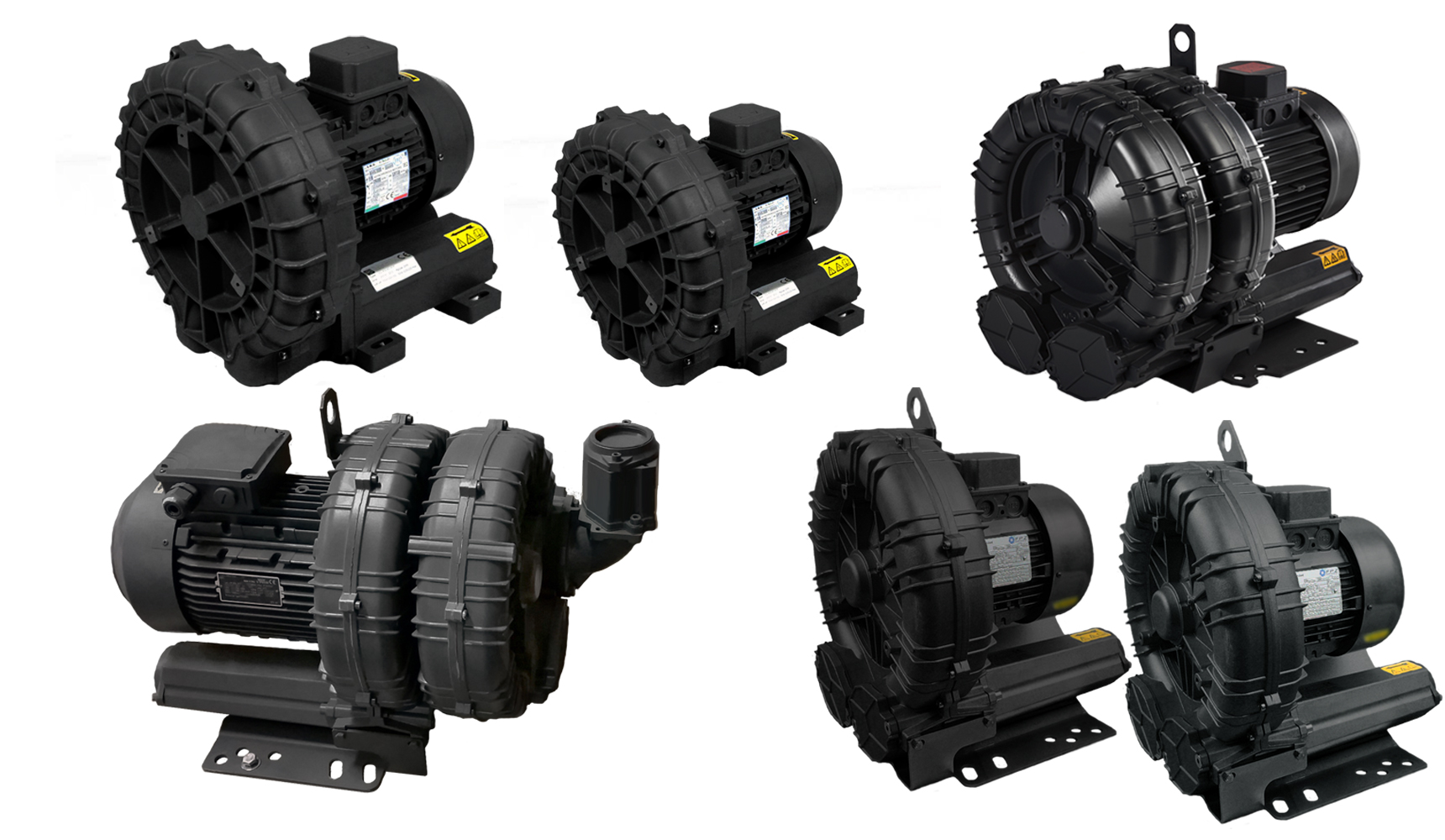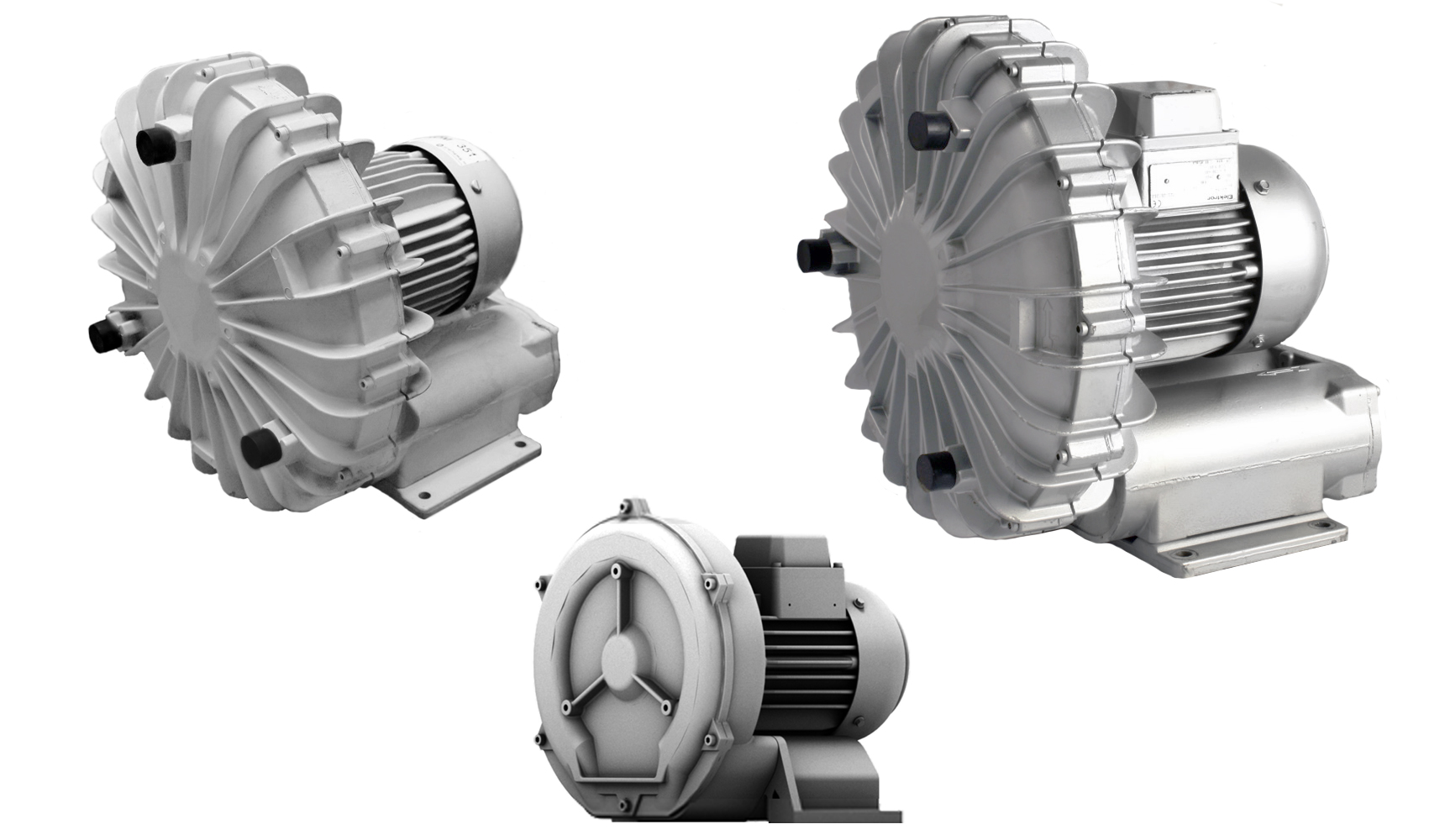

Benefits at a glance
- Low noise
- Virtually maintenance-free
- Reliable and durable
- Robust yet lightweight
- Can be installed with the shaft in any position
- Variable across the performance range
- Worldwide use (UL/CSA/IEC/EN certified)
- 50/60 Hz voltage range versions
- ATEX
- Speed control via external or integrated inverter
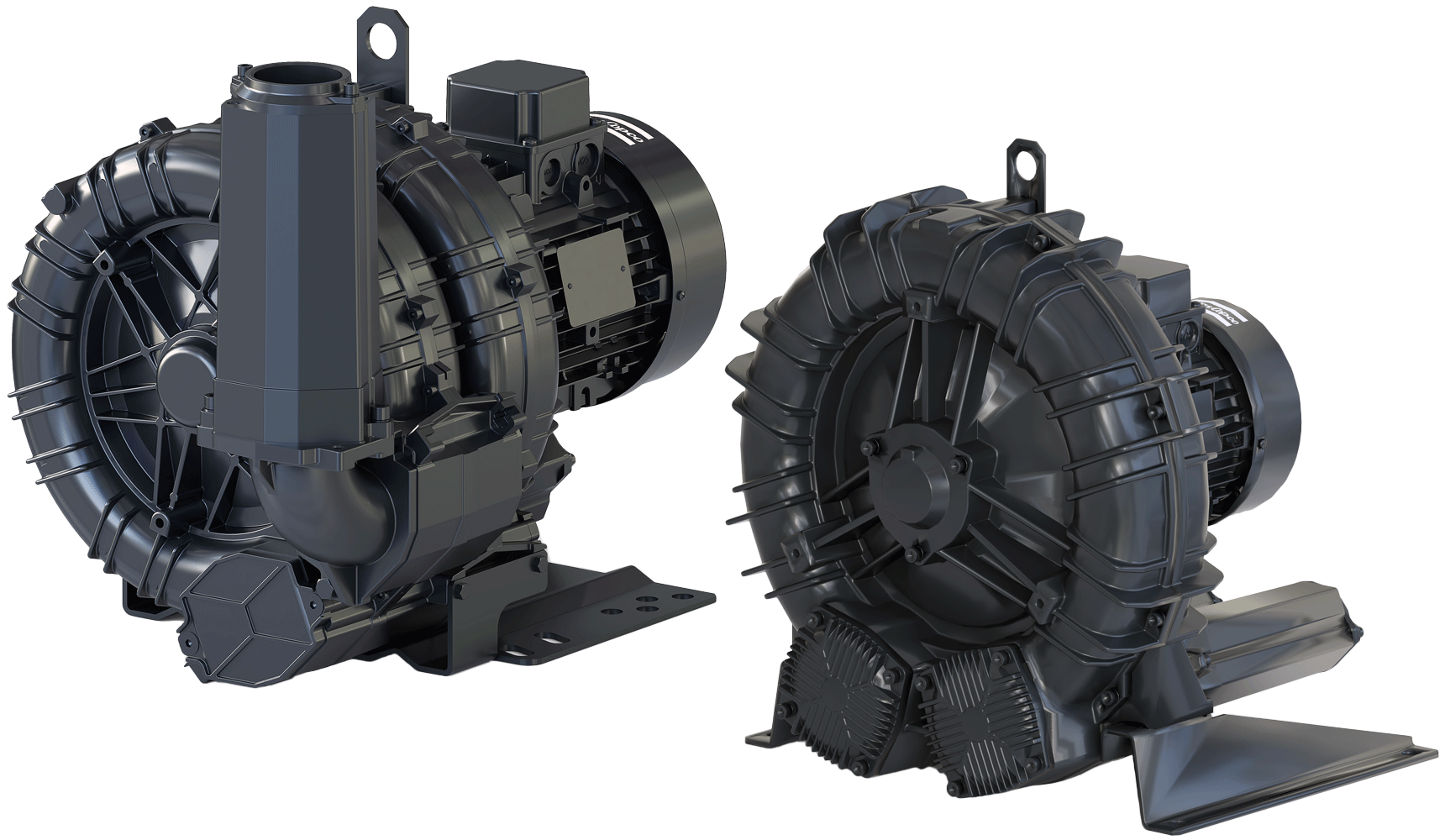
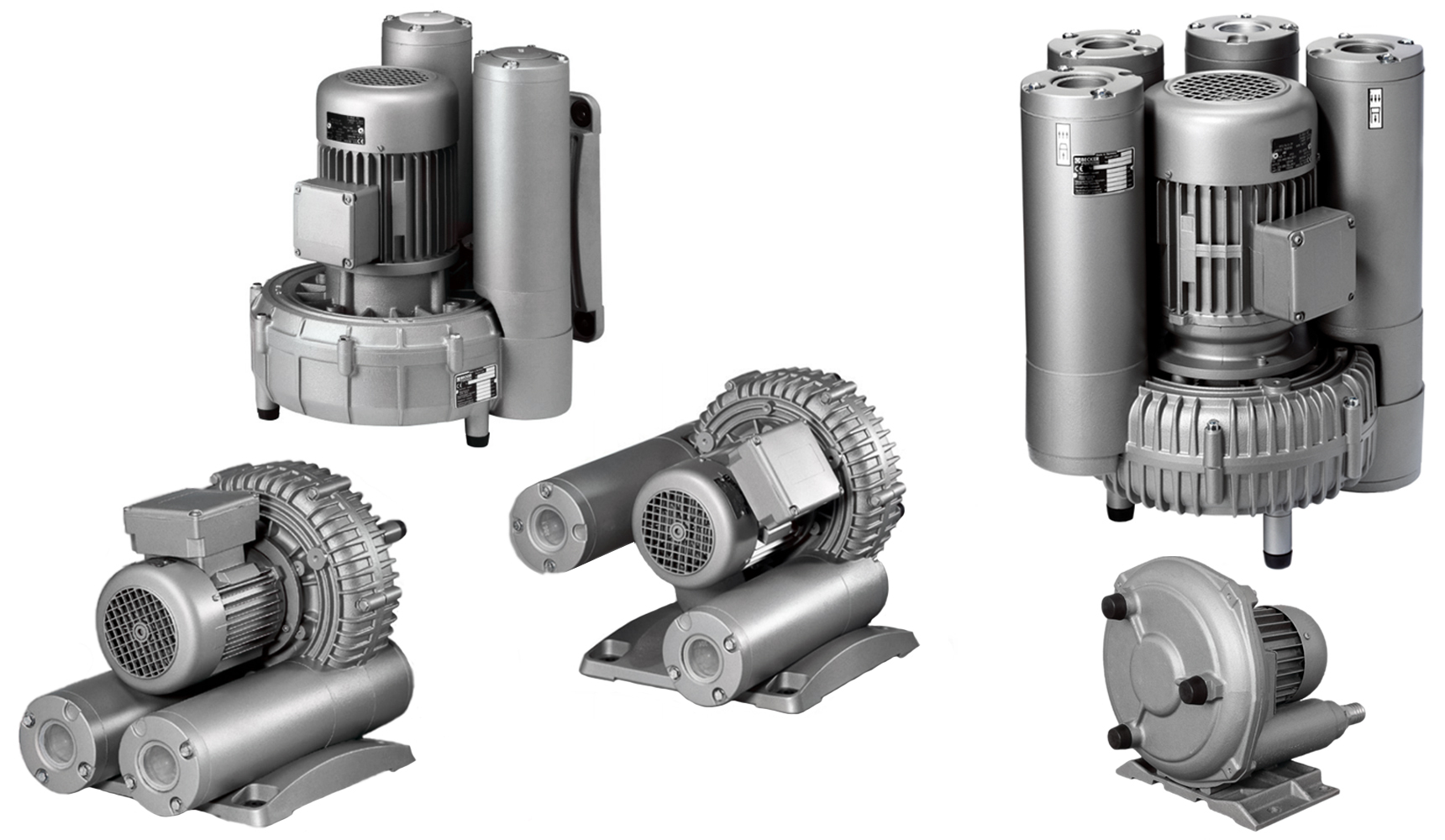
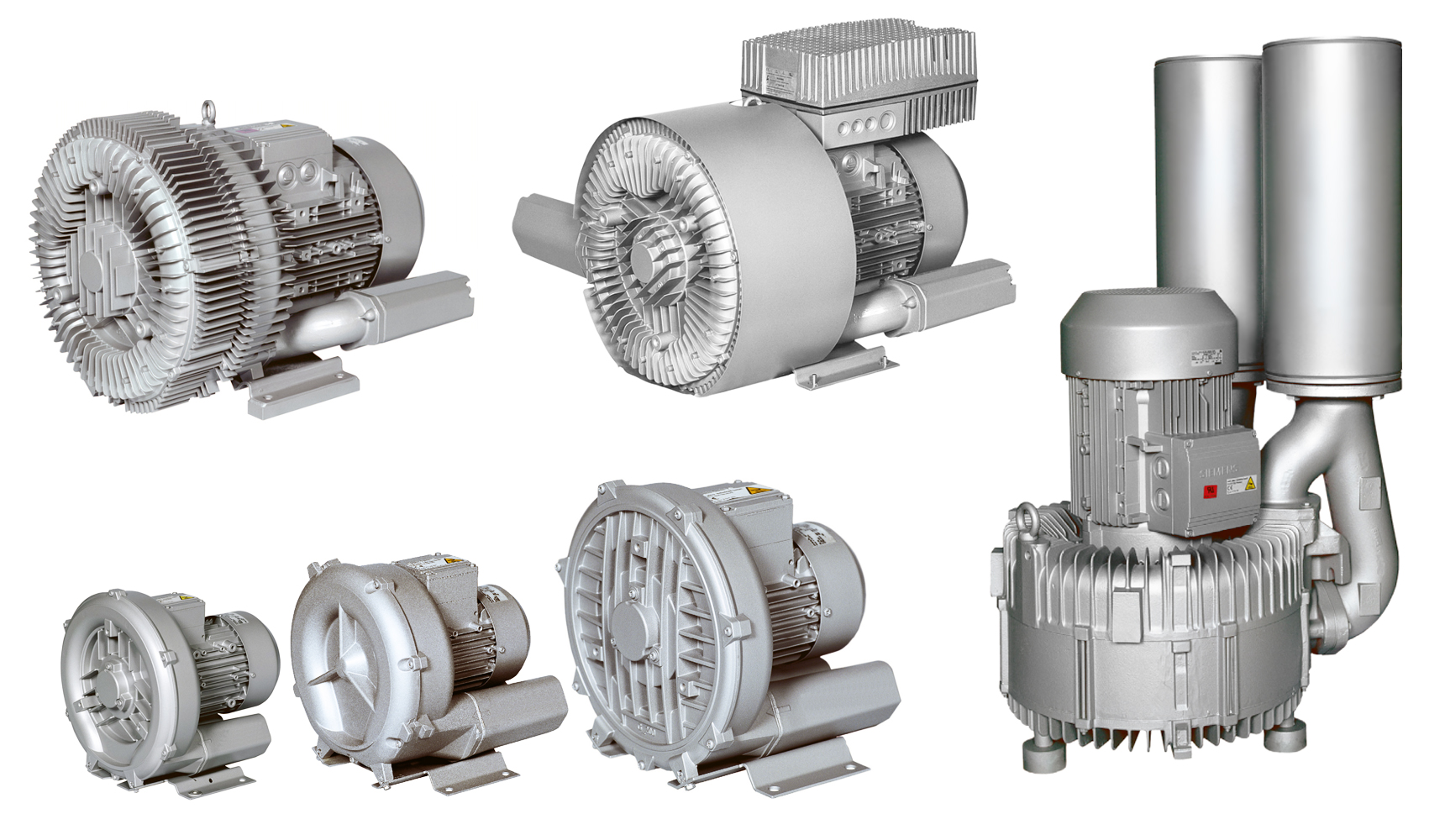
Over decades, side channel vacuum pumps have proven their reliability in service – with convincing performance and virtually maintenance-free, day in, day out, with practically no downtime. For years, side channel vacuum pumps have been quieter than most other vacuum pumps and compressors. We offer a wide selection of accessories that are ideally suited to these pumps and therefore improve their performance and adapt to customers’ specific requirements. The pumps can also be installed outdoors and, thanks to their special sound insulation, can be operated even in sensitive environments such as schools and residential areas and even hospitals.
Areas of application
- Building drying
- Filling of bags / bottles / silos
- Aeration of sewage treatment plants
- Soil remediation
- Dental suction
- Degassing of foodstuffs
- Pond aeration
- Gas analysis
- Lifting and holding
- Industrial vacuum cleaners
- Plastics industry
- Laser printers
- Paper processing
- Pneumatic conveying
- Sorting / enveloping of letters
- Textile industry
- Packaging industry
- Central vacuum systems
Operating principle
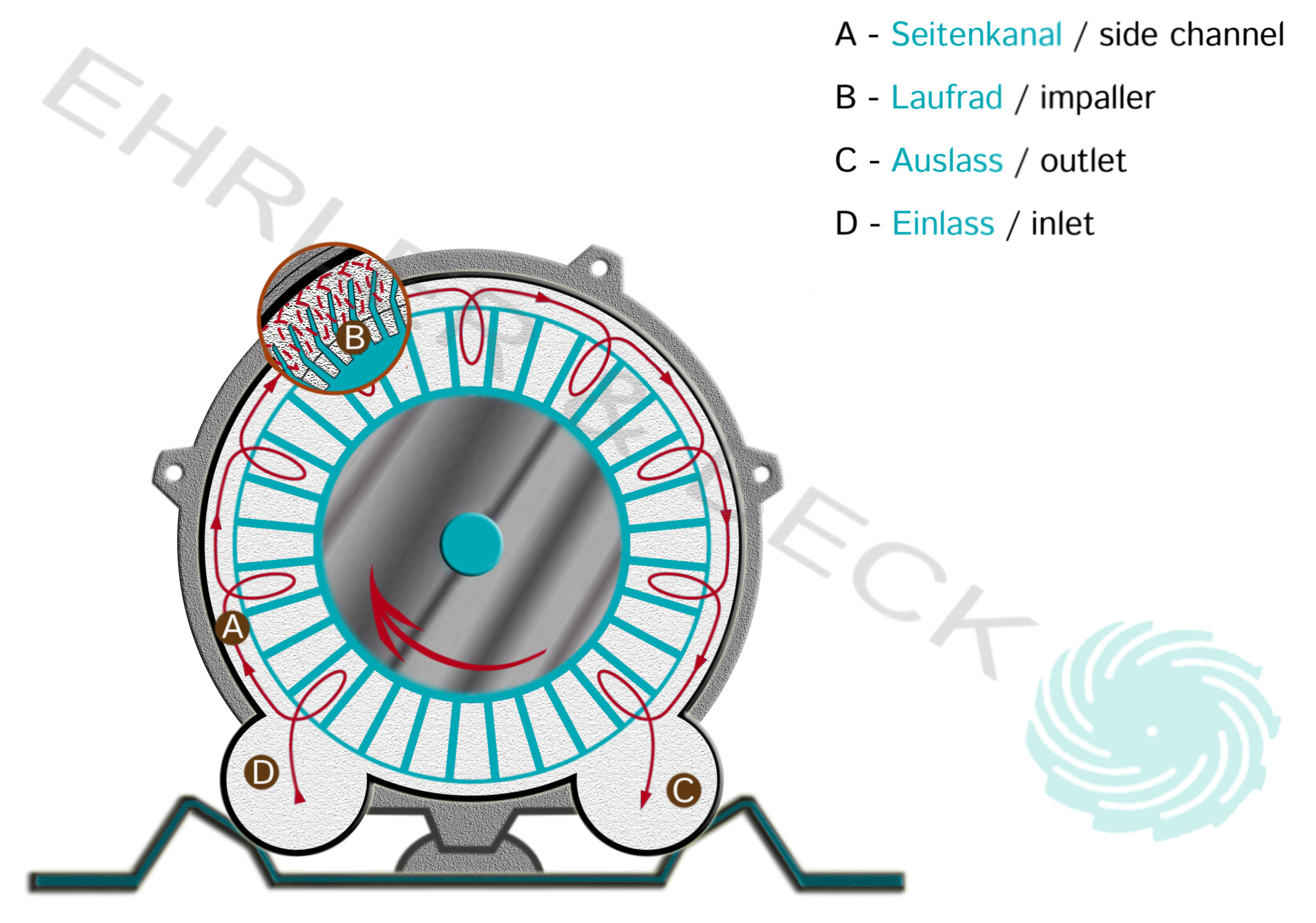
Gas enters through the inlet channel (D). In some pumps, the impeller is mounted directly on the motor shaft for contact-free compression, which increases service life. When the gas enters the side channel (A), the rotating impeller (B) accelerates it in a spiral in the direction of rotation. The effect of centrifugal force causes the gas in the impeller blades (B) to be accelerated radially outwards and the pressure to rise. With each re-entry into the impeller, kinetic energy is fed back to the impeller along the side channel. At the interrupter, the cross-section of the side channel narrows; the gas is stripped off the impeller and leaves the pump through the outlet port (C). Arranging the bearings outside the compression chamber ensures maximum operational reliability and a long service life, even at high differential pressures.
*This description does not take into account each manufacturer’s approach to the technology, but is a general description that attempts to cover the basic operating principle.